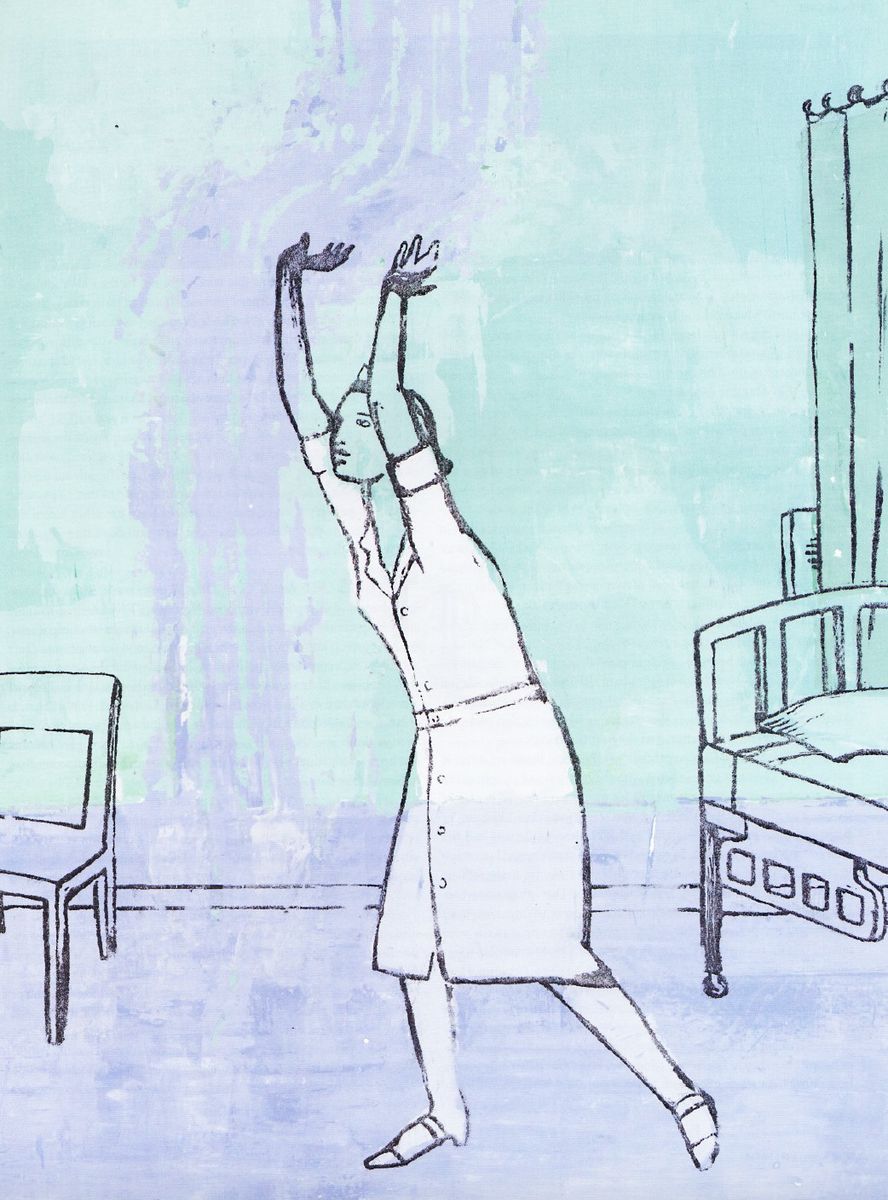
It may be the doctors who receive the prestige and tribute in the medical field, but as anyone who has been hospitalized — or anyone who has spent time at the bedside of a sick loved one or friend — knows, it is nurses who are the critical links in the day-to-day care of patients.
Those who run hospitals such as UCLA’s are well aware of the value of the unsung angels of mercy on their staffs. “Nurses are absolutely pivotal to health care in the hospital setting,” says Michael Karpf, vice provost of UCLA Hospital Systems. “They’re the ones who are with the patient minute to minute, day to day, administering medicines and monitoring patient-care protocols. Much of our reputation at UCLA is built on the backs of these hard-working professionals.”
But there aren’t nearly enough of them.
At UCLA and elsewhere, the national nursing shortage is cause for both concern and action, including unprecedented recruitment and retention efforts. Nationally, approximately 1 in 8 hospital nursing positions is unfilled, with key areas such as critical-care and medical-surgical units posting the highest vacancy rates. Meanwhile, declining enrollments at nursing colleges and universities have resulted in an aging workforce. Twenty years ago, 1 in 4 registered nurses (RNs) was under 30; today that ratio is 1 in 10, and many older nurses are expected to retire within the next decade, just as the first wave of baby boomers becomes senior citizens. Current projections are that the nation will be short 400,000 RNs by 2020.
It is a problem that has drawn the attention of leaders nationwide, both within the profession and the government. In one effort to address the issue, President Bush in August signed the Nurse Reinvestment Act to create a Nurse Corps Scholarship and to provide grants and loans to improve nurse education and retention.
Still, the crisis looms large, and the impact has been felt throughout the health-care establishment, most often in the forms of emergency-department overcrowding and the need to close hospital units due to staff shortages. In May, the New England Journal of Medicine published the first large study drawing a connection between inadequate nursing-staff levels and poorer patient outcomes. Harvard researcher Jack Needleman and colleagues found, among other things, that in hospitals with high staff levels (one nurse per 2.5 patients per day), patients experience cardiac arrest and shock 9 percent less often and suffer 9 percent fewer urinary-tract infections, 5 percent fewer episodes of bleeding in their stomachs or intestines and 6 percent less hospital-acquired pneumonia than in hospitals with low staff levels (one nurse per four patients). “When nurses are overworked, or when there are inadequate numbers of registered nurses, they cannot do the same job of monitoring patient condition that they can when nurse staffing is better,” Needleman explains.
“This is a public-health crisis that’s going to be with us for a decade or longer,” says Marie J. Cowan, dean of the UCLA School of Nursing. “And California will be more acutely affected than the rest of the nation.”
Indeed, only Nevada has a lower ratio of RNs per 100,000 population than California, where 1 in 5 hospital-nursing positions is unfilled. More ominous, Cowan adds, is that California has the highest projected population growth in the nation over the next two decades.
At UCLA Medical Center, officials say the crisis hasn’t yet affected patient care. The prestige associated with the hospital and its reputation as a stimulating working environment for nurses have proved beneficial in attracting RNs, notes Heidi Crooks, senior associate director for patient services and operations for UCLA Healthcare. Crooks and her staff are also benefiting from having taken the initiative several years ago in establishing a one-year residency program as a way for new-graduate nurses to gain much-needed work experience. That program, which began at a time when other academic centers were shying away from investing in inexperienced nurses, has contributed to a drop in the average age of a UCLA Medical Center nurse to just under 40 years old — significantly lower than the national average of 44. The Department of Nursing’s recruitment staff has redoubled its efforts, going to health fairs, high schools and community colleges to interest young people in nursing and bring them to UCLA Medical Center to meet the nurse managers. The department is also going the extra mile in its attempts to keep nurses happy once they’re hired. “We conduct surveys regularly while they’re here rather than waiting for them to leave and then doing an exit interview,” explains Cathy Ward D.N.S. ’95, clinical director of nursing.
But the hospital has felt the effects financially. Beefing up recruitment efforts, while necessary, has been expensive. The fierce competition for a limited pool of nurses has resulted in escalating payroll — at UCLA, the most recent package negotiated with the California Nurses Association will raise salaries for staff nurses by more than 25 percent over three years. To fill vacancies, the hospital, like many others around the country, has relied increasingly on traveling nurses — experienced RNs hired through an agency to work three-month stints while the facility tries to fill the position with a permanent employee. “The quality of these nurses is superb,” says Crooks. “But the cost to us is almost double what we would pay if those positions were filled by full-time staff.”
There are also concerns that cost might not be the only problem in the future. Keeping experienced nurses on hand to train younger nurses in the complex cases seen at UCLA is becoming increasingly difficult as many of these veteran nurses approach retirement with an inadequate number of newcomers following behind, Karpf notes. Certain nursing specialty areas are hurting more than others, including stressful units that require high skill levels, such as neonatal intensive care, pediatric intensive care and the psychiatric wards.
“We think we’re at the beginning of the crisis part of the nursing shortage,” says Mark Speare, UCLA Medical Center’s senior associate director for patient relations and human resources. “Right now we consider ourselves lucky to be able to spend our way out of this, to pay what it takes to get very talented people here. But there are other places that don’t have that opportunity, and some of them will close. It’s going to get worse before it gets better.”
The trends aren’t encouraging. For 20 years, cost-containment efforts and improved treatments have resulted in more outpatient care and shorter hospital stays for inpatients. Construction of new hospitals stopped, and smaller ones were forced by their low census numbers to shut down. But the aging population has begun to figure more heavily than these trends: Hospital admissions, which had declined from the mid-1980s to the mid-1990s, began to increase in the second half of the last decade and are expected to continue that climb into the foreseeable future. And given the higher bar that has been set for admission, today’s hospital patients are much sicker than patients of the past.
Why, then, aren’t there more nurses to take care of them? Several reasons have been proposed, including the expansion of opportunities for women (who continue to make up the vast majority of nurses) in medicine and other higher-paying professional fields. Nursing salaries, adjusting for inflation, rose slightly in the 1980s and then reached a plateau in the ’90s. (In 2000, the average salary for a full-time RN was $46,782.)
But the problem isn’t just one of not attracting enough people to the field; it’s also an issue of keeping them once they’ve entered the profession. In a recent survey published in the journal Health Affairs, more than 40 percent of hospital nurses reported being dissatisfied with their jobs. Major sources of job dissatisfaction among RNs include inadequate staffing, heavy workloads, increased requirements to work overtime and lack of sufficient support staff.
“The shortage really comes from the exit of nurses from the workplace,” says Linda Rosenstock, dean of the UCLA School of Public Health. “A number of people decide not to continue to be employed because it’s a very stressful job with occupational risks that we should work to reduce.” Rosenstock notes that staffing shortages are compounding already difficult conditions — conditions that put nurses at elevated risk for back injury, infection and violence — at many facilities. “We need to attract more nurses to make up for the current shortage, but we also must attend to some of the factors that caused us to lose a lot of the well-trained workers in the first place,” she says. Hospitals that take steps to give nurses more control over their work schedules help not only their employees, but also the overall level of patient care, Rosenstock adds.
UCLA has been one of those hospitals. In a survey by the Department of Nursing, flexible scheduling, along with salary, ranked at the top of the list of most important job factors. So the hospital’s nurse managers have become more flexible when making staff-scheduling decisions. “Five years ago, nurses would tell us days they needed to be off,” says Crooks. “Now, they give us the days they are able to work. Nurses today are really in the driver’s seat.”
While it’s easy to blame the nursing-shortage problem on a lack of young people being attracted to the profession, close observers argue that that’s actually not the case, particularly in California. At a time when well-trained nurses are in demand more than ever, there simply aren’t enough programs, or slots within the existing programs, to educate them. The American Association of Colleges of Nursing reports that in 2000–’01, nursing schools were forced to turn away nearly 6,000 qualified applicants due to insufficient number of faculty, clinical sites and classroom space, along with budget constraints. Again, California is particularly hard-hit. “Obstruction of the educational pipeline is the most serious component of the nursing shortage in California,” says Cowan. She points to waiting lists of three years or more for baccalaureate programs, which are offered through the California State University system, along with a lottery system for accepting applicants to associate degree programs at many community colleges. The low output of nursing graduates has compelled the state to become an importer of nurses — more than half are educated outside California.
Individuals can become RNs in three ways: through a two-year associate degree, a three-year hospital diploma or a four-year baccalaureate degree. “We have a shortage of baccalaureate-prepared nurses in California,” says Cowan. “These are the nurses who provide the case-management and leadership skills, as well as many of the skills needed to work in intensive-care units and emergency departments.” Cowan sees an expanded CSU system, along with several UC campuses getting into the business of educating undergraduate nurses, as critical to meeting the state’s future nursing needs. In the meantime, like the medical center, the School of Nursing conducts extensive outreach in an effort to attract more people to the field, banking that increasing the demand will eventually compel the state to invest in the educational infrastructure required to meet it.
UCLA’s own baccalaureate program was discontinued in 1996 due to a budget crunch. The School of Nursing, which now primarily graduates nurse practitioners, recently submitted a proposal to start an undergraduate program anew. But that proposal is on hold amid the state’s current budget woes. Educating health-care professionals is expensive, requiring high ratios of faculty to students. It costs twice as much to educate a nurse as it does to educate, say, an English major, says Kay Baker, associate dean for student affairs. “But an English major isn’t going to help you to get better when you’re in the hospital.”
“There will have to be a big investment, but it is absolutely a necessary investment, in redeveloping the educational infrastructure for nurses in California,” contends Karpf. “There aren’t nearly enough nursing slots, and I’m not sure everyone understands the gravity of the situation.”
Peter Anderson ’99, M.S.N. ’01 gave up a successful career as vice president in the home-video division at Metro Goldwyn Mayer to become a nurse. “I was disillusioned with business, going through a midlife crisis, and I thought nursing would be a good profession to be of service to others,” he explains. Anderson hasn’t looked back. “I’m seeing people at a point where they require someone to help them do something they can’t do for themselves,” he says. “There’s great honor in providing that kind of assistance.”
“It’s tremendously fulfilling,” says Cowan, who started her career 41 years ago as a bedside nurse. “It’s a type of satisfaction from your job that you don’t get in most professions.” Others point to the many different types of job descriptions, settings and specialties within nursing; the opportunities for professional growth through continuing education; the scheduling flexibility; and the ability to find work anywhere in the country.
Nonetheless, there is concern that nursing continues to be an undervalued profession — and that the admiration of patients and other health-care providers, along with the attractions inherent to the nursing field, won’t be enough to avert a deepening crisis. “The system couldn’t function without them, and yet we don’t always act as if that’s the case,” says Rosenstock. “If we had an equal shortage of physicians, society would be up in arms.”
“Nursing is a very tough job, very demanding emotionally and intellectually, and very satisfying when it’s done well,” says Karpf. “Many nurses feel overwhelmed and underappreciated. I understand the overwhelmed. It is the underappreciation that we must fix.”



