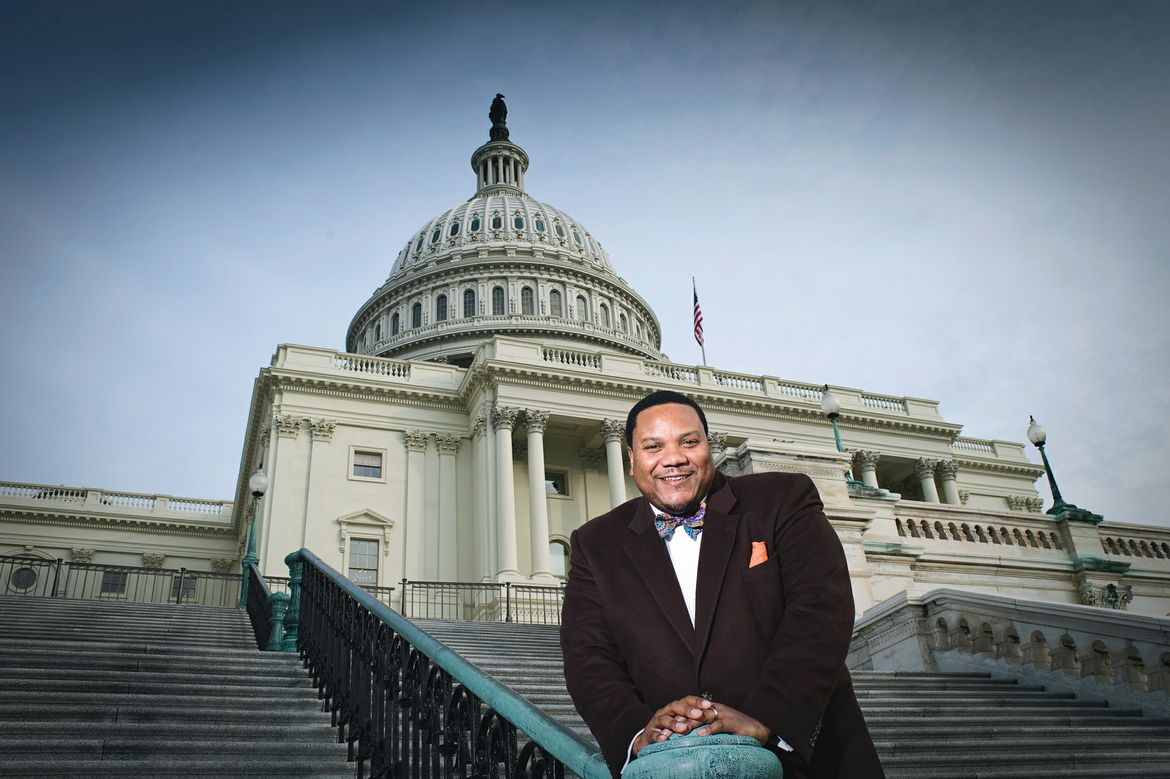
Washington, D.C., is and has been for some time the epicenter of a strange malady known as “Potomac Fever,” and the nation’s capital is teeming with Bruins suffering from it. More intoxicating than fame, more addictive than drugs, this highly contagious condition draws smart, ambitious people who want to make a difference to the Beltway — Washington-speak for the Capital Beltway, Interstate 495, which encircles the capital and is shorthand for all things political — and never lets them go.
Not every UCLA alumnus in D.C. grew up wanting to be president. Most, in fact, weren’t even politically active on campus. But they all caught Potomac Fever one way or another, and now they spend every day trying to improve our government, better our country and strengthen our democracy by pursuing their individual passions.
While Beltway Bruins don’t all share the same ideology or careers, they have three things in common: They are here because they believe in the work they do; they wear paths down the most powerful corridors in the world; and what they miss most about UCLA — and dislike about D.C. — is the weather.
The Road to Washington
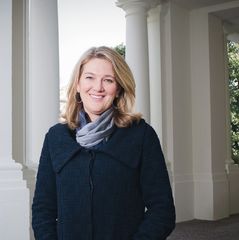
Now serving as Michelle Obama’s spokeswoman, Camille Johnston ’90 wasn’t sure what she was going to do with her political science degree upon graduation. Though she was not active in politics, on or off campus, she nonetheless took a job on the short-lived ’92 presidential campaign of Sen. Tom Harkin (D-Iowa). The connections she made led to a spot as Iowa press secretary for the victorious Clinton-Gore campaign. From there she has held a slew of jobs both inside the Beltway and in the private sector, including communications director to then-Second Lady Tipper Gore.
“You get to be a part of important things,” Johnston explains about why she keeps coming back to public service. “It’s nice to work on something that you really believe in, and for people whom you really believe in. I always feel like my work makes a difference. Working for the first lady is really working for the family; you really do feel a responsibility for the family [and] knowing how important it is that kids be allowed to be kids, no matter who their parents are.”
Todd Harris ’93, a top Republican strategist who has worked for Gov. Arnold Schwarzenegger, 2008 Republican nominee Sen. John McCain and former Florida Gov. Jeb Bush, claims that he took up politics “out of spite.”
“My parents were Republicans, but I didn’t really know what it meant,” he explains. “I had a friend who was a Democrat and his whole family was and they’d say these horrible things about Ronald Reagan. I didn’t know how to defend myself, but I’m really stubborn and don’t like to lose arguments so I started reading up on the political parties.”
Harris interned at the Republican National Committee in the summer of 1992. When he returned to L.A., he became active in state politics, volunteering, attending party conventions and eventually working for the California Republican Party. But it was the monumental recall of former Gov. Gray Davis that really earned Harris his stripes.
“It was a political earthquake,” he says. “We were at the center of the political universe for two months; it was a hell of a ride. We worked so hard and our hours were so long, we use to joke that everyone in the political world who was not involved in the recall campaign was doing everything they could to get in, and everyone who was involved was doing everything they could to get out.”
Thelma Meléndez de Santa Ana ’82, assistant secretary for elementary and secondary education at the Education Department, still can’t believe she’s here. Her path, which started in the classroom, seems natural enough, especially given that being an educator runs in her family. Her grandmother was a teacher and administrator in Mexico. Meléndez didn’t grow up speaking English as her first language, and a high school guidance counselor told her she wasn’t Bruin material.
“I graduated cum laude and I almost didn’t go,” she recalls from her office overlooking Independence Avenue, an eraser’s throw from the National Mall, striking a tone of wonderment rather than self-aggrandizement.
She began as a teacher in the Montebello and Pasadena, Calif., unified school districts. She has been a university professor, an administrator, a manager at education-related foundations and, ultimately, superintendent at Pomona Unified, where she won the California Superintendent of the Year award. Coincidentally, President Obama visited Pomona students during a trip last year before Meléndez joined his team.
“The president made clear he wanted his secretaries to hire people they wanted to hire,” Meléndez says about how she came to serve in the administration. “It speaks to the openness of this administration.” She met Secretary Arne Duncan through her foundation work and was so impressed with him that when he asked her to leave California, she did and took a pay cut for the chance to work with him.
Heeding Their Calling
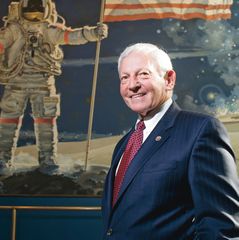
While retired Marine General John “Jack” Dailey ’56, who runs the Smithsonian’s iconic National Air and Space Museum, has never worked on campaigns or served as a political appointee, his military career ultimately landed him in Washington. He’s the first to admit that he started out with a very unclear flight path. “I didn’t go to UCLA with a master plan,” other than to use his football scholarship, he chuckles. The camaraderie, teamwork and discipline instilled in him by his football coach, Johnny Johnson, reinforced his belief that following his father into the military was the right move once it became clear an NFL career was not on the horizon. He joined the Naval Reserve Officer Training Corps and graduated a 2nd Marine lieutenant.
After 36 years in the Marine Corps, he was offered the job as NASA’s second-in-command. The transition from military to civilian life was smoother than he anticipated. “It’s amazing what you can get done when you don’t care who gets the credit,” he says of the approach both the Marines and NASA take. “That’s why we always used to beat USC, because we played as a team and they played as a bunch of individuals,” he says.
After seven years with NASA, Dailey was asked to head the Air and Space Museum — on whose board he served in his capacity with NASA — when the previous director died in a hang-gliding accident. His experience working with NASA scientists and researchers prepped him for his “new” job, which he has held for 10 years and will only leave “feet first.”
“You should do things you like to do and if you don’t, you should really think about doing something else,” Dailey advises during an interview in his office above the museum housing the Wright Brothers’ plane and the Apollo 11 command module, neatly summing up the philosophy of every Beltway Bruin.
That includes David Drucker ’01, a reporter for the Capitol Hill newspaper Roll Call. About halfway through his studies, he left school to open his own business. Two career changes and eight years later, Drucker returned to campus, and while on assignment for the Daily Bruin, he finally found his calling.
His writing career was supposed to lead to magazines in New York City, until he covered the 2000 Democratic convention in L.A. for the student paper. After that night, Drucker realized, “I need to cover national politics. Working for the Daily Bruin put me in the position to have that light-bulb moment.”
A decade later, Drucker wouldn’t have it any other way. “I love the action,” he admits. And as a reporter, he doesn’t have to worry about winning an election to keep his job.
“No matter who loses, I win because I just cover it all.”
Behind the Beltway
Being part of a presidential administration is old hat for Neera Tanden ’92, chief operating officer at the Center for American Progress. She held a dual role in the second Clinton administration, where her work on the domestic policy council also made her part of then-First Lady Hillary Rodham Clinton’s team. Tanden worked on health care, Head Start, juvenile crime and similar issues during her Clinton days.
Tanden is also a veteran of numerous campaigns, including the first Senate race of Secretary of State Clinton, which is a little unusual. For the most part, Washington hands are either policy people (wonks) or political/campaign people (operatives).
“In the governing context, I’m probably a little more attuned to how things play politically,” she contends. “In the context of a campaign, I hope that I am more wonky than others. … Campaigns are important to build mandates for governing. Governing is informed by both politics and policy. Good executives, good leaders, have a good balance between those two things.”
Republicans and Democrats alike, however, say that in the highly partisan environment that has settled over the capital, it is getting more and more difficult for anyone to govern.
“Clearly, Washington right now is a very partisan town; there’s a lot at stake,” says J. Jioni Palmer ’98, spokesman for the Congressional Black Caucus and a former political reporter for Newsday. “The Republicans are recently out of power, so they know what it feels like and tastes like to be in power, and the Democrats are recently new to power, so they’re savoring it. And there are real ideological differences.”
Still, Palmer argues, plenty of legislation attracts bipartisan support and passes easily; we just don’t always hear about it. “A lot of business gets done, but most of the attention is on the big issues,” such as health-care reform or the economy, where reaching consensus is not easy, nor always politically expedient, he notes. “The conflict and the drama are the more compelling stories and get most of the focus,” so important business, like when Congress addressed problems in the student lending industry, gets conducted with little fanfare.
Palmer also blames the 24-hour news cycle. “Every day it seems there are new uses of technology — the blogosphere, Twitter. You have to be constantly vigilant, and it feeds into this ‘permanent campaign’ [mentality]. It can make it more difficult at times to have comity and to get along.”
William McGinley ’92, who has been a counselor to both the Republican National Committee and to the National Republican Senatorial Committee and now specializes in campaign finance law at the powerhouse firm Patton Boggs, says the impact of technology on campaigning and governing cannot be overstated.
“The nature of campaigns has changed; it’s faster than when I arrived, the messaging is much faster,” says McGinley, who runs the political blog expressadvocacy.com. “You have to be able to respond at a moment’s notice, and I think that has definitely changed the nature of the town. Politics has become a contact sport.”
But the blogger also hails the digital culture’s impact on the capital. “I think it’s fascinating; every campaign has a technology — the ’06 campaign was YouTube; ’08 was Facebook; I have no idea what it’s going to be this year.” And he’s glad to see the Senate, which prides itself on maintaining even the most archaic traditions, embracing social media. For example, the Senate Rules Committee recently set forth guidelines allowing senators to establish individual, official Facebook pages. “You could say that the Internet culture has caused politics to become a bit more caustic,” McGinley concludes, “but it’s also enhanced the ability for the American people to interact with their government leaders.”
A thoughtful answer from a politico who, like all of his fellow Beltway Bruins, is as determined to make a contribution to his country as he is hooked on this strange condition called Potomac Fever.
“I have lots of friends who are partners at big law firms [making lots of money], and that’s great,” D.C. veteran Tanden says, defining both the essence of political life and the legacy of UCLA. “But I do what I do because I want to serve.”



