Editor’s note: This is an article from the Winter 1999 issue of UCLA Magazine.
Each winter quarter, in a scene echoed all over campus, fresh-faced applicants pay visits to UCLA’s newest department with the delightfully screwy-sounding name: World Arts and Cultures. And although prospective students continue to apply each year in ever greater numbers, what they find when they arrive at the department’s home in the Dance Building can too often stop them in their tracks.
Dancers, who comprise roughly half the department’s target group, are initially attracted by the fact that World Arts and Cultures students are encouraged to take not only modern and postmodern dance, but flamenco, Argentine tango and the dances of Guinea and Senegal as well — a range that, among university dance programs in the U.S., remains unparalleled. Students applying in cultural studies — the department’s other focus — are drawn to a curriculum designed to train community arts activists, astute observers of culture and facilitators of intercultural communication. What all the department’s undergraduate students hold in common is a desire to study art-making, either as practitioners or as scholars, and to do so within the largest possible framework, transcending traditional boundaries of culture and discipline.
But at the moment when the prospective student walks through the dramatic portal of the Dance Building — which, with its Romanesque rose windows, cuts a stunning first impression — expectations can turn to disappointment and befuddlement. Why? Because the building’s interior is depressingly dilapidated.
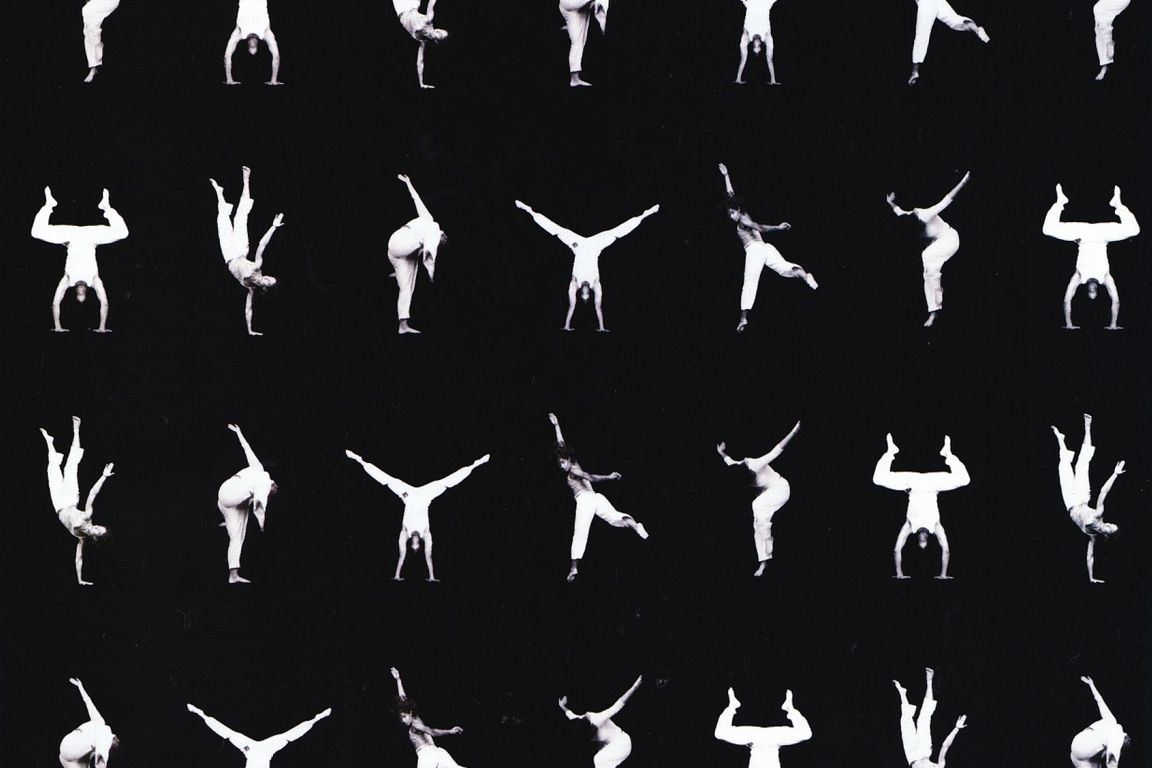
In stairwells throughout the 1932 structure, plaster walls are riven with deep cracks — decorated now with playful black-and-white photos of students dancing and performing, but ominous nonetheless. Ceilings are stained from a chronically leaky roof. Visitors would turn on their heels and bolt were they to know that, in 1978, the building was rated “very poor” as part of an investigation of seismic hazards throughout the University of California system. Of course, that assessment long predates the 1994 Northridge earthquake, which led to further weakening.
At a time when the department’s curriculum is attracting ever greater interest in the undergraduate B.A. as well as the M.F.A. degrees in dance; when new M.A. and Ph.D. degrees in culture and performance are on the horizon; and when the number of ladder faculty has nearly doubled to 15, the decaying interior sends a disconcerting message.
The desire to bring physical resources into line with renewed curricular visions pervades university life. But at World Arts and Cultures, the wish to upgrade the Dance Building has long been deemed an impossible pipe dream, dismissed by faculty and administrators alike as too expensive or too unrealistic in a climate in which the arts must learn to live with less, not more.
Now, however, in a turn of events that has stunned most of all those who work and study within WAC (pronounced “wack,” both lovingly and self-deprecatingly), the Dance Building is about to be completely refurbished with a combination of some $17 million in state and federal funds, targeted to repair the building seismically, and $18 million from a private donor, Glorya Kaufman, who has committed herself to the intercultural and interdisciplinary mission of the department.
That’s a whopping $35 million to carve out a network of state-of-the-art studios, classrooms, arts laboratories, offices and a pair of theaters — a 299-seat flexible indoor performance space as well as a 99-seat outdoor pavilion. This level of research-and-development funding rarely comes the way of the arts. Even more significantly, the newly designated Glorya Kaufman Hall will be the first of UCLA’s academic core buildings named for a woman.
A bastion for women within the university in the pre- and post-World War II eras, the dance segment of Physical Education served as the seed of the current Department of World Arts and Cultures — housed in what was then known as the Women’s Gym. In 1953, Alma Hawkins was hired to head the dance “unit” and to extend its reach.
With a doctorate from Columbia University Teacher’s College and 20 years of teaching and curriculum development under her belt, Hawkins had been recruited by UCLA because of her groundbreaking work in creativity (with educational philosopher Harold Rugg) and a strong background in modern dance. A contemporary of Martha Graham and Doris Humphrey, she had studied at the Bennington School of the Dance in Vermont, the direct progenitor of the famous American Dance Festival.
According to an interview conducted for the UCLA Oral History Project in 1981, Hawkins arrived at UCLA without “any big dreams about dance. I just knew that I was supposed to come in and help develop [the dance unit].”
By 1957, however, this small but famously forceful woman, who believed in joint decision-making through the then-novel concept of “group process,” had spearheaded the creation of a lively dance major, albeit still under the aegis of physical education. When in the early 1960s a new College of Fine Arts was formed as an umbrella for Theater, Art and Music, the campus Committee on Education Policy invited Hawkins to bring along dance as well. Thus, in 1962, UCLA became the first university in the U.S. with an autonomous dance department.
Those who worked under Hawkins describe her as an inspiring leader. But she was also socially conservative, so much so that it took three entire faculty meetings for her colleagues to persuade her to allow students to wear tights, as opposed to calf-length skirts in pastel colors, to their dance classes.
Still, it was Hawkins’ foresight that led to an expanded dance curriculum, including, most significantly for the current incarnation of the department, a program in dance ethnology. In 1963, inspired by the addition of ethnomusicology offerings within UCLA’s Music Department, Hawkins arranged to hold classes in the movement practices of Yugoslavia, Bali and Mexico. The stage was set for UCLA’s dance department to focus not just on dance of the United States but, uniquely, on dance of the world.
It was in 1968, then, goaded by “student pressure” and the specific catalyst of a strike against the Vietnam War, that Hawkins birthed the idea that has since grown into the Department of World Arts and Cultures. As a member of a multidisciplinary university committee charged with responding to student demands for accountability, Hawkins dreamed up a new interdisciplinary program “that would be more liberal in nature … and not tied directly to a graduate education degree. I felt that the broad experience in the so-called ethnic arts could provide a foundation that could be useful in several fields of study.”
Fueled by anti-war activism, the struggle for civil rights and the growth of ethnicity-based political movements, the Ethnic Arts Program was established in 1972, drawing from distinct curricula in dance, art, music, theater, anthropology and folklore and mythology.
Allegra Fuller Snyder, the dance ethnologist who replaced Hawkins as chair of Dance in 1974, was responsible for nurturing Ethnic Arts, terming it “the truest liberal arts program in the university.”
Judy Mitoma, who subsequently took over the program, had been an undergraduate dance major at UCLA in 1968 when anti-war protestors “were storming down the Men’s Gym doors.” She earned her M.A. in dance ethnology at UCLA and was asked to lead Ethnic Arts in 1982 at a particularly rocky moment: The Academic Senate had just voted to disestablish the program due in part to low enrollment.
Granted a brief reprieve by the Senate, Mitoma set about revitalizing the program. “We got political,” Mitoma recalls. “We felt that Ethnic Arts must be a degree because no one else was offering this curriculum” — which, from the beginning, focused on interdisciplinary education, issues of diversity, community engagement and thinking globally instead of locally. “These were new notions at the time,” she continues, “and we thought this should be the most important program on campus because these were the most important ideas.”
The annual budget during Mitoma’s first year was $300, a carryover from the days when Hawkins had convinced university administrators to green-light the program by arguing that it could be run on a shoestring. But eventually the university proffered a $60,000 grant spread over three years, and a vital cohort of new students began to join the enterprise.
The program thrived, and in the late 1980s, Mitoma suggested a name change — to World Arts and Cultures — as a way to avoid the negative connotations of the word “ethnic.” But the new title also served as a declaration of the curriculum’s global aspirations: For many students, the program became a safe haven, providing a place to learn about issues of diversity and how to become effective community activists.
The 1995 merger of dance and WAC, then, amounted to a rejoining of the original dance major with its spin-off ethnic arts program, with the renamed offspring coming back to swallow its mother whole. At the beginning of the 1990s, WAC had been on the rise with talk of imminent departmental status, while the Dance Department was falling into disarray. “You could feel the weight, the heaviness, about the place,” recalls Mitoma, who was called in to serve as interim chair of dance.
When the idea of merging the two entities was first floated in 1994, resistance was palpable, based on understandable fears of loss of identity and the dilution of established programs. But Mitoma says that she could see “that the remedy for what was ailing dance — a lack of connection to community and the outside world, and a lack of creativity, which was true of dance all across the country — could come from the WAC Program. And I also thought that it was time to inaugurate a dance department that was different from 98 percent of the dance departments in this country.”
While some may have thought it a betrayal, Mitoma adds, “I thought it was an opportunity to again be at the forefront of the field.”
One of the most frustrating and formative rites of passage for new students in the department is the frequent need to define what the field of World Arts and Cultures stands for, a notoriously slippery task. “When you study English, nobody needs to ask what that means,” one student offered in class last year. “But when you say you’re majoring in WAC, you get these weird looks, almost as if you were an academic Martian.”
But if a definition of WAC is difficult to pin down, this is due, at least in part, to the fact that WAC is as much an anti-discipline as a discipline. Fittingly, the three key features of the department resound like a manifesto. In WAC, the popular and folk arts are placed on equal terms with the high or classical arts. Ballet, for example, is treated as just another dance genre, as part of a European arts diaspora rather than the font from which all movement flows. Secondly, the human body is the starting place in virtually all WAC approaches. Even when the art being studied is of a material nature, such as architecture or visual art, WAC attends to the process through which the material is made, and the action of the bodies that make it. Finally, community engagement is viewed as so crucial that it transcends the separation between dance and cultural studies, between theory and practice. All the WAC faculty, whether they be ethnographers, theorists or choreographers, place enormous value on the application of WAC studies to life beyond the university.
To translate these principles into the classroom, the faculty of WAC brings to the program a diverse wealth of experience and a global perspective. Christopher Waterman — chair of the department — has, for example, focused his life’s work on the popular arts of sub-Saharan Africa and has conducted research on popular music of the Yoruba people of Nigeria. Peter Nabokov teaches courses in vernacular architecture, studying everyday structures in Native America and South India rather than more obviously impressive edifices. Overall, the department might best be described as eclectic, comprising scholars in folklore, anthropology, political science, art history, art criticism, choreography, dance ethnology, education and therapy.
The overlap of dance and humanities also means that dance training in WAC is regularly buttressed by serious attention to cultural context.
“Many dance genres taught at WAC belong to cultural complexes that include not only other arts, such as music, poetry, song, imagery and drama, but also particular secular and sacred philosophies,” WAC professor Marta Savigliano explains. “We are committed to teaching our students the historical, cultural and political background associated to the dance techniques of their interest.”
The environment created by this loose set of shared principles and by the focus on cultural context has been salutary in attracting dynamic new humanities faculty who do not want to be confined by the traditional walls inhibiting communication between fields of study. Virtually all the new faculty identify themselves as misfits in their established disciplines, and that’s the way they like it.
Waterman, for example, worked as a jazz bassist before earning a doctorate in anthropology and becoming an ethnomusicologist. He’s happy to be working outside the confines of standard disciplines. “The intellectual openness of WAC — the fact that it originates from an interdisciplinary impulse — is powerfully attractive to those of us who see our work as residing in the interstices between the arts, humanities and social sciences.” Nabokov, whose position is half in WAC, half in American Indian Studies, agrees: “When you are required to wave a banner for a particular discipline, it can begin to feel restrictive.”
Savigliano worked in public policy before earning her doctorate in political science. Now she writes on tango and post-colonial theoretical issues, and she is in the midst of creating a new tango opera called Angora Matta. This is a time of enormous creative expansion for her, as she works toward performing her scholarship on a grand scale.
The same creative misfit status applies to the new choreographers on the faculty: David Rousseve, whose Love Songs was performed at the Brooklyn Academy of Music Next Wave Festival in mid-December, and Victoria Marks, who is currently devising a community-wide celebration of the millennium for the city of Lincoln, Neb., as well as preparing a weekend of theory and public performance in the WAC Department Jan. 27–29.
Rousseve feels stretched: “Working with students from such a wide array of cultural backgrounds has profoundly influenced my own aesthetic.”
For her part, Marks references a new attentiveness to issues of culture, to the extent that for the first time in her life she recognizes the modern/postmodern dance world as a cultural system unto itself. “It feels like dance is being ‘invented,’ rather than ‘taught’ in WAC,” she says. “We are all, faculty and students, finding out what it is and what it can be.”
It is not unusual for WAC grads and undergrads to feel that they’ve lost their moorings in the swirl of experimentation and anti-disciplinary thinking that characterize the department. But this is also a place where students — Parijat Desai, for example — can make big breakthroughs.
As an M.F.A. choreography student, the Indian-born, American-bred Desai worked to find a bridge between her Indian heritage and her modern-dance training. For her final M.F.A. concert, she created a new hybrid choreographic form that gestures toward Bharata Natyam, a classical dance of India, even as it incorporates notions of narrative structure and movement exploration from postmodern dance. The Los Angeles Times took note, describing Desai at her recent performances at Highways in Santa Monica as “a major talent who bears watching.”
As Peter Sellars, the famous director of opera and theater and a professor in WAC, has asserted, “We have to insist that art retain its complexity, because in our society now, all the social questions that confront us don’t have simple solutions anymore.” Appropriately, then, WAC is a very complex place indeed.
The stream of fresh energy bubbling up in the department might have gone unnoticed within this sprawling university were it not for two things: Kaufman’s generous gift and the salutary choice of Moore Ruble Yudell as the firm to redesign the building’s interior. Larger endeavors than this have failed to establish homes capable of supporting their visions. But for WAC, with its focus on the body and on breaking down the walls between disciplines and cultures, the physical interpretation of the department’s mandate emerges as particularly crucial.
When at a recent faculty retreat Waterman announced that architectural firms were being solicited to bid on the job, many faculty were crestfallen, assuming that without magical intervention on the part of the university, we would be doomed to live in the architectural equivalent of a parking garage. But the university, Dean Daniel Neuman and the chair have done right by the department, hiring a company headed by a serious thinker who essentially wrote the book on the interaction between bodies and architectural space.
Buzz Yudell, whose firm only recently completed the masterful renovation and seismic reinforcement of the Powell Library and construction of the Law Library, boasts the perfect resumé for this project. He is the son of a former Martha Graham dancer, the author of a frequently cited essay on “Body Movement” featured in an architectural textbook and a lover of dance whose own admittedly haphazard training ranges from classes with Geoffrey Holder and Carmen de Lavallade to Daniel Nagrin and Dan Wagoner. He and his design team are also remarkable listeners who have convened countless meetings with groups of faculty and staff to brainstorm the functions of every part of the building.
At one such meeting, Peter Sellars goaded the architectural team to push beyond standard notions of what a theater should look like, describing the image he had in his mind of a warm, wood-lined space — “No more black boxes,” Sellars exclaimed — that would be as appropriate a setting for sacred ritual as for experimental theater. “Soundstage meets Shinto shrine,” he mused.
“What was great about what Peter was saying,” says Yudell, “was the encouragement to create a space that was beautifully made but also enormously flexible, that has a strong character but which also allows choreographers and directors to explore many different modes of presentation. In fact, we were in a funny way looking for that kind of nudge.”
The new plan (still subject to change) calls for the old basketball court in the building to be converted into a serenely plain and elegant theater with a simple balcony suspended on three sides. Rolling banks of seating will fold up and practically disappear when the space is being used for rehearsal or if the audience is seated in alternative configurations.
The design of the outdoor theater, to be situated at the corner of the grassy dance area opposite the pool, is still in flux. But one of Yudell’s inspirations is a Balinese pavilion that Mitoma — an Indonesian dance expert — recognized at an early showing as the structure located adjacent to her daughter’s house in Bali. Regarding this new al fresco theater Yudell, explains, “From the beginning we’ve wanted to find a balance between near total openness, in the tradition of the Balinese pavilion, or a courtyard in a village, while at the same time recognizing that we’re in a dense campus context. We’re trying to walk a fine line.”
Perhaps the most exciting design element thus far is Yudell’s superimposition of a mandala pattern over the peristyle of columns remaining from what was once the extensive ground-floor locker room of the Women’s Gym. Taking the “world” moniker of the department very seriously, Yudell considered at one time building walls that would have resembled Japanese screens.
Ultimately, the option that proved most pleasing from both aesthetic and practical standpoints involved configuring the ground floor as a series of squares layered upon circles, accommodating a curving boulevard that sweeps through the middle of the building. This classic mandala pattern is significant in that it quotes a genre of visual art associated with Tibet, an endangered world culture. But the design also made it possible for Yudell to lay out a series of byways that encourage relaxed connection, deftly capturing the ethos of WAC.
“One of the wonderful things about working with a historic building,” Yudell observes, “is that flexibility needn’t mean blandness or complete neutrality. You can be in a building that makes a strong statement and still change it. And this is a case of one of the oldest buildings on campus being used for one of the most experimental programs.”
Now perhaps WAC will finally have a building capable of supporting the bustling activity within it. And the prospective students, when they come, will want to stay.
Senior Development Writer Lisa Waring contributed to this article.