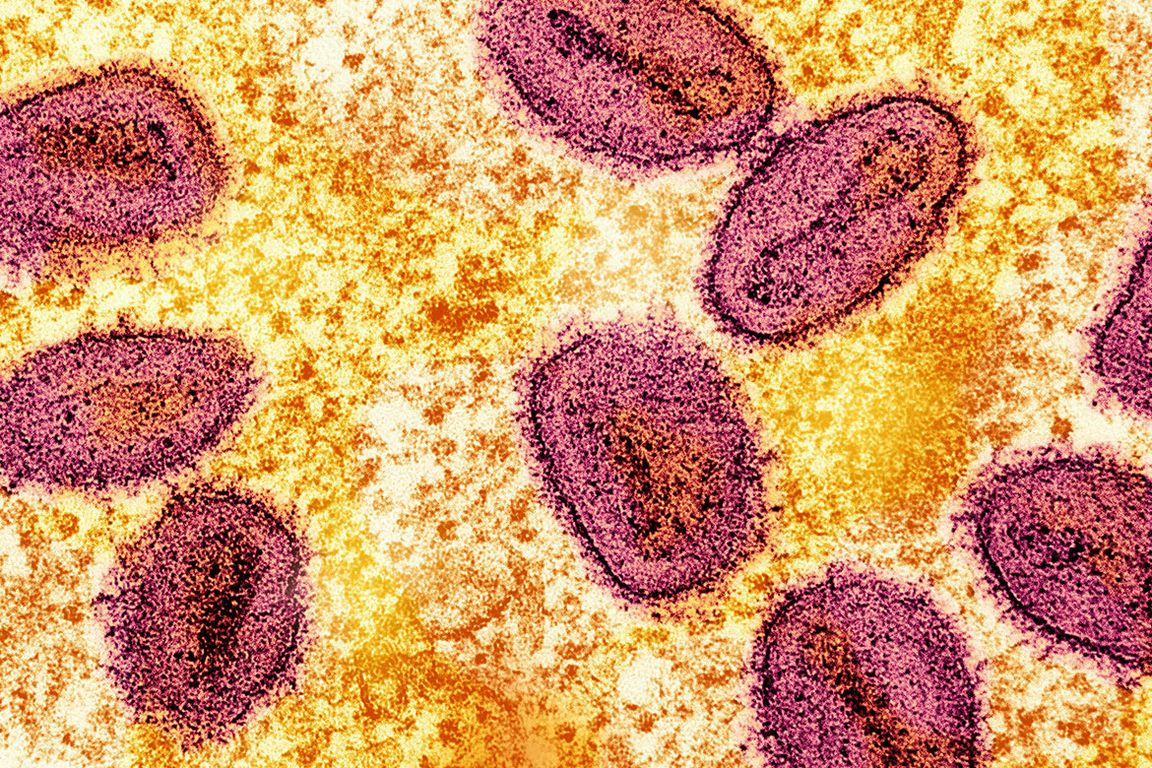
Two related and recently published studies by international teams — including researchers with the UCLA Fielding School of Public Health — have identified methods to improve how infectious diseases, including COVID-19, mpox and Ebola can be tracked and better understood by public health officials in an emergency.
“The results enable us to write clear guidelines for the use of novel computational approaches analyzing viral sequences to guide public health decisions in emerging infectious disease crises,” said Dr. Marc Suchard, a physician and professor in the UCLA Fielding School of Public Health’s department of biostatistics. “Our open-source methods are available to the scientific community and can be used to investigate the drivers of viral spread through space and between people to design tailored intervention strategies.”
Hear more about how the new tool can quickly track the spread of viruses on KNX-1070 AM.
The studies focus on the use of viral disease genomes — the genetic material contained within a virus particle, which can be composed of either deoxyribonucleic acid (DNA) or ribonucleic acid (RNA) — to estimate the dispersal history of the virus responsible for an epidemic, a task known as phylogeographic inference. The researchers developed and evaluated the performance of three new analytical approaches using standardized software to create phylogeographic reconstructions, improving understanding of how quickly a virus can disperse across a given population.
As an example of how the techniques could be used, the researchers used historical data from the 2021-22 COVID-19 (SARS-CoV-2) outbreak in the United Kingdom and used the newly developed methods to check if the dispersal patterns could have been discerned earlier than they were, historically. Overall, the new techniques improved the speed of getting results of the analyses, in some cases by up to 300–400 times, researchers said.
“The usefulness of this sort of expedited analysis in improving a public health department’s reaction to an emerging public health crisis is obvious,” said UCLA Fielding’s Dr. Andrew Holbrook, an assistant professor in the department of biostatistics and a study co-author. “The more, and the earlier, those dealing with an outbreak understand what is happening, the more likely it can be slowed or even stopped.”
Read more on the UCLA Fielding School of Public Health website.