Key takeaways:
- UCLA is the first campus in California to receive a Green Grounds Certification from the environmental nonprofit Re:wild Your Campus.
- More than 90% of UCLA’s landscape is managed sustainably and without the use of pesticides.
- The campus’s ecologically friendly practices are the result of work and research by UCLA Facilities Management, UCLA Sustainability and other campus programs, as well as the knowledge and recommendations of the Gabrielino-Tongva tribe, the traditional caretakers of the land on which UCLA sits.
UCLA is rooted in keeping its grounds green and healthy. As a result, the university has become the first school in the state to receive the Green Grounds Certification from Re:wild Your Campus. The honor recognizes UCLA’s efforts to improve human health and biodiversity by eliminating the use of pesticides on campus grounds through an ecological approach to landscape and pest management.
Re:wild Your Campus is a youth-founded, women-led nonprofit organization that aims to change the thinking behind green space. Founded by two UC Berkeley students in 2017, Re:wild's mission is for school grounds to go organic by 2030.
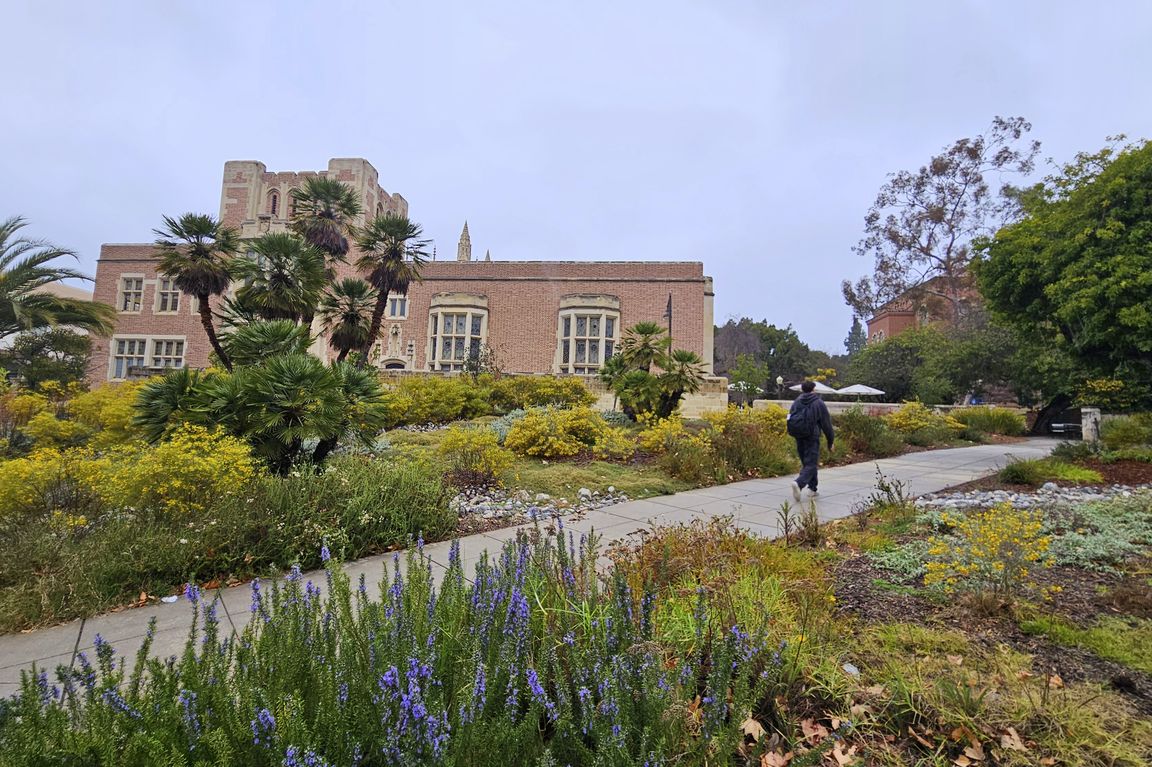
At UCLA, more than 90% of campus grounds are managed sustainably, with the university employing ecologically friendly practices to maintain its green areas, including entirely discontinuing pesticide use in its landscaping.
UCLA earned a gold-level certification thanks to its long-standing efforts to transition turf spaces to drought-tolerant plants and recent projects focusing more on native plants. Over 30,000 square feet of turf was recently converted to California native, drought-tolerant plants.
“This certification reflects the hard work of so many at UCLA, especially our grounds staff from Facilities Management and the Landscape and Ecology Task Force,” Nurit Katz, UCLA’s chief sustainability officer, said. “The goal is setting an example with climate-resilient landscapes that also support human and ecological health that hopefully become standard way beyond our campus.”
How UCLA has created an ecologically sustainable campus
The student-led Sustainability Action Research program at UCLA’s Institute of the Environment and Sustainability included an undergraduate team that worked with UCLA Facilities Management and Sustainability on a study on campus grounds to measure soil health by comparing synthetic fertilizers versus compost tea – an application made by steeping compost in water to extract nutrients and good microorganisms. Applied research projects like this contributed to the certification.
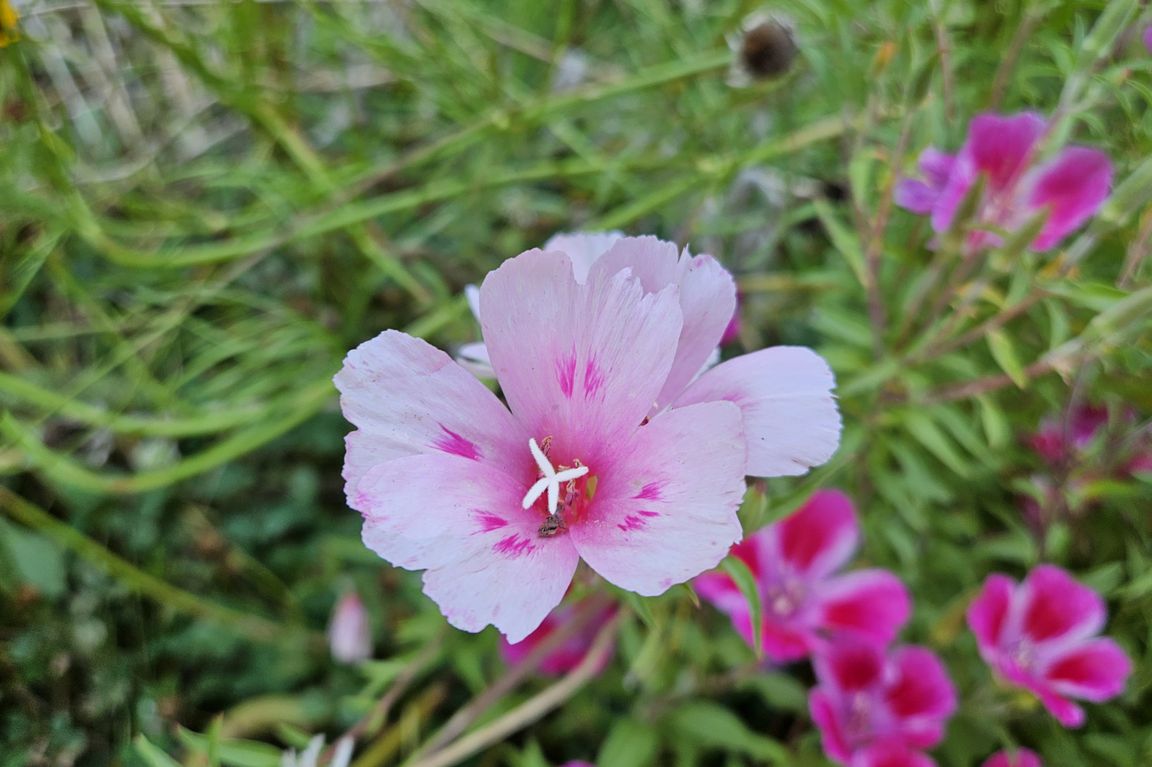
The UCLA Landscape Plan has a framework for more green outdoor spaces rich in climate-resilient plants with California origins. The landscape palette for the campus was informed by a list of plants and flowers provided by the Gabrielino-Tongva tribe, who are the traditional caretakers of the land where UCLA now resides. It incorporates their ecological knowledge and was a result of a formal agreement signed in 2022 that makes traditional ways of planting, harvesting and gathering part of campus landscaping and caretaking practices.
Facilities Management groundskeepers have already participated in a California Native Plant Landscaper Certification Program facilitated by the Theodore Payne Foundation. The training in the specialized maintenance of native plant life supports UCLA’s ongoing efforts to improve water conservation and mitigate the effects of statewide drought conditions on our campus.
The university has also committed to ecosystem preservation and bolstering biodiversity through the global Nature Positive Universities alliance.
“With pesticide manufacturers facing ongoing lawsuits for the human health impacts of their products, UCLA’s commitment to managing almost the entire campus landscape sustainably and without pesticides is significant, hopefully leading more colleges and universities in California and nationally to follow suit,” Sheina Crystal, co-director at Re:wild Your Campus, said.
“Additionally, Los Angeles is a global biodiversity hot spot, making it even more important to eliminate chemicals that can impact the over 4,000 distinct species of plants and animals that call the L.A. area home,” Crystal added.
Since its inception, Re:wild Your Campus has encouraged the University of California system to transform land care on its campuses. In 2019, the organization’s leadership helped get the harmful herbicide glyphosate suspended across all 10 UC campus grounds and contributed to the development of an Integrated Pest Management Policy for the University of California system.