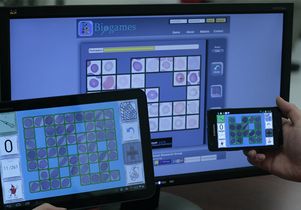
UCLA Engineering has joined with a Korean youth organization to establish the program, which will focus on addressing malaria and other global health challenges.
Children and adolescents who receive integrated mental health and medical treatment are 66 percent more likely to have a good outcome than those who receive more traditional primary care.
Regardless of where they are from, people judge acts like lying, theft and assault to be wrong — but less wrong if those acts happened far away or long ago.
The new ceramics hold promise for use in miniature mechanical components and flexible-yet-strong foils for use in solar sails, which are used to propel spacecraft, among many other applications.
UCLA researchers found that a subset of ovarian cancer cells that don’t produce the CA125 protein biomarker, used to test for ovarian cancer, have an enhanced ability to repair their DNA and resist programmed cell death.
New research highlights the value of a program at UCLA's Semel Institute that teaches social skills to high-functioning young adults with autism spectrum disorder.
Teens who have a positive role model, an adult mentor at school, and who volunteer or participate in extracurricular clubs are less likely to be overweight.
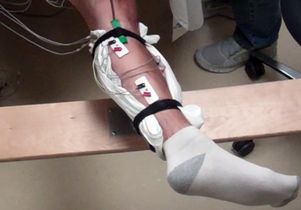
Five men who have been completely paralyzed for years moved their legs in a rhythmic motion, thanks to a noninvasive method of stimulating the spinal cord, UCLA scientists report.
The award from the California Institute for Regenerative Medicine will fund a phase I/II clinical trial that will enroll 10 patients with an immunodeficiency disorder at three different U.S. locations.
Kareiva will conduct research into urban conservation, improving environmental communications and exploring the role of consumer choices in pushing businesses to go green.
A UCLA-led study suggests that the Brain Trauma Foundation's guidelines for treating traumatic brain injuries do not guarantee better clinical outcomes for patients.
Researchers at the UCLA Institute of the Environment and Sustainability recommend that state officials adopt best practices for monitoring leaks and measuring water loss.
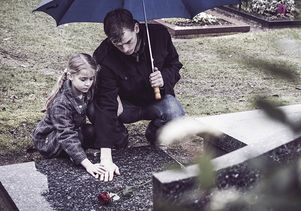
An assessment tool developed jointly by psychiatrists at UCLA and the University of Texas Health Science Center at Houston will be the first to help identify maladaptive grief in youth between 8 and 18.