The findings have implications for the conservation of rare and endangered species, in which low genetic diversity could increase the odds of extinction.
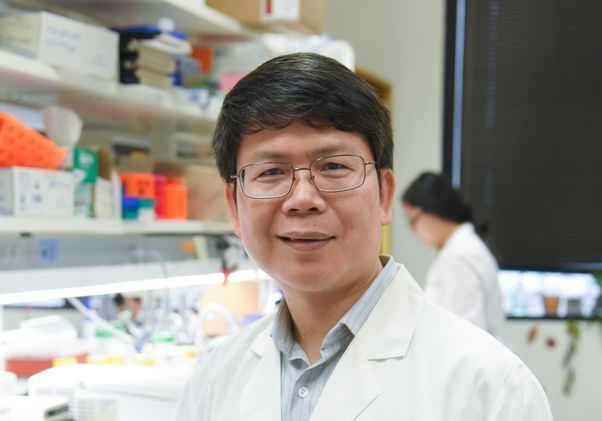
Dr. Zhijian (James) Chen of the UT Southwestern Medical Center in Dallas is the recipient. Chen has performed groundbreaking work on the mechanisms underlying the cellular response to infection.
The bequest by Sidney Roberts and Clara Szego Roberts reflects the couple’s backgrounds — both benefited from college scholarships — and their passion for science and the arts.
Ecologist Jeff Holmquist explains why there are so many painted lady butterflies in Southern California this year — and why he’s betting on this species despite climate change.
Shane Campbell-Staton says “superheroes give us the opportunity to discuss where the science meets the fiction, and how scientific innovation influences our lives.”
“This is a pervasive, global problem.... It’s in all types of landscapes — urban, rural and even untouched environments,” says Seth Riley, a co-author of the research.
The life scientists have provided the first cell “atlas” of the hippocampus — the part of the brain that helps regulate learning and memory — when it is affected by traumatic brain injury.
Researchers from the School of Dentistry and the David Geffen School of Medicine will use a technology created in the lab of Dr. David Wong from the dental school.
UCLA researchers have found that an often overlooked component of a cell, the extracellular matrix, can influence how much sugar the cell consumes and its migratory behavior.
“We expect several of these combinations, or more, will work much better than existing antibiotics,” said Pamela Yeh, one of the study’s two senior authors and a UCLA assistant professor of ecology and evolutionary biology.
The research provides the first direct evidence of the proteins moving through PTEX, the protein complex that transports malaria proteins into the red blood cell.
The study is the first to establish a link between susceptibility to seizures and the gut microbiota — the 100 trillion or so bacteria and other microbes that reside in the human body’s intestines.