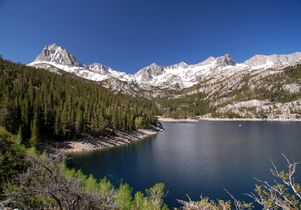
UCLA research shows that during future droughts human-induced climate change could all but eliminate California's snowpack, which supplies 60 percent of the state's water supply.
Now in its 20th year, the UCLA Law Fellows program, run by UCLA School of Law, demystifies law school for undergraduates from various colleges and universities, who aspire to law careers.
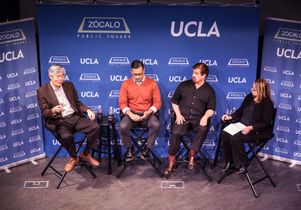
Alex Hall and Mark Gold say California’s infrastructure needs to be designed for how the state’s climate will be in the future, which likely means more rain and less snow.
Professor Alex Hall’s research shows that, as temperatures warm in the Sierra Nevada, a deluge could overwhelm California’s patchwork network of dams and reservoirs that currently supplies 60 percent of the state's water.
The report reveals that the natural cycle in commercial real estate appears to be running its course, somewhat independent of the results of the presidential contest.
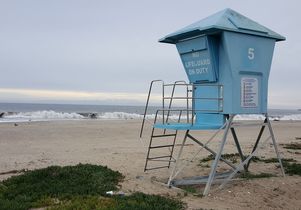
Sixty-two percent of California voters said access to coastal areas is a problem, and even more said that they were deterred by the cost of parking, overnight accommodations and transportation options.
You can be among the 1,000 volunteer citizen scientists who will collect 18,000 samples of soil and aquatic sediment from across the state through a new University of California program called CALeDNA.
A standing-room-only crowd gathered Wednesday, Jan. 18, in Little Tokyo in downtown Los Angeles to hear two UCLA scholars with expertise in immigration law and the historic underpinnings of the Japanese-American incarceration.
California State Senate will discuss barriers, such as difficult-to-navigate health system, inadequate insurance, and cultural misconceptions, as well as possible solutions Jan. 12.
Thanks to a multimillion-dollar grant from the U.S. Department of Transportation, faculty, staff researchers, and students affiliated with the UCLA Luskin Institute of Transportation Studies will be part of a new regional transportation center.
UCLA scientists are studying the Sierra Nevada's climate future using a technique to create simulations to predict outcomes under different circumstances and help them understand the physical reasons for the projected changes.
As life-changing as these new projects that voters approved on Nov. 8 might be, one of the region’s most critical infrastructure needs is still being largely ignored: water.
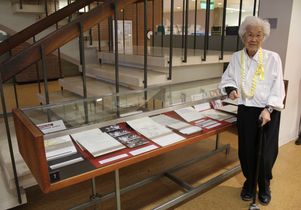
At the time of her three-year incarceration in internment camps, she didn't ask herself why this was happening. But in the ensuing years, she and her husband began a tireless quest for answers.
With support from UCLA, The Atlantic magazine will present the 2016 Race + Justice summit, bringing together civic leaders, artists, activists, academics and policy makers to share ideas and insights.
The acclaimed scholar of immigrant and low-wage workforce issues says he looks forward to studying the gig economy, young workers and immigrant workers.
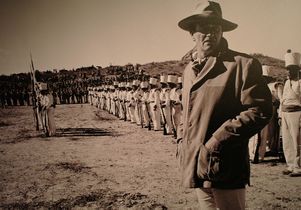
History professor Stephen Aron examines how more accurate and nuanced depictions of the time period are pushing out the idealized depictions of Wild West films and literature.
In industrial and multi-family housing, the optimism of the past few years continued, according to a survey by the UCLA Anderson Forecast and the Allen Matkins law firm.