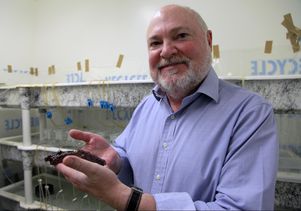
The research in marine snails could lead to new treatments to restore memories and alter traumatic ones in people with Alzheimer's disease and those dealing with post-traumatic stress disorder.
Researchers led by UCLA’s Dr. Paul Krebsbach are the first to characterize the mechanism of the gene, and they found it regulates the molecular process that dictates cell growth and human development.
The team used molecular engineering to develop vaccines that use a common delivery method, or “single vector,” to carry protective antigens to the immune system.
Their technique would enable an average biochemistry laboratory to make its own sequences for only about $2 per gene, far less than the $50 to $100 per gene commercial vendors charge.
UCLA research published in the journal Proceedings of the National Academy of Sciences is the first proof that a single material can be both static and moving.
Each is among 14 scientists nationally to be named by the Howard Hughes Medical Institute as HHMI professors. UCLA is tied for second in the number of 2017 recipients.
The protein, NOTCH1, was known to be a key player in the development of blood vessels in embryos, but researchers weren’t sure whether it was also critical to adults’ health.
Elaine Hsiao, assistant professor of integrative biology and physiology, and Hosea Nelson, UCLA assistant professor of chemistry and biochemistry, are among 18 winners.
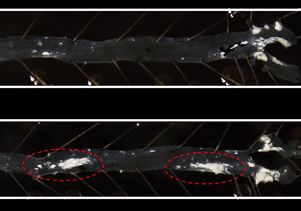
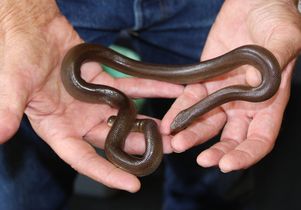
UCLA researchers’ study using zebrafish shows how the disease turns a repair mechanism into one that damages nerve cells. The findings could lead to treatments to prevent nerve damage in leprosy and other diseases.
The new consortium could not only help generate life-saving treatments, but also create significant economic activity from spin-off companies to licenses and collaborations with industry.
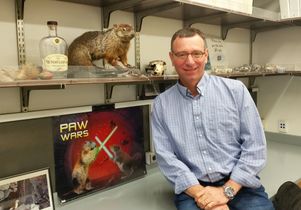
Daniel Blumstein, a professor in the UCLA Department of Ecology and Evolutionary Biology, is the recipient of the 2017 Gold Shield Faculty Prize, presented annually by Gold Shield, Alumnae of UCLA.