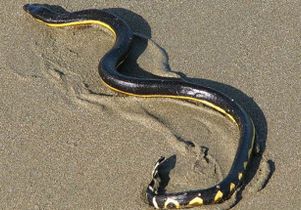
L.A.’s only species of newt is showing signs of severe distress, troubling researchers and raising questions about the impacts of the drought and climate change.
Lee Cooper writes about how UCLA’s Sustainable LA Grand Challenge will leverage the university’s students to make Los Angeles energy and water independent.
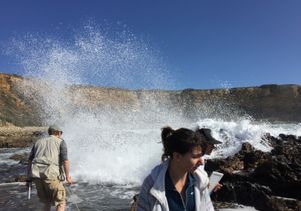
While many students head home or to resort locations during spring break, a group of UCLA students is monitoring the tides and rushing to the coastal bluffs of Palos Verdes to observe how El Niño is changing life in tide pools.
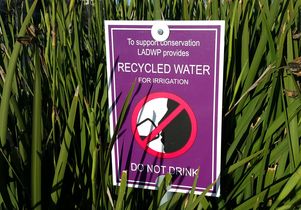
More than 1 in 9 people around the world do not have access to safe, clean drinking water, and the problem is expected to worsen due in part to climate change.
While the experts agreed on the need to reduce greenhouse gas emissions, they sharply divided on how to achieve that goal at a recent discussion sponsored by the UCLA Institute of the Environment and Sustainability.
Hecht is part of a group of 50 scholars and scientists addressing the UC Carbon Neutrality Initiative that pledges to make all 10 campuses carbon neutral by 2025.
Previous research showed that ice shelves are vulnerable to even small increases in greenhouse gases, but the new study was the first to demonstrate that huge, land-based glaciers are also vulnerable.
Brad Shaffer, director of the UCLA La Kretz Center for California Conservation Science, says the role of citizen scientists is important in helping scientists track changes in the environment due to climate.
The UCLA Sustainable LA Grand Challenge’s first competitive research grants will go to 11 projects, ranging from developing lightweight solar panels that double as batteries to studying the costs of algae-based biofuels.
In this Q&A, Jon Christensen of UCLA and his colleague Adam Wolf discuss their study of how climate change affects plant species’ shifting in California.
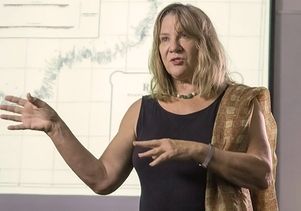
Robinson shared the story of her awakening to the global impact of climate change on the world's impoverished countries and communities at a lecture hosted by the UCLA Luskin School of Public Affairs Tuesday.
The paper was published by UCLA Law’s Emmett Institute on Climate Change and the Environment, the Sabin Center for Climate Change Law at Columbia Law School and the Institute for Policy Integrity at NYU School of Law.
The plan is a key step in UCLA’s Sustainable LA Grand Challenge, which aims to move the county to 100 percent renewable energy, 100 percent local water and enhanced ecosystem health by 2050.
Global climate models vary in how much they show rain and other precipitation changing due to climate change. UCLA researchers discovered a way to reduce these differences by 35 percent.
Professor Jon Christensen praises Gov. Jerry Brown for his deft ability to mix doomsaying predictions with pragmatic solutions as he strives to get Californians to mitigate the causes and effects of climate change.
All eyes are on Paris as the 2015 UN Climate Conference begins. California is well-represented, with many from the state participating, including five UCLA faculty and seven students.
From less electricity generated by coal to more whales in California, UCLA Institute of the Environment and Sustainability director Peter Kareiva offers things to be thankful for.
Eating local is good. All corporations are bad. Population growth is the problem. Peter Kareiva, director of the UCLA Institute of the Environment and Sustainability, implores people to question assertions like these.
Jon Christensen writes that to take these solutions from UC-wide to a global scale, we’ve got to start now using a combination of technology, outreach and policy.
UCLA environmental professors Magali Delmas and Susanna Hecht are among the climate experts, politicians and industry leaders gathering in San Diego today for a University of California climate change summit.