From Oct. 6 and running through Dec. 10, staff, faculty and students can join the challenge to reduce their carbon footprints and earn points for UCLA.
Cement manufacturing accounts for roughly 7 percent of the world’s carbon dioxide emissions, but scientists are determined to lessen its environmental impact.
A “Thinking L.A.” event, jointly sponsored by UCLA and Zocálo at the RAND Corporation Tuesday evening, explored the roots of the fervor surrounding fracking in California.
The Hammer and the UCLA Institute of the Environment and Sustainability present “The Next Wave: Quality, Quantity and Accessibility of Water in the 21st Century."
The models predict that the area burned by Santa Ana fires will increase by 64 percent and the are burned by non-Santa Ana fires will increase by 77 percent.
At a "Thinking L.A." event co-hosted by UCLA and Zócalo, four panelists discussed the importance and difficulty of implementing desalination plants, water-recycling facilities and other tools to help California make better use of its water resources.
The UCLA Center for World Health and the LA5 Rotary Club brought together a panel of experts to talk about the failing health of the Earth and what mega-cities can do about it before an audience of 200 business peoplein downtown Los Angeles.
Researchers from UCLA and the Jet Propulsion Laboratory found that extra heat from greenhouse gases has been trapped in the subsurface waters of the Pacific and Indian oceans.
Glen MacDonald writes that rising temperatures, groundwater depletion and a shrinking Colorado River mean the most populous U.S. state will face decades of water shortages and must adapt.
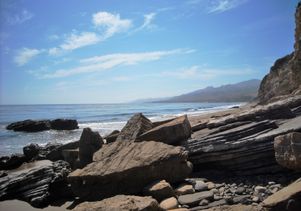
A new report from UCLA School of Law’s Emmett Institute on Climate Change and the Environment provides recommendations on how to harness AB 2516 to enhance coastal climate change preparedness in California.
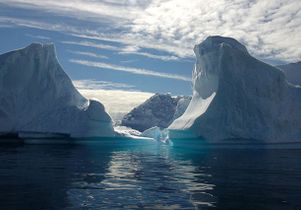
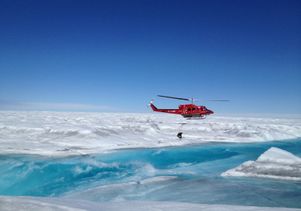
Just a few weeks ago, third-year M.F.A. student Emma Kragen was concentrating on advancing her thesis project at the UCLA School of Theater, Film and Television. Now the emerging cinematographer is assembling waterproof snow gear.
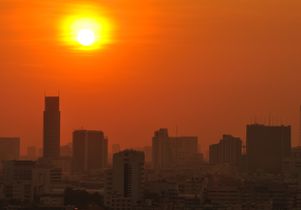
The number of cities across the globe that experience heat waves has increased since the 1970s — as has the frequency of those heat waves — as the heat island effect amplifies global warming.
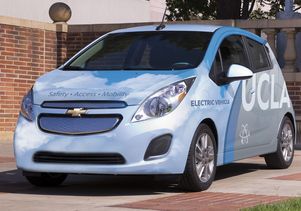
UCLA Transportation’s focus on alternative transportation and success in reducing traffic and emissions at UCLA won an award from the California Environmental Protection Agency
The scientists resolved a dispute over whether a small population of black-headed squirrel monkeys, which are found only in an isolated part of Brazil, is a sub-species of another species or its own species.
Climate model simulations of the 21st century show little change in total precipitation, but more rain instead of snow, posing flooding risk and shortening chance to capture water.