Black truffles are highly prized in haute cuisine. A study by an international team of scientists sheds new light on their unique pattern of DNA methylation, a biochemical process.
The findings open the door to future research on how to control the regeneration of heart tissue in order to repair damage caused by disease or heart attack.
The funding from the California Institute of Regenerative Medicine will support Dr. John Chute's research aimed at creating new stem cell therapies for use in medical practice.
In clinical trials at UCLA, doctors are seeing major treatment successes with an experimental drug called MK-3475 in two types of cancer with historically low survival rates: metastatic melanoma and lung cancer.
The public is invited to join world-renowned culinary visionaries at UCLA's popular "Scientific Bake-off," part of life scientist Amy Rowat's "Science and Food" course.
UCLA researchers have discovered that the parasite that causes trichomoniasis, a common sexual infection, may enhance prostate cells' progression from normal cells to tumor cells.
Those patients with additional major medical conditions are more likely to die from something other than cancer, so radiation or surgery represent "a poor gamble," UCLA researchers say.
"It's like your car's airbag, which won’t be deployed unless you really need it," UCLA's Alexander Hoffman said of the specialized immune cells, which use a built-in feedback system to determine which threats are real and which aren't.
Amy Rowat, an assistant professor in UCLA's Department of Integrative Biology and Physiology, believes food can be a powerful way to communicate science to a broad audience.
Identifying enzyme catalysts that improve the speed and efficiency of the drug-production process can be a major boon. Figuring out exactly why a particular enzyme works so well, UCLA researchers say, is an altogether different quest.
Phony laughter, unlike the real thing, is unique to humans, says Greg Bryant, who is studying the acoustic properties that differentiate the two types of cachinnation.
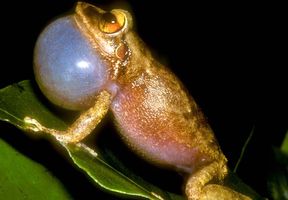
UCLA scientists found that not only have male coquis become smaller, but their mating call has also become shorter and higher pitched; the researchers attribute the change to Puerto Rico's warmer temperatures.
UCLA life scientist Amy Rowat's tasty springtime demonstrations seek to advance the public's understanding of science through food, and food through science.
By growing larger, rangeomorphs, fern-like organisms that existed on the sea floor some 580 million years ago, were able to access nutrient-carrying ocean flows.
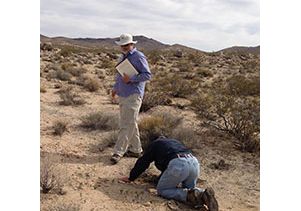
In the debate about which plant and animal species endangered by climate change should be rescued and which are expendable, a small band of UCLA botanists is fervently championing a desert plant most of us have never seen or heard of.
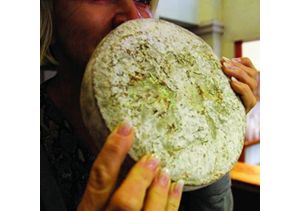
There’s something smelly about researcher Christina Agapakis’ recent work — which is just as she intended.Emitting odors that range from fragrant to fetid are nearly a dozen one-of-a-kind, designer cheeses that Agapakis, a...
Telling a crop-fertilizing strain from its potential bioterrorist-agent cousin is tricky, said researchers whose bioinformatics analysis shed light on the Burkholderia bacteria genus.
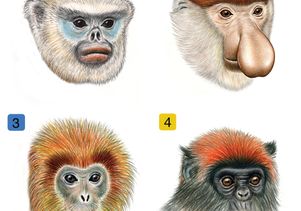
For Old World primates, the variety and complexity of their facial colors and patterns play a major role in helping them identify members of their own species and communicate with one another.
UCLA researchers test blood and saliva samples, compare bite marks and use claw swabs and traces of fur to track the family tree and the animals’ behavior.