UCLA Anderson’s Elisa Long, informed by personal experience, parses data to help those mulling mastectomy and gynecological surgeries to reduce cancer risk.
Three fact sheets recommend that legislators enact changes to help patients and survivors — particularly low-income women — who face serious obstacles to care.
Every year as Californians file their state income taxes, they have an opportunity to help University of California researchers and others in the fight against cancer.
California State Senate will discuss barriers, such as difficult-to-navigate health system, inadequate insurance, and cultural misconceptions, as well as possible solutions Jan. 12.
Though the test reduces the number of women undergoing radiation, researchers say doctors and policy makers should further discuss the value of using Oncotype DX DCIS.
An earlier study had suggested that a class of drugs called anthracyclines might increase the risk for neuropsychological issues and cognitive difficulties.
Other diagnostic tools may be more efficient and cost-effective for the general population, although genetic screening remains valuable for women in groups known to carry certain genetic mutations.
Elisa Long, an expert in probability and statistics at the UCLA Anderson School of Management, wrote a column that appeared in the Washington Post about how statistics helped guide her through life, death and 'The Price is Right.'
Newer, more targeted method, called partial breast irradiation, takes less time to complete and is less likely to expose vital organs to potentially harmful radiation.
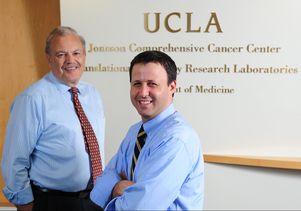
Revlon CEO Lorenzo Delpani, chairman Ronald O. Perelman and global brand ambassador Halle Berry announced the gift at an event honoring Slamon, a member of the UCLA Jonsson Comprehensive Cancer Center.
The researchers say that women with a high risk for breast cancer recurrence benefit by having chemotherapy as part of their treatment, but for those at low risk, chemo has no added value.
Wealthier women living in communities with larger income gaps are most likely to get a test that can help determine the best way to treat early-stage breast cancer.
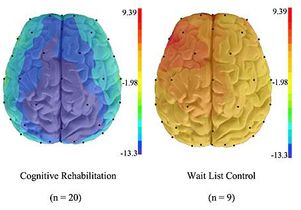
A series of mental training exercises has been shown to help mitigate the effects of “chemo brain,” which affects up to 35 percent of women after their treatments for breast cancer.
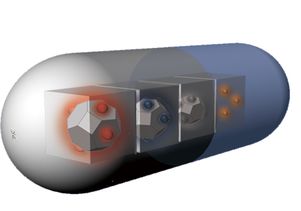
UCLA bioengineers have developed a revolutionary approach that brings together traditional drugs and nanotechnology-enhanced medications to create safer and more effective treatments.
Research at UCLA played key role in developing the treatment, which could signal a new strategy for arresting tumor growth and extending the time before cancer worsens.
UCLA study shows that combining palbociclib with letrozole effectively doubled the length of time women with estrogen receptor-positive breast cancer were on treatment without their cancer worsening.