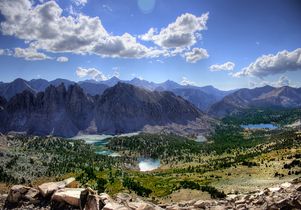
Dust from as far away as Saudi Arabia is carried by winds to the Himalayan snowpack, where it accelerates glacial warming and snowmelt, scientists say.
Guidance from legal researchers could strengthen California climate policy by helping policymakers further reduce carbon pollution from transport fuels.
The researchers' healthy solution is to move the transit sites 120 feet away from intersections, where high concentrations of noxious exhaust are emitted.
New state and local policies promoting energy use transparency, public transit funding and sustainable development make researchers are optimistic for improvement.
Mary Nichols, chair of the California Air Resources Board and a UCLA faculty member, is a fierce fighter for the environment. She has championed a difficult cause without succumbing to bitterness or wallowing in the polarization that has crippled Sacramento and Washington.
The new building material called CO2NCRETE would be made from carbon captured from power plant smokestacks potentially eliminating a huge source of greenhouse gas emissions.
A “Thinking L.A.” event, jointly sponsored by UCLA and Zocálo at the RAND Corporation Tuesday evening, explored the roots of the fervor surrounding fracking in California.
A national leader in identifying dangerous chemical exposures and then applying the findings toward regulations to protect health, John Froines has spent his career pursuing both.