A “Thinking L.A.” event, jointly sponsored by UCLA and Zocálo at the RAND Corporation Tuesday evening, explored the roots of the fervor surrounding fracking in California.
The models predict that the area burned by Santa Ana fires will increase by 64 percent and the are burned by non-Santa Ana fires will increase by 77 percent.
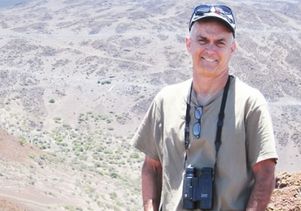
Brad Shaffer, UCLA Distinguished Professor of Ecology and Evolutionary Biology, is the 2015 recipient of the Meritorious Teaching Award in Herpetology.
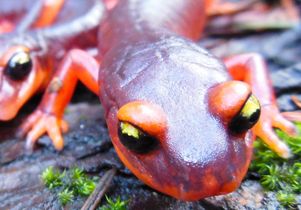
Researchers from the UCLA Institute of the Environment and Sustainability call for a federal ban on salamander imports to prevent a deadly pathogen from coming here.
Mark Gold writes in the L.A. Times that to meet the mayor’s goal of reducing imported water by 50 percent by 2025, we must all pay more to upgrade infrastructure and invest in new projects.
The UCLA Center for World Health and the LA5 Rotary Club brought together a panel of experts to talk about the failing health of the Earth and what mega-cities can do about it before an audience of 200 business peoplein downtown Los Angeles.
Kareiva will conduct research into urban conservation, improving environmental communications and exploring the role of consumer choices in pushing businesses to go green.
Researchers at the UCLA Institute of the Environment and Sustainability recommend that state officials adopt best practices for monitoring leaks and measuring water loss.
Join experts for a panel discussion of the impact of plastic pollution, one of the most significant environmental problems facing our oceans, at 7:30 p.m. on Tuesday, July 14 at the UCLA Hammer Museum’s Billy Wilder Theater.
UCLA Residential Life’s Sustainable Living Community and the Education for Sustainable Living Program at UCLA have won awards given to honor innovation at UC and CSU campuses.
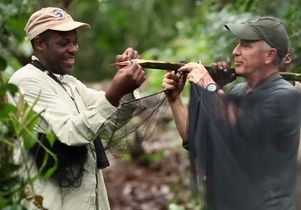
The Congo Basin Institute in Cameroon will provide a one-of-a-kind center to address the challenges of food and water security, climate change, biodiversity loss, public health and emerging diseases.
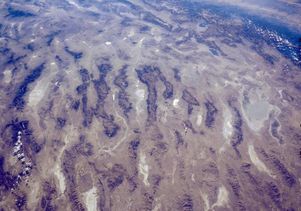
Glen MacDonald writes that rising temperatures, groundwater depletion and a shrinking Colorado River mean the most populous U.S. state will face decades of water shortages and must adapt.
Jon Christensen writes that artist Michael Heizer’s monumental sculpture called “City” best embodies the Western ethos of humanity’s role shaping and adapting to the vast open expanse.
UCLA faculty, staff and students, with guidance from a Santa Monica architect, are building a prototype dwelling that they designed to shelter people as well as edible plants, bees, birds, lizards and even bats.
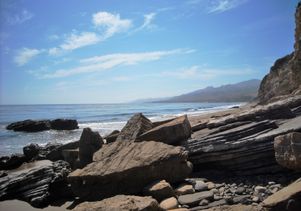
A new report from UCLA School of Law’s Emmett Institute on Climate Change and the Environment provides recommendations on how to harness AB 2516 to enhance coastal climate change preparedness in California.
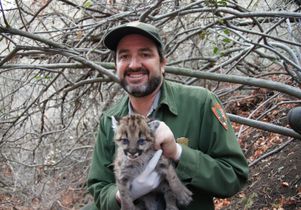
When the Griffith Park mountain lion crawls under someone’s house, or a brother and sister cross a freeway, Seth Riley is at the top of the list of scientists who can give the inside details.
Despite progress, dirty air and water are just the beginning of the region's environmental troubles. The findings, which are believed to be the most comprehensive environmental report card for any region in the nation, show the county needs tutoring to bring up its grades.
UCLA researchers looked at 22 indicators to determine grades in six main categories — water, air, ecosystem health, waste, environmental quality of life, and energy and greenhouse gases.