The professor emeritus won the 1997 Nobel Prize in chemistry for his pioneering research on the formation of adenosine triphosphate, or ATP — the cellular energy that drives all biological reactions.
“The center will provide CNSI with the cutting-edge technology to help us maintain our leadership in biophotonics research,” said UCLA’s Laurent Bentolila.
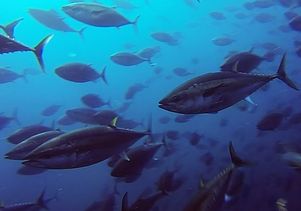
“Today’s rich biodiversity among marine fish shows the fingerprints of the mass extinction at the end of the Cretaceous period,” said Michael Alfaro, a professor of ecology and evolutionary biology.
Working to upend one of the most stalwart of construction materials, a team of UCLA researchers created a near carbon dioxide-neutral version of concrete.
The research, which enabled viewing of an enormous blue star nicknamed Icarus, increases understanding of the fundamental composition of the universe, said UCLA’s Tommaso Treu, co-author of the study.
In experiments the device produced 30 percent better capacitance — the measure of a device’s ability to store an electric charge — for its mass compared to the best available electrode made from similar materials.
UCLA is tied for third in the number of people honored this year by the Alfred P. Sloan Foundation, which selects early-career scientists who are rising stars of science.
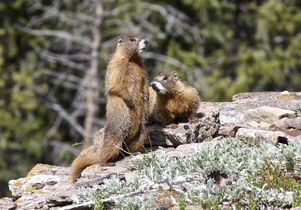
Yellow-bellied marmots live much longer, on average, if they are less social and more isolated than if they are more social and less isolated, a UCLA-led study has found.