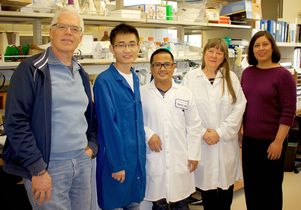
The study, by researchers at the California NanoSystems Institute, could be an important step in the effort to satisfy the world’s need for clean water.
The particles are used in a wide range of consumer products for their ability to kill bacteria. But that benefit might be coming at a cost to the environment.
A “Thinking L.A.” event, jointly sponsored by UCLA and Zocálo at the RAND Corporation Tuesday evening, explored the roots of the fervor surrounding fracking in California.
The Hammer and the UCLA Institute of the Environment and Sustainability present “The Next Wave: Quality, Quantity and Accessibility of Water in the 21st Century."
UCLA Anderson lecturer Paul Habibi says creating an enhanced infrastructure financing district can promote development that spurs economic growth, protects the environment and ensures affordable housing.
Mark Gold writes in the L.A. Times that to meet the mayor’s goal of reducing imported water by 50 percent by 2025, we must all pay more to upgrade infrastructure and invest in new projects.
Researchers at the UCLA Institute of the Environment and Sustainability recommend that state officials adopt best practices for monitoring leaks and measuring water loss.
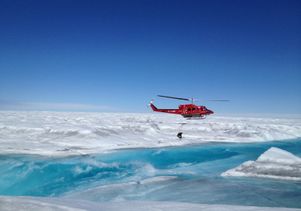
Researchers from UCLA and the Jet Propulsion Laboratory found that extra heat from greenhouse gases has been trapped in the subsurface waters of the Pacific and Indian oceans.
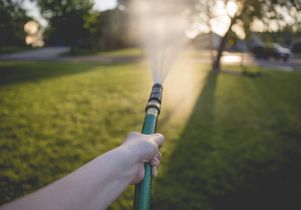
Switching the IM Field to artificial turf saved UCLA nearly $700,000 through the DWP’s commercial rebate program, similar to the rebate program for homeowners who replace their lawns.
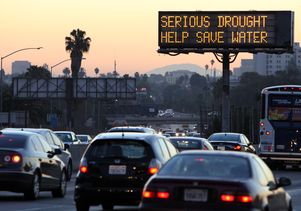
Glen MacDonald writes that rising temperatures, groundwater depletion and a shrinking Colorado River mean the most populous U.S. state will face decades of water shortages and must adapt.
The new artificial turf on the intramural field and other places combined with drought-tolerant landscaping from five large projects, could save 11.3 million gallons annually.
Despite progress, dirty air and water are just the beginning of the region's environmental troubles. The findings, which are believed to be the most comprehensive environmental report card for any region in the nation, show the county needs tutoring to bring up its grades.
UCLA researchers looked at 22 indicators to determine grades in six main categories — water, air, ecosystem health, waste, environmental quality of life, and energy and greenhouse gases.
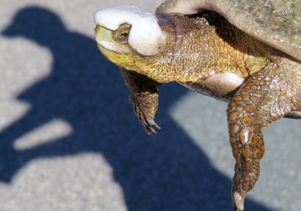
Biologists with the UCLA La Kretz Center for California Conservation Science recently went on a rescue mission to save endangered turtles that have become dehydrated, emaciated and stressed-out by the extended drought.
Using UCLA environmental research, the Los Angeles City Council passed a motion to develop a program to improve energy and water conservation efforts in city buildings that consume the most resources.
Six proposals led primarily by UCLA units are vying with 261 others for grant funding by the Goldhirsh Foundation, which is hoping to jump-start projects that will make L.A. the best place to play, to connect, to live, create and learn by 2050.
Two UCLA engineering professors say that it's crucial for engineers to understand the hazards that threaten our levees to ensure that California's fresh water delivery system remains protected in the future.
Efforts to hit Gov. Brown’s water reduction target could have unintended, and potentially harmful, consequences for the health of Californians and their communities.
Water researchers from UCLA, the Natural History Museum and elsewhere are helping the region understand issues, history and possible solutions related to the drought. A discussion series featuring panels of experts begins July 10.
Among the group's other recommendations: household water meters that measure indoor and outdoor water use separately, and stronger incentives for drought-resistant landscaping.
Professor Yoram Cohen suggests that water reclamation, water recycling and reuse could become very important for health and conservation in the future.