The international team has found the first evidence of a source of high-energy cosmic neutrinos — ghostly subatomic particles that can travel unhindered for billions of light-years to Earth.
The Synthetic Control Across Length-scales for Advancing Rechargeables center will help accelerate research on new types of chemistry and materials that can help improve batteries’ capacity, stability and safety.
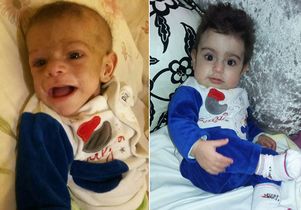
Hussein El Kerdi looked like a healthy baby boy, but his immune cells lacked an important enzyme. His family traveled from Lebanon to UCLA seeking a cure.
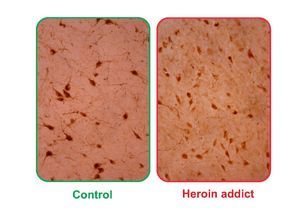
Two discoveries — one in the brains of people with heroin addiction and the other in the brains of sleepy mice — shed light on chemical messengers that regulate sleep and addiction, UCLA researchers say.
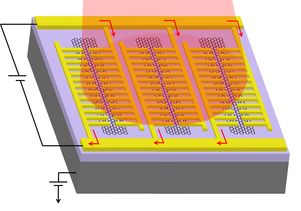
The device, designed by UCLA Engineering researchers, operates across a broad range of light, processes images more quickly and is more sensitive to low levels of light than current models.
Rachelle Crosbie-Watson is researching new drugs that one day may halt the progression of the deadly childhood muscle-wasting disease, Duchenne muscular dystrophy.
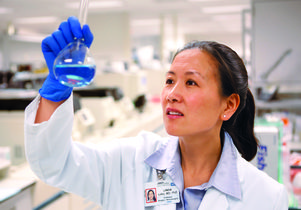
The availability of such cells — with properties similar to those from humans and other animals — should help scientists accelerate research on therapies for cancer and autoimmune diseases.
Hosea Nelson and Jose Rodriguez have been selected among 22 early career researchers for the awards which provides funding for work advancing human health.
An emotion called ‘kama muta’ is typically accompanied by moist eyes or tears, chills or goosebumps, a warm feeling in the body, a feeling of exhilaration and a motivation to help others.
The findings help explain the connection between HDL cholesterol and reduced cancer risk, and suggest that a similar compound may be an effective therapy in humans.
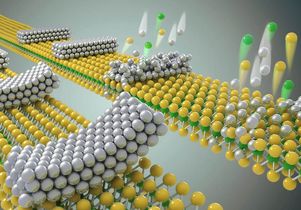
Their method joins a semiconductor layer and a metal electrode layer without the atomic-level defects that typically occur as part of the process commonly used now.
Nearly 30 percent of people in the ongoing trial have survived for at least three years after they enrolled in the study; the average life expectancy for people with glioblastoma is 15 to 17 months.
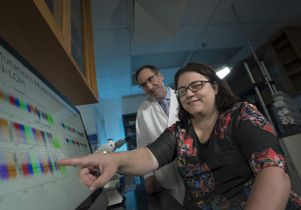
Understanding colon cancer's ability to change its genes — a process called immunoediting — could help researchers develop new immunotherapies that target those genetic changes, leading to more effective treatments.
The study is the first to establish a link between susceptibility to seizures and the gut microbiota — the 100 trillion or so bacteria and other microbes that reside in the human body’s intestines.
African-American and low-income kids are the most at risk for health problems as the biggest consumers of sweetened beverages, a study by the UCLA Center for Health Policy Research has found.