New research shows that a collapse of an ice sheet 14,000 years ago in what is now western Canada triggered a reorganization of the jet stream in a century — a geological blink of an eye.
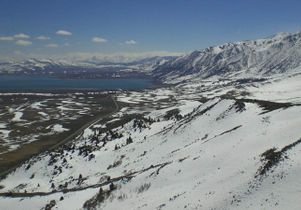
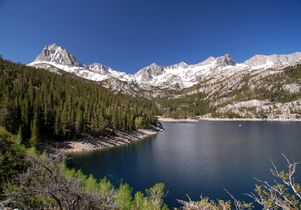
UCLA scientists are studying the Sierra Nevada's climate future using a technique to create simulations to predict outcomes under different circumstances and help them understand the physical reasons for the projected changes.
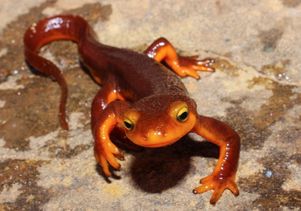
L.A.’s only species of newt is showing signs of severe distress, troubling researchers and raising questions about the impacts of the drought and climate change.
Robinson shared the story of her awakening to the global impact of climate change on the world's impoverished countries and communities at a lecture hosted by the UCLA Luskin School of Public Affairs Tuesday.
Global climate models vary in how much they show rain and other precipitation changing due to climate change. UCLA researchers discovered a way to reduce these differences by 35 percent.
All eyes are on Paris as the 2015 UN Climate Conference begins. California is well-represented, with many from the state participating, including five UCLA faculty and seven students.
UCLA environmental professors Magali Delmas and Susanna Hecht are among the climate experts, politicians and industry leaders gathering in San Diego today for a University of California climate change summit.
The Hammer and the UCLA Institute of the Environment and Sustainability present “The Next Wave: Quality, Quantity and Accessibility of Water in the 21st Century."
At a "Thinking L.A." event co-hosted by UCLA and Zócalo, four panelists discussed the importance and difficulty of implementing desalination plants, water-recycling facilities and other tools to help California make better use of its water resources.
Researchers from UCLA and the Jet Propulsion Laboratory found that extra heat from greenhouse gases has been trapped in the subsurface waters of the Pacific and Indian oceans.
Despite progress, dirty air and water are just the beginning of the region's environmental troubles. The findings, which are believed to be the most comprehensive environmental report card for any region in the nation, show the county needs tutoring to bring up its grades.
UCLA researchers looked at 22 indicators to determine grades in six main categories — water, air, ecosystem health, waste, environmental quality of life, and energy and greenhouse gases.
Expanding customer access to energy data can bring cleaner, more efficient power to Californians, save money and boost emerging clean technologies, according to a new report by the Climate Change and Business Research Initiative, a partnership between UCLA and UC Berkeley schools of law.
Climate model simulations of the 21st century show little change in total precipitation, but more rain instead of snow, posing flooding risk and shortening chance to capture water.
UCLA atmospheric scientists were instrumental in the creation of the Santa Ana Wildfire Threat Index, which will help classify the fire threat potential of the Santa Ana winds.
Six proposals led primarily by UCLA units are vying with 261 others for grant funding by the Goldhirsh Foundation, which is hoping to jump-start projects that will make L.A. the best place to play, to connect, to live, create and learn by 2050.
Alex Hall, a professor in UCLA’s Department of Atmospheric and Oceanic Sciences and Institute of Environment and Sustainability, appears in “Years of Living Dangerously,” airing June 2 on Showtime, and explains how climate change will impact our lives.