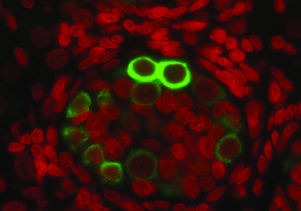
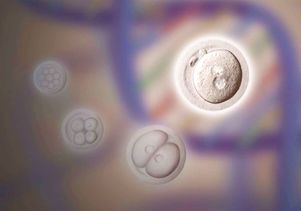
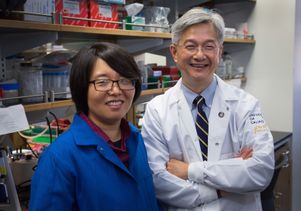
Research by scientists at the Broad Stem Cell Research Center shows that the cells carrying parents’ genes to a child are unprotected during part of the prenatal stage of development.
Several new studies, one co-authored by a UCLA professor, show that transcription is in fact the most influential step in determining protein abundance.
Life scientists have created an accurate new method to identify markers for many diseases — a significant step toward a new era of personalized medicine, tailored to each person’s DNA and RNA.
Scientists found that removing a specific molecular switch from a mutant protein can trigger symptoms in mice that are similar to those found in people with the disease.
People with a deficiency of the iron-regulating hormone hepcidin are especially vulnerable to Vibrio vulnificus, but research shows a medical form of the hormone can cure the infection.
The scientists resolved a dispute over whether a small population of black-headed squirrel monkeys, which are found only in an isolated part of Brazil, is a sub-species of another species or its own species.
Scientists from UCLA, Harvard, Mass General and Stanford present strong evidence that a chemical modification on RNA plays a key role in determining embryonic stem cells’ ability to adopt different cellular identities.
When adult mice with Noonan syndrome were treated with lovastatin, their memory and ability to remember objects and navigate mazes improved dramatically.
The disease may be more harmful than previously thought, say UCLA researchers, who found genetic damage is present not only in the lungs but also in circulating blood.
UCLA research may lead to a simple saliva test to diagnose at an early stage diabetes and cancer, and perhaps neurological disorders and autoimmune diseases.
A landmark UCLA study makes a persuasive argument for the routine clinical use of DNA sequencing as a tool for diagnosing children with rare genetic disorders.
The $2.3 million National Institutes of Health awards go to scientists from the Eli and Edythe Broad Center of Regenerative Medicine and Stem Cell Research at UCLA for work in stem cells and neuroscience in medicine.
Research by UCLA biochemists may lead to a new treatment — or even a cure — for a rare kidney disease that afflicts children, and may provide insights into treatments for Parkinson’s, Alzheimer’s and other degenerative diseases.
Researchers identified a gene called AMPK that can slow the aging process throughout the entire body when switched on in key organ systems. Activating the gene in fruit flies extended the animals’ lifespans by about 30 percent.
UCLA-led study brings scientists closer to developing therapeutic agents that could slow down bone loss and regenerate lost bone, which could provide relief for millions suffering from aging-related bone loss.
Black truffles are highly prized in haute cuisine. A study by an international team of scientists sheds new light on their unique pattern of DNA methylation, a biochemical process.