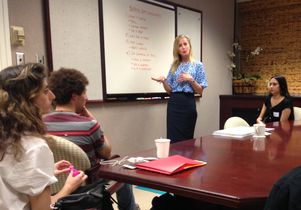
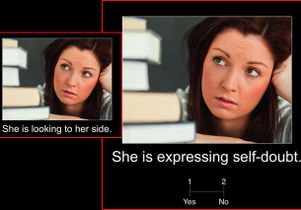
New research highlights the value of a program at UCLA's Semel Institute that teaches social skills to high-functioning young adults with autism spectrum disorder.
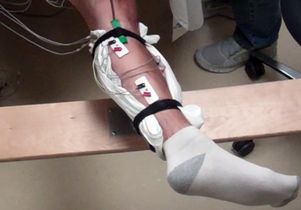
Five men who have been completely paralyzed for years moved their legs in a rhythmic motion, thanks to a noninvasive method of stimulating the spinal cord, UCLA scientists report.
A UCLA-led study suggests that the Brain Trauma Foundation's guidelines for treating traumatic brain injuries do not guarantee better clinical outcomes for patients.
Why do some youngsters bounce back quickly, while others suffer devastating side effects for years? Damage to the fatty sheaths around the brain’s nerve fibers may explain the difference.
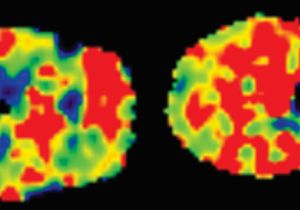
Tens of millions of Americans will suffer at some point in their lifetime from obsessive-compulsive disorder. Functional MRI might help doctors predict who responds best to one of the most common treatments.
The three-year project aims to fill critical gaps in knowledge about concussion and translate research findings into new safety guidelines for the more than 450,000 U.S. collegiate student-athletes.
“The results were about as good as you could hope for,” said Lara Ray, a UCLA associate professor of psychology and director of the UCLA Addictions Laboratory.
Four UCLA brain researchers have been selected for two of six awards recently announced by the Paul G. Allen Family Foundation to support work at the frontier of one of the most challenging roadblocks in neuroscience: growing mature human brain cells in the laboratory.
Psychiatrist Peter Whybrow explores the epidemic of debt in modern America and how consumerist culture has warped Americans’ brains into reckless spending.
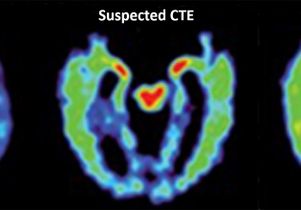
The research is another step toward the early diagnosis of CTE, a degenerative brain condition that affects athletes in contact sports who are exposed to repetitive brain injuries.
UCLA researchers showed that shock treatment changes certain areas of the brain that play a role in how people feel, learn and respond to environmental factors.
Triathlete Greg Parks and actor Larry Miller recently appeared at the Reagan UCLA Medical Center to share the experience of recovering from a major brain injury.
The finding marks the final step in an international consortium’s successful effort to develop a unified and reliable approach to assessing signs of Alzheimer’s-related neurodegeneration through structural imaging tests.
The center, to be led by Michael Fanselow, will focus on brain health and developing novel methods to get the unhealthy brain back to the healthy state.
People with both disorders had abnormal activity in the visual cortex of the brain during the very first instants when the brain processes “global” information, as opposed to a tiny detail.
Scientists found that removing a specific molecular switch from a mutant protein can trigger symptoms in mice that are similar to those found in people with the disease.