The studies found a link between risk-related terms that Google and Twitter users researched or tweeted about and subsequent syphilis trends that were reported to the CDC.
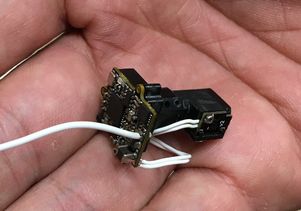
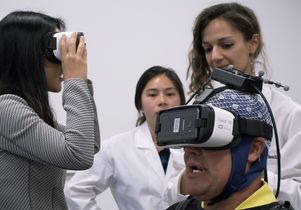
The advance could help bring high-quality medical diagnostics into resource-poor regions, where people otherwise do not have access to high-end technology.
Working to upend one of the most stalwart of construction materials, a team of UCLA researchers created a near carbon dioxide-neutral version of concrete.
UCLA professor of musicology David MacFadyen is a champion of blockchain and how it could influence the future study and scholarship in arts and literature.
Hong shares what it was like to run a leg in the torch relay for the 2018 Winter Olympics in Pyeongchang, South Korea, and the future of robot athletics.
UCLA’s Jane Margolis and Julie Flapan use research to help policymakers devise equitable and effective strategies to scale up diversity in computer science.
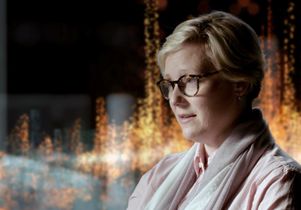
Q&A with UCLA’s Sarah T. Roberts about seeing the subject of her work — the study of people who keep the internet “clean” — on screen in “The Cleaners.”
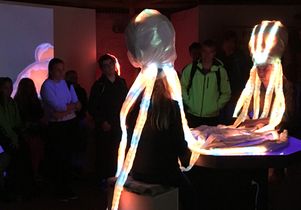
A UCLA digital artist and neuroscientist collaborated to create a performance art installation in which participants explore unspoken, visual communication.
Ivo Welch notes that the energy consumption to fuel the digital currency is equivalent to the consumption of just fewer than 2 million average U.S. households.
The research may lead to new drugs that could promote hair growth for people with baldness or alopecia, which is hair loss linked to such factors such as hormonal imbalance, stress, aging or chemotherapy.
“The dream is to have an array of hundreds or thousands of qubits all working together to solve a difficult problem,” said graduate student Joshua Schoenfield. “This work is an important step toward realizing that dream.”
Math often gets a bad rap as an uncreative left brain-oriented activity, but Andrea Bertozzi recalls that, as a child, she was fascinated by math's creative potential.
Q&A with UCLA professor Sarah Roberts, who has pioneered the study of the toll screening objectionable online content takes on the people who have to do it.