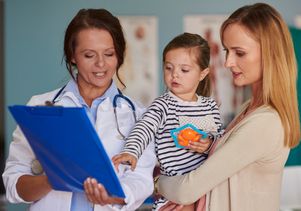
Researchers at the UCLA Center for Health Policy Research have received a $400,000 grant to find out why individuals who receive both Medi-Cal and Medicare benefits are rejecting the new state-managed health care pilot program.
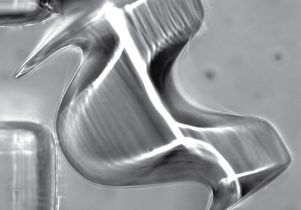
The study, by researchers at the California NanoSystems Institute, could be an important step in the effort to satisfy the world’s need for clean water.
Ten UCLA students completed the UCLA Labor Center’s “I Am a #YoungWorker” multimedia research project documenting the experiences of young people working in Los Angeles County.
Therapy targets not cancer cells but macrophages, a special type of immune cell, in order to prevent them from helping the cancer take root in the abdomen.
UC Global Food Initiative researchers recently published a report highlighting ways UC research, including a study at UCLA, has been used to inform or affect policies in food and agriculture.
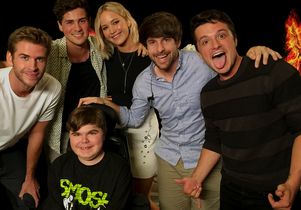
Dylan Miceli-Nelson, 14, and his “co-stars” Jennifer Lawrence, Liam Hemsworth and Josh Hutcherson headline a video for an online humor site to help raise awareness and money to fight the deadly disease.
UCLA professor Teresa McCarty has done extensive work with Native-American communities on language education policy and youth language and literacy learning.
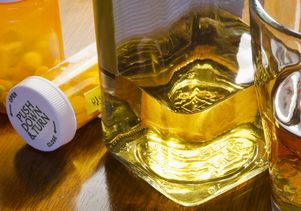
Recovery has at least as much to do with rewarding oneself as it does with depriving oneself, according to a new book by a UCLA expert in addiction treatment.
The therapy shows great promise for extending the lives of people with an advanced form of the disease, and it does so without causing a secondary skin cancer, a side effect seen in some patients who took only one of the drugs.
Archaeologist Matthew Curtis was part of a team that recently discovered a skeleton that yielded the first complete ancient genome ever found in Africa.
For the last 18 years, UCLA’s Lisa Snyder has been bringing to life the bygone glory of a true architectural, social and cultural wonder — the Chicago World’s Fair.
Dr. Thomas Klitzner, a UCLA professor of pediatric cardiology, said the findings could help identify high-risk patients so doctors can provide a higher level of support.
UCLA research reveals the three-dimensional atomic structure of a double-stranded RNA virus and the biological nano-switch that turns on transcription.
For the first time, researchers have described the cost throughout the entire treatment process — from the initial doctor’s visit to follow-up appointments.
UCLA’s Seulgi Moon and her colleagues devised a mathematical model that estimates the amount of stress bedrock is under, which will enable scientists to predict where fractures may occur.