In March 2020, the COVID-19 pandemic forced Broadway to dim its lights. But it couldn’t stop the music.
While some of the Great White Way’s most shining stars couldn’t appear in person to celebrate the 90th birthday of prolific legendary composer and lyricist Stephen Sondheim, artists including Lin-Manuel Miranda, Patti LuPone, Bernadette Peters (who performed “No One Is Alone” from “Into the Woods”), Sutton Foster, Aaron Tveit, Raúl Esparza, Audra McDonald and Mandy Patinkin honored him virtually with their voices and words.
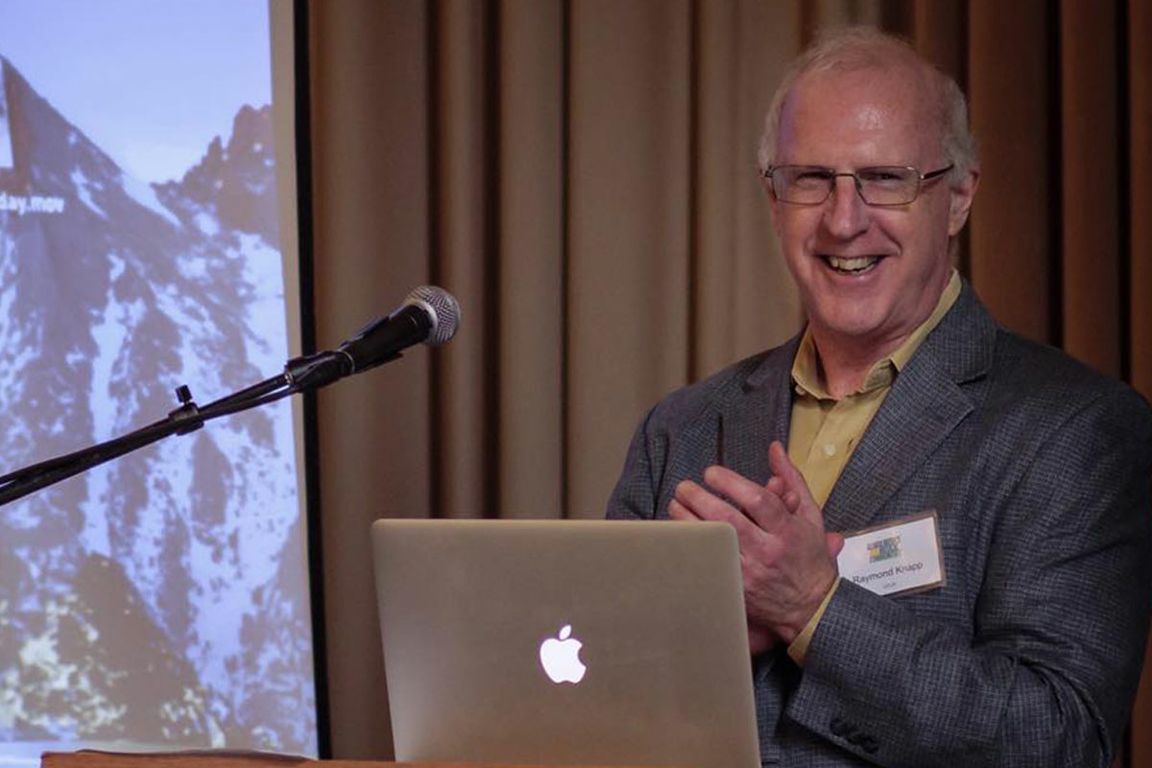
Raymond Knapp, distinguished professor of musicology, disability studies and humanities at the UCLA Herb Alpert School of Music — who has spent more than two decades applying musicology to musicals — tuned in, watching the tribute with far-flung family members. His spring semester UCLA Fiat Lux students also watched, with each choosing a song from the online concert for their final presentations. One of Knapp’s daughters wrote about it in her theater blog, too. Those experiences left Knapp pondering “how this one event connected people in the same way that a live musical event could connect people.”
“We were having conversations about it afterward in a way that wasn’t happening with everything we were doing online,” he recalled. “So, I wanted to think about that a little bit more. And eventually, I got around to writing about it.”
On Friday, April 11, Knapp will take the stage at Schoenberg Hall from 2–4:30 p.m. PT for his Faculty Research Lecture (the university’s 138th) — “How Music(ology) Saves Lives” — where his study and reflection on the Sondheim tribute will help him illustrate how the idea of music “saving lives” goes beyond the literal, to reanimate history and deepen the human experience.
As Knapp explained when he spoke to Newsroom, his lecture will also provide a foundation to learn more about musicology and the discipline’s development, something he and his colleagues have helped lead since he joined the faculty in 1989.
What does it mean to you to be chosen to deliver the lecture?
I’ve seen a few of these over the years, and it’s always struck me as an amazing opportunity to take what you do, which is usually in a silo of sorts, and bring it forward into conversation with people who otherwise might be in their own academic silos. And I saw fairly early in my time at UCLA Susan McClary do one of these, and she was amazing — in ways that I will never be because she would sit down at different keyboards, piano and harpsichord, and sing along. It’s like magic. I’m not going to be doing that, but what I can do is bring some of the ability that I developed teaching general education courses at UCLA into the project of explaining some things about what we do in musicology to a broader audience.
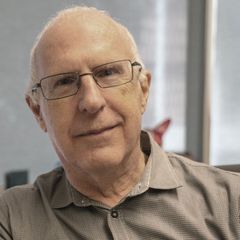
How are you preparing for the lecture? It’s got to be a lot of work, and you already have a job.
Right? Well, many of the different things I’ll be talking about are either already part of my teaching, part of my experience or part of my most recent project, which has been not on popular music broadly or even concert music, but on Sondheim’s 90th birthday celebration. The pandemic hit right before that was about to be celebrated in real time, and a month later, they put this tribute together, and it’s something I had always wanted to return to, something I immediately turned to when I was teaching. And each time I do that, there’s something else that speaks to me from it. But the overall thing that spoke to me is that there’s no way we can forget what the pandemic felt like because we have this document, this video, and it’s all there, and the nature of the songs and their performance brings it back. So, I wanted to talk about the ways in which the pandemic is reinvoked for us. For me, that’s what the “saving lives” (in the lecture’s description) is about. It’s about bringing lives back to us, bringing back our own former lives in this case.
The other parts come from realizing that in order to really say that to a group of academics who are not musicologists, I would need to explain more about how my own field has evolved over the years, what it’s been like to be in one of the places that has driven those changes, because UCLA musicology has been a major force in the transformation of the discipline, starting with Susan.
So, I’ll be talking about some of the work of my colleagues and my take on the way musicology has evolved as a discipline in order to get to the point of talking about my particular (Sondheim) example.
In your lecture brief, you mention how musicology has been embraced or entwined more with the human experience over the last 30 years. Why were the last 30 years so important to this versus other eras of recorded history?
I got to UCLA in 1989, just before we were able to bring Susan McClary to UCLA, and there was something called the “new musicology” that she helped pioneer — a term that was used in a kind of pejorative way originally until seemingly everyone became a new musicologist. In the “old musicology,” music was seen as this thing that’s out there. It’s about big things; it’s about religion; it’s about the cosmos; it’s about deep thoughts and emotions. Or maybe it’s about nothing, a purely aesthetic object. But to say that music was an expression of sexuality was maybe not something people were ready to do at the time because what did that tell us about all of these great works from the past that we love? We’re going to start saying that Bach was about sexuality? That Beethoven was about sexuality? Well, they were, but in a way that we didn’t necessarily want to talk about. There was a lot of resistance to this, but it also opened up the possibility of broadening how we look at music — it’s not just about lofty things but about how we live our lives, how we are on this earth, and how we are humans and how we relate to each other.
Susan McClary came to UCLA talking about these things. It became a big thing in the popular press that musicology was talking about homosexuality in music, for example, which violated an unspoken rule because music in academia was always a bit of a closet, a place where people could take music seriously, but only if they didn’t talk about those things. So, all sorts of things were being thrown open, including popular music as something that we could study. And at some point, I myself moved into working on musicals.
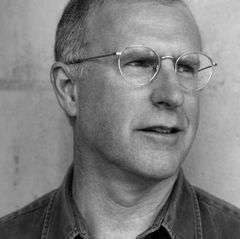
I came to UCLA as a Brahms expert. I taught our Beethoven course. I gave courses on the symphony, on (Gustav) Mahler — a lot of this serious stuff, right? After being here a little over 10 years, I developed a course on musicals with a colleague. I ended up teaching it, I wrote books on it, and that sort of became what I did. Doing musicals is going a step beyond just doing popular music. Popular music had some cachet. Musicals, as a serious academic topic, had zero cachet and still struggles to be taken seriously, but I had tenure, so I said, “OK, now I can do what I want.” So, in a way, it’s also about my own story, of having these possibilities opened up for me by other people. I could not have transformed the field the way Susan did, but I could certainly do something with that transformed field, and that’s kind of how I saw myself.
What are you hoping people will take away from your lecture?
I’m most invested, at least at the moment because it’s the part I’m working on now, in talking through the different things that musicologists do and how many of those things line up with this idea of using music to evoke an earlier or different way of being — and how we can understand through music what animates humans or what did animate humans. This capacity of music to retain what animates us is what I mean by “saving lives.” And I’m hoping that people — even my own colleagues in musicology — might look differently at what they do in common with each other, even while doing very different things and working with very different modes of musicking. Music captures — saves — how we move, inwardly and outwardly, and I hope that people take away something from that notion as a way to appreciate the field of musicology and what it can offer us.
Register to attend “How Music(ology) Saves Lives” here.