“I love commencements,” Chancellor Julio Frenk has said. There’s something wonderful, he admits, about seeing students first arrive, full of expectation, and then ultimately reach the milestone of graduation. “It is our absolute sacred duty to make sure that they blossom, that they flourish.”
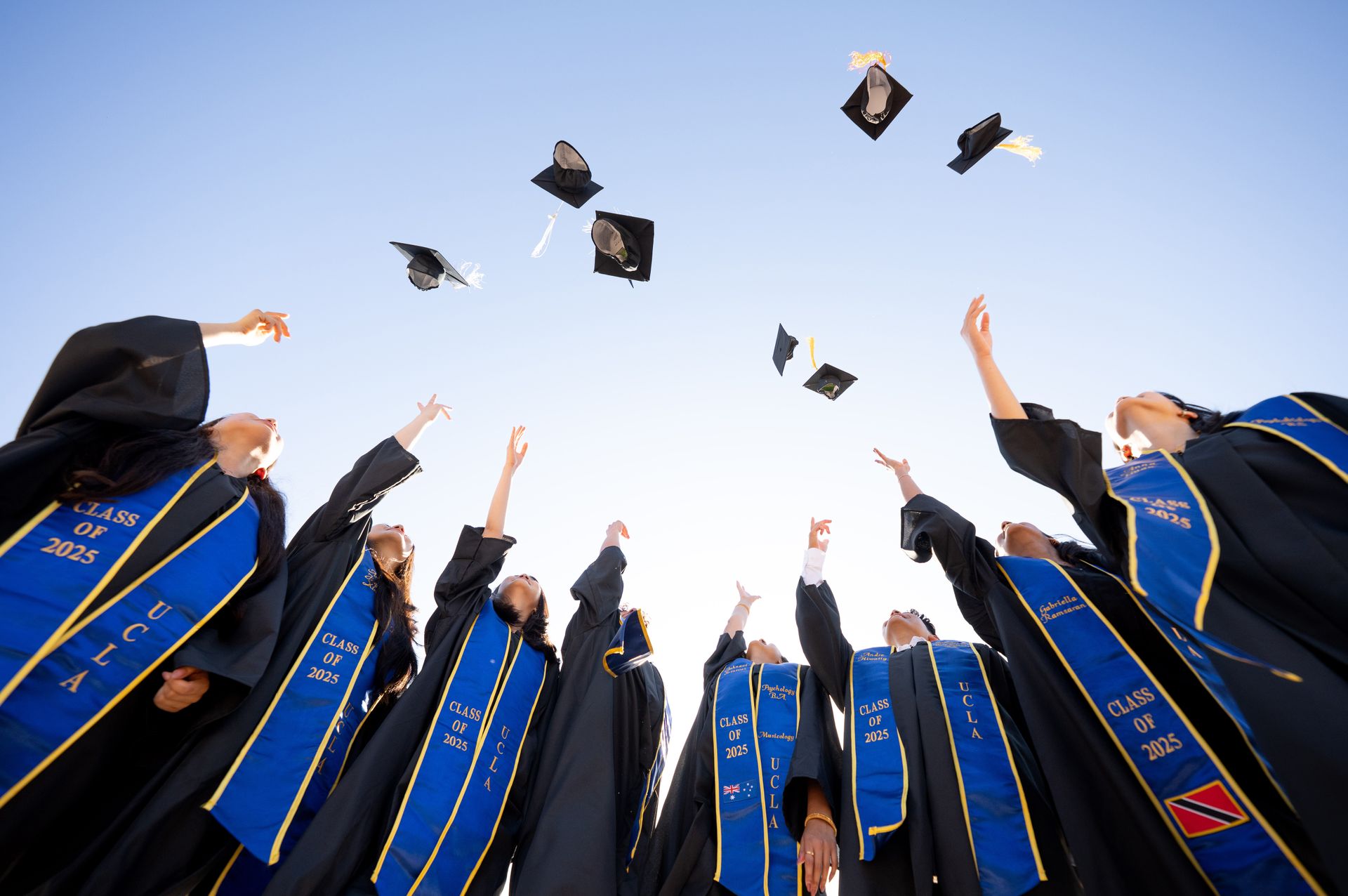
And flourish they have. This commencement season, nearly 15,000 extraordinary Bruins, undergraduates and graduate students, will receive their degrees. These students come from a rich tapestry of backgrounds, cultures, perspectives and disciplines. And each has traveled their own unique journey — they have overcome both personal and collective challenges, impressed with their talents, inspired through their service, and embodied all the remarkable qualities that continue to make UCLA the top-ranked public university in the nation.
As the members of the class of 2025 prepare to launch into the next chapter of their lives, we are pleased to honor them by spotlighting just a few of their stories.
See coverage of our UCLA College 2025 commencement ceremony.
Homegrown voices, lasting legacies: 2025 Class Artist winners
For the winners of the third-annual Chancellor’s Council on the Arts Class Artist competition, Sydney Richardson and Jorge Parra Jr., UCLA has left its mark.
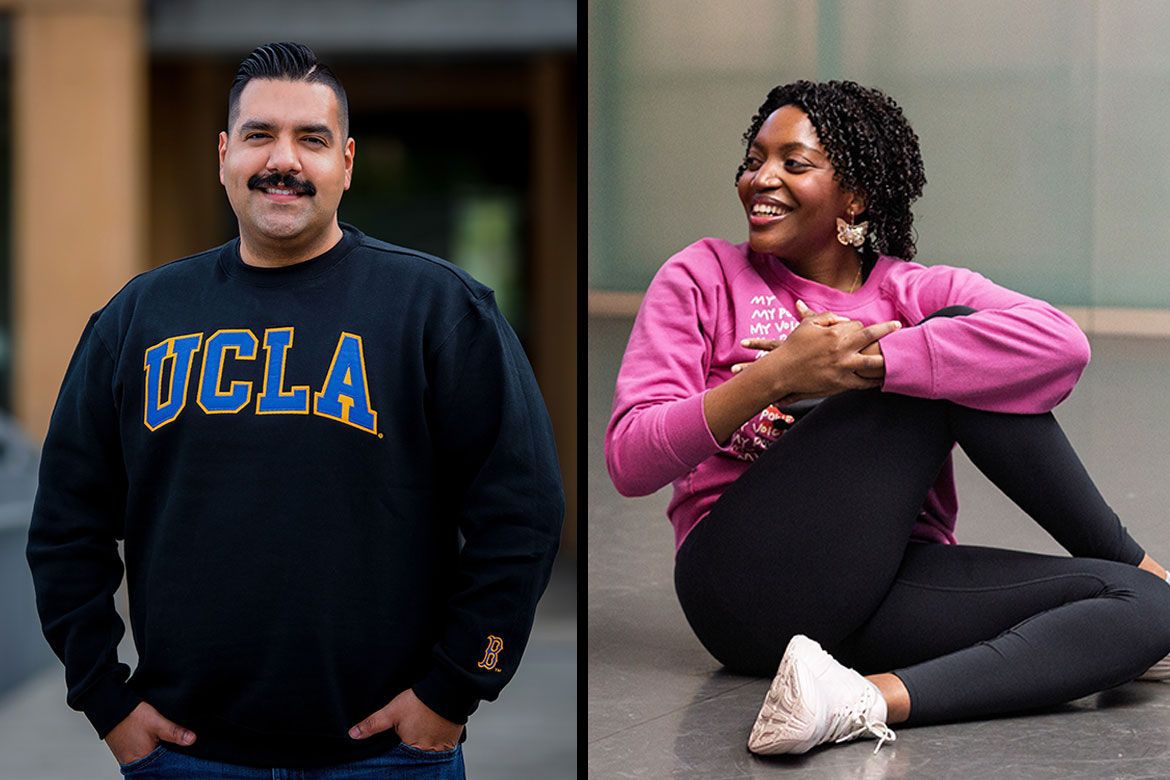
Both Los Angeles natives first set foot on UCLA’s campus during elementary or high school field trips and have earned degrees in the social sciences. And now, they are leaving their own marks at UCLA, having just been honored by the Chancellor’s Council on the Arts for the strength of their work and the clarity of their artistic voices.
This year’s undergraduate winner, Richardson (world arts and cultures/dance B.A. & African American Studies, B.A.), is a choreographer who blends faith, history and Black dance traditions. Her work, “The Story I’ll Tell,” is an exploration of resilience and shared testimony, rooted in her strong faith and lifelong spiritual practices.
In the graduate category, Parra Jr. (film, theater & television, M.F.A.) is a writer/director whose work frequently centers on Latinx identity and emotionally resonant storytelling. His film “¡Que Suene La Banda!” is a vibrant story of cultural rediscovery told through music and memory.
Read more about Sydney Richardson and Jorge Parra Jr. on UCLA Newsroom.
Finding purpose through interdisciplinary learning
When Clara Prideaux started her undergraduate career at UCLA, she imagined a future working with data, maybe even becoming a data scientist. Numbers had always come easily to her, and she declared a major in statistics during her first year. Yet she soon realized that her curiosity could not be captured by data alone.
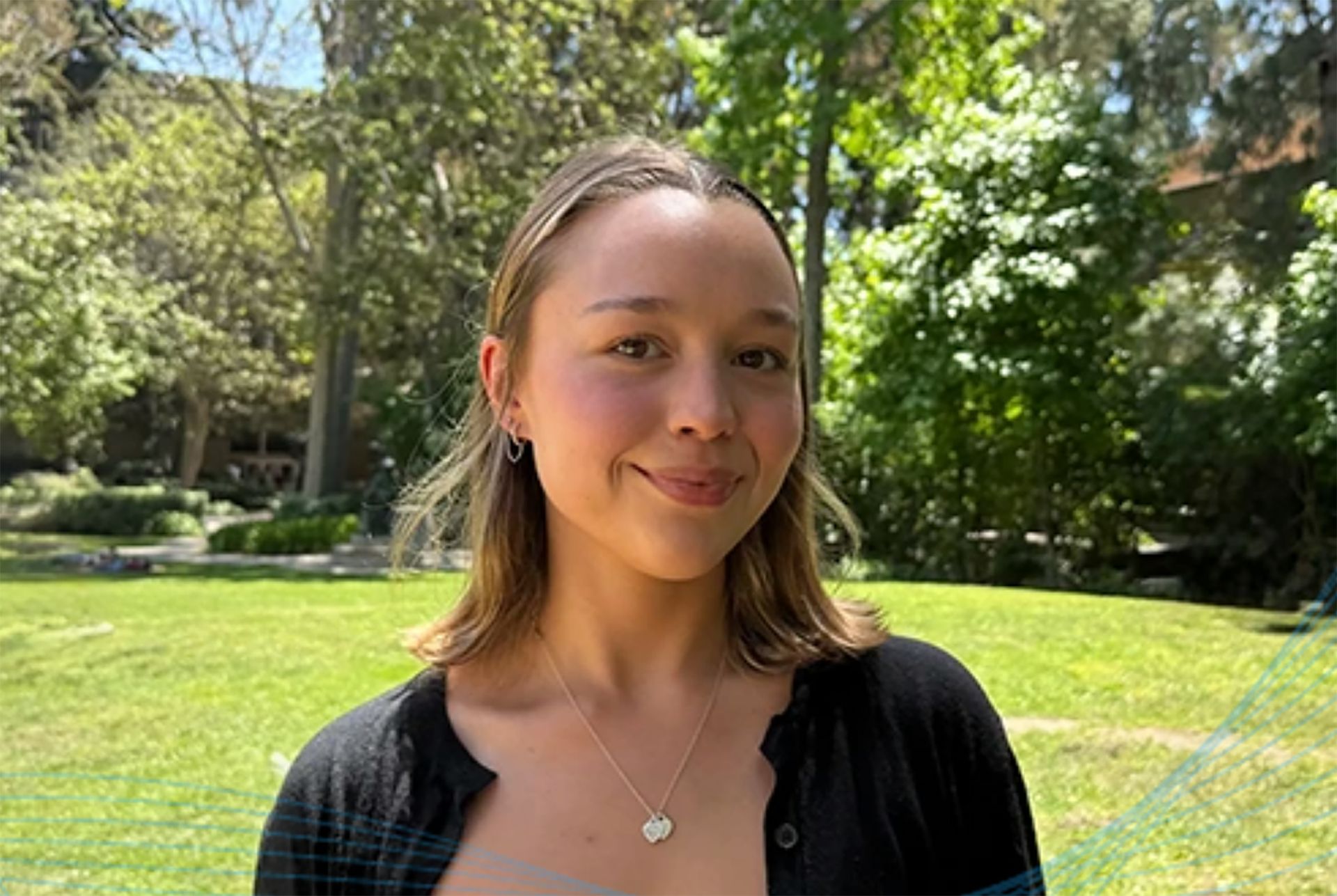
“I didn’t really like the lack of … applicability,” she said of her first statistics course. The desire to connect academics to lived experience drew her to the international development studies(IDS) program, where she found an approach that embraced intellectual breadth, real-world relevance and personal perspective.
Born in Hong Kong and raised in Manila, Prideaux was drawn to questions of inequality, migration and community. “Being around so many different types of people … got me really interested in (attending) a school that had that type of diversity,” she said.
At UCLA, IDS became the foundation for an academic and personal transformation that eventually led Clara Prideaux to conduct interviews with overseas Filipino workers, for a research paper on gendered migration and choose to pursue a graduate degree in business so she can one day lead a nonprofit organization.
Read more about Clara Prideaux on the UCLA International Institute website.
Tracing biodiversity in the Guatemalan highlands
Seven environmental science seniors covered the cost of their trip through a crowdfunding campaign, carrying their research from Westwood to the mountains of western Guatemala.
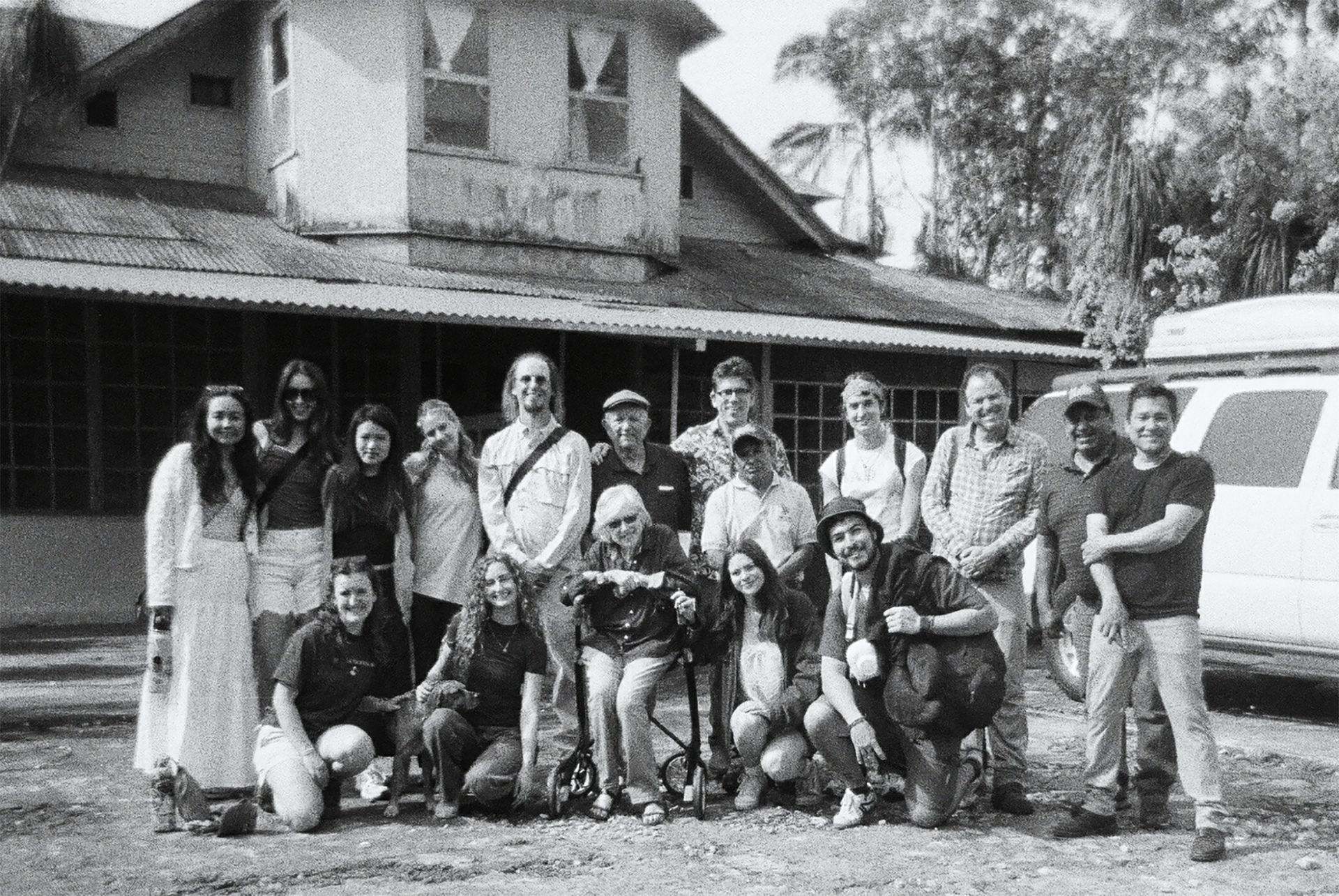
They came to Finca Dos Marias — a century-old coffee farm perched 5,000 feet in the Guatemalan highlands — to study biodiversity across a working landscape. What they found was more layered: a living classroom where ecology, culture and community wove together in unexpected ways.
For a week in March, the group — seniors in UCLA’s Environmental Science program — rose before dawn, hiking into the cloud forest to collect data on native and often endemic species. Led by faculty advisors Dan Cooper and Ryan Harrigan, the students partnered with Jones Coffee Roasters, a Pasadena-based company that sources beans from the remote, family-owned farm in Guatemala.
They recorded sightings, cataloged songs and tracked how birds, insects and other species responded to the landscape, from shaded groves to clear-cut paths and cultivated slopes.
Read more about the trip on the UCLA Institute of the Environment and Sustainability website.
Engineering student gets ready for a new title
Brynn Beatty is preparing for more than just a walk across the stage this weekend in Pauley Pavilion. With commencement nearing, she has been wrapping up her capstone project, working with her group to finish building a small robot that detects and digs up metal on the beach and at the sand volleyball courts near the dorms.
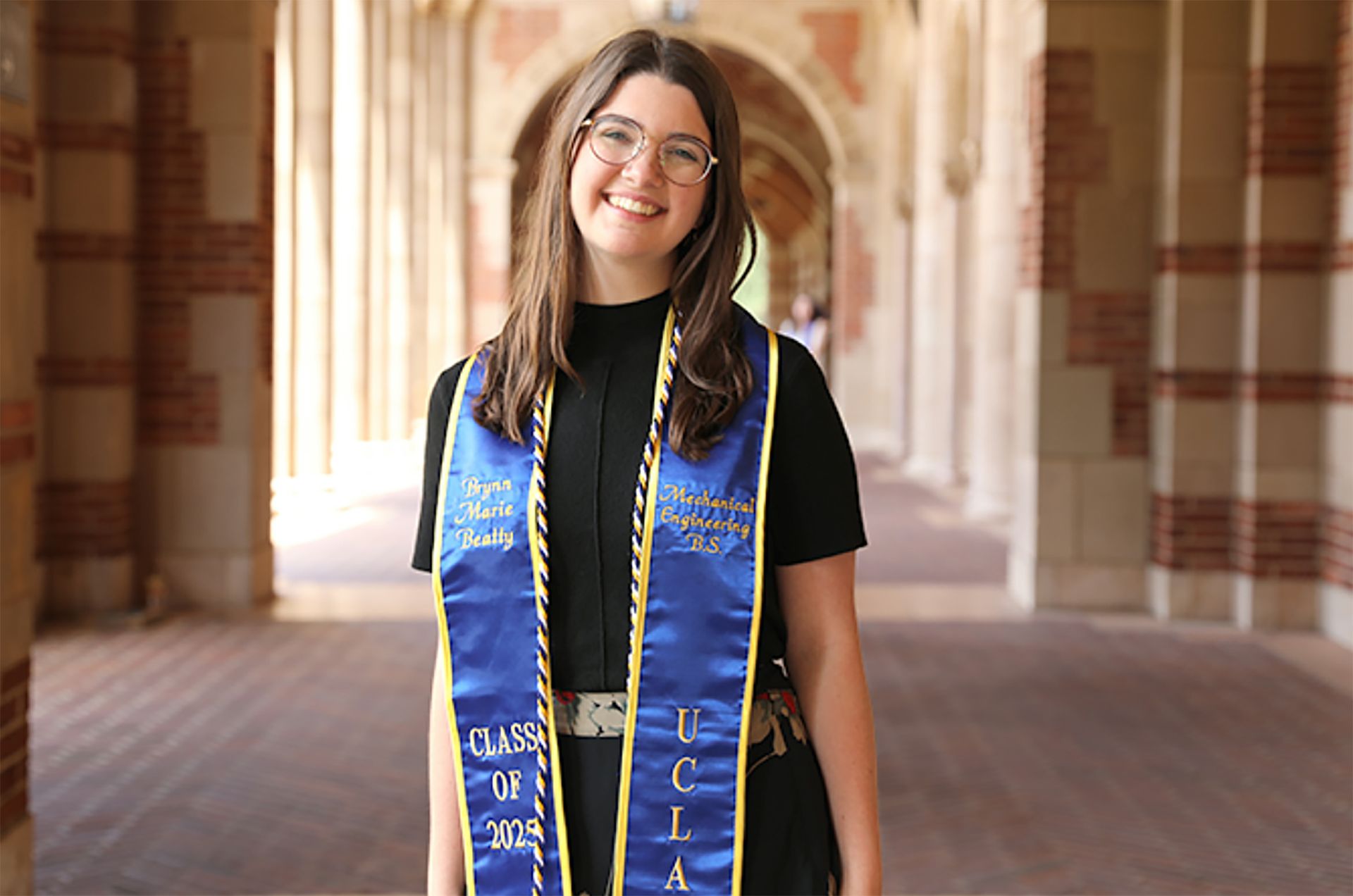
But the fourth-year mechanical engineering student at the UCLA Samueli School of Engineering is also getting ready for a new title: graduate student.
This fall, Beatty will move off campus into an apartment farther from Westwood as she begins a new chapter at UCLA, pursuing a master’s degree focused on fluid mechanics, a discipline she gravitated toward after taking two rigorous but captivating elective courses.
Originally from New Orleans, Beatty experienced a bit of culture shock when she first moved to Los Angeles. “I am used to a very laissez faire city. Changing from the laid-back attitude of my home city to the fast-paced, get-it-done mentality here was a major change,” she said.
Read more about Brynn Beatty on the UCLA Samueli website.
A UCLA senior’s path to community-driven change
Joaquin Garcia will graduate this spring with a double major in international development studies and political science, and minors in global studies and Chicano studies. His journey from a small mountain town to the No. 1 public university in the country reflects just what UCLA offers its students: world-class academics, leadership opportunities and a space to figure out who you are and what you want to do.
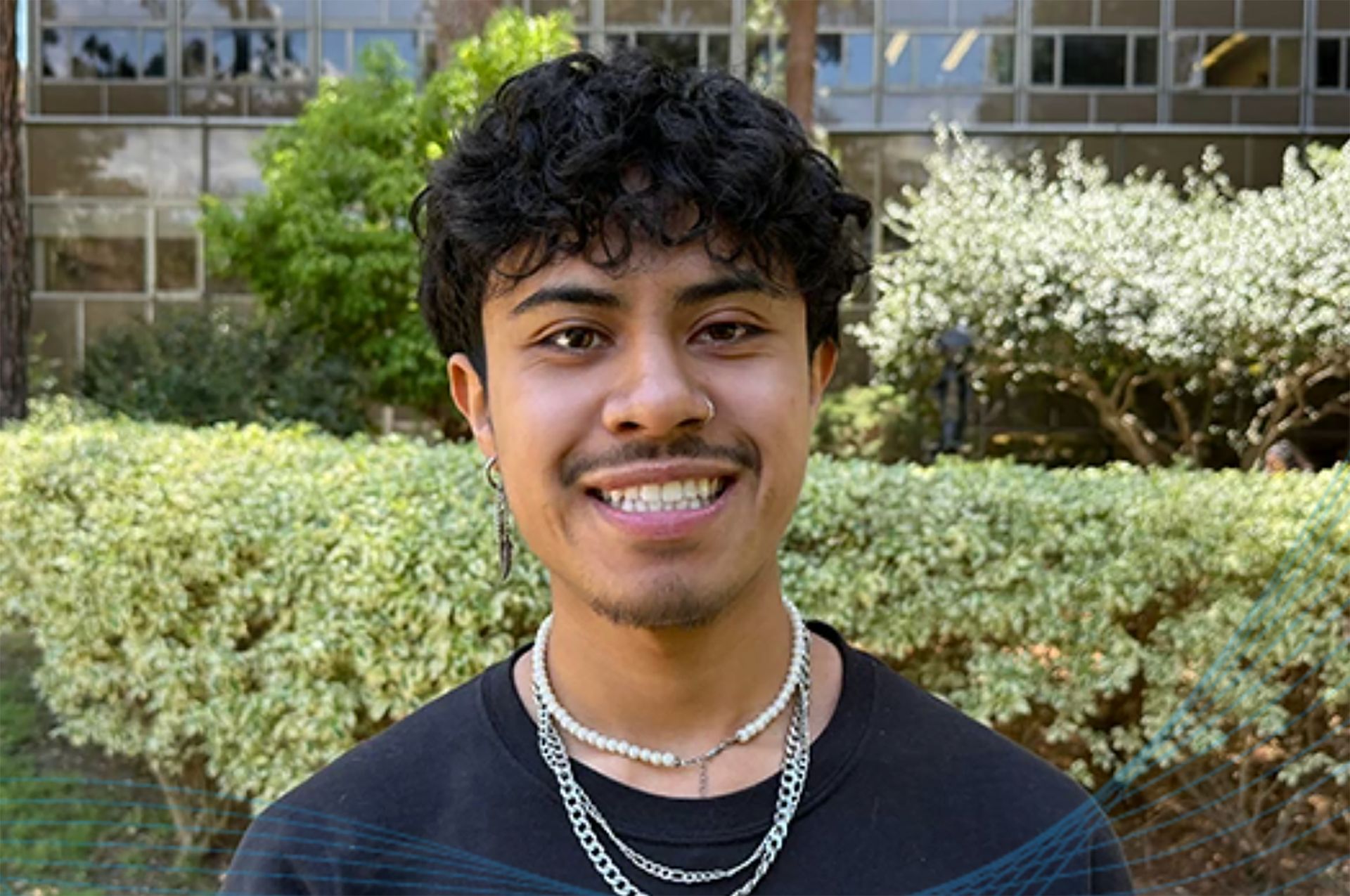
Garcia grew up in Mammoth Lakes, California, a tight-knit community with “a lot of natural beauty, but not the most diversity.” He knew early on that he wanted something different for college.
“I always knew I was attracted to this university,” he said. “UCLA was the perfect opportunity to pursue both high-tier academics and also remain [in] proximity to home.”
When he arrived, Garcia tried several academic paths, including premedical and economics tracks, before taking Introduction to Development Studies.
Read more about Joaquin Garcia on the UCLA International Institute website.
Linguistics and English major to perform at 2025 commencement
Katie Cunningham’s parents and sister are traveling all the way from their home in Virginia to be at Pauley Pavilion for her UCLA graduation.
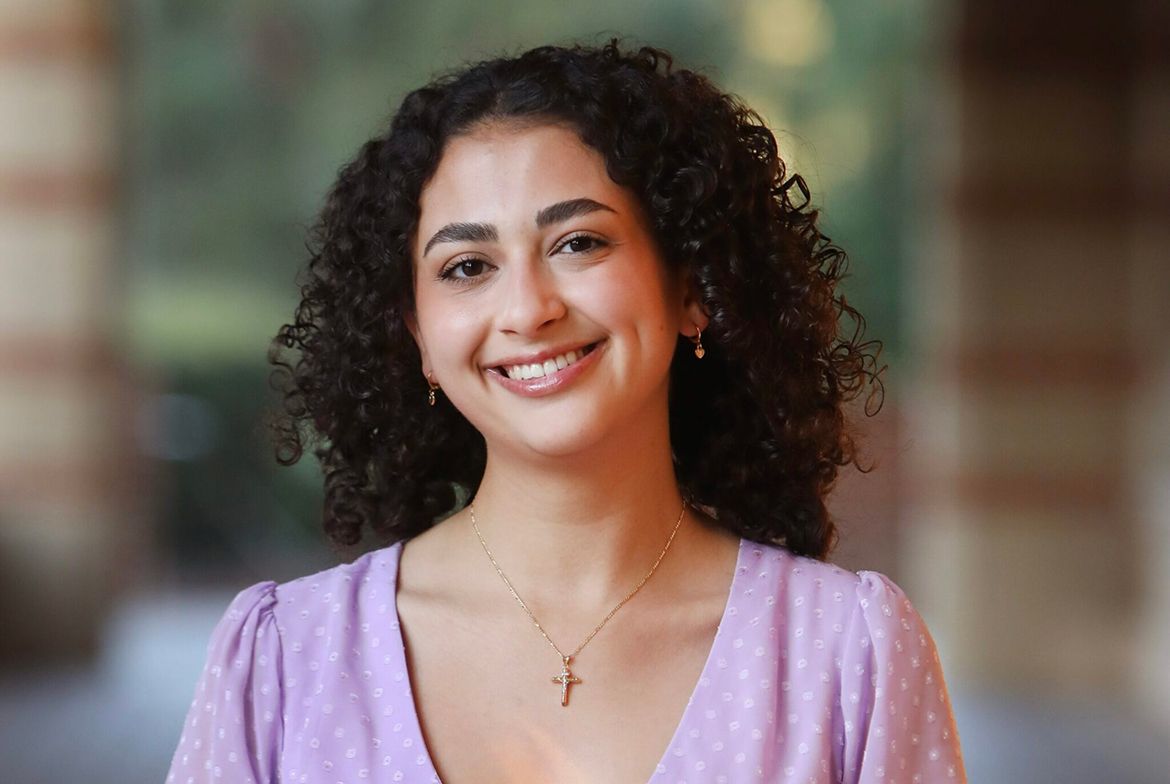
The long plane ride would have been worth it anyway, to be sure. But now the family has some additional incentive: Cunningham was selected to sing the national anthem at one of the three UCLA College commencement ceremonies on June 13.
Cunningham, who will graduate with honors with a degree in linguistics and English, was selected from among 30 students who auditioned for the honor. She’ll give her rendition of “The Star-Spangled Banner” at the 3 p.m. event in front of thousands of other graduating students and their families.
For Cunningham, one of the perks of her selection is that she figures to have a chance to meet Sara Bareilles, the UCLA alumna and award-winning singer-songwriter who will deliver the commencement keynote.
Read more about Katie Cunningham on the UCLA Humanities website.
UCLA Luskin public affairs majors shine in capstone showcase
A central and unique aspect of UCLA Luskin’s public affairs undergraduate major is the capstone requirement, a three-quarter project combining immersive learning experiences with a wide variety of settings in and outside of the university.
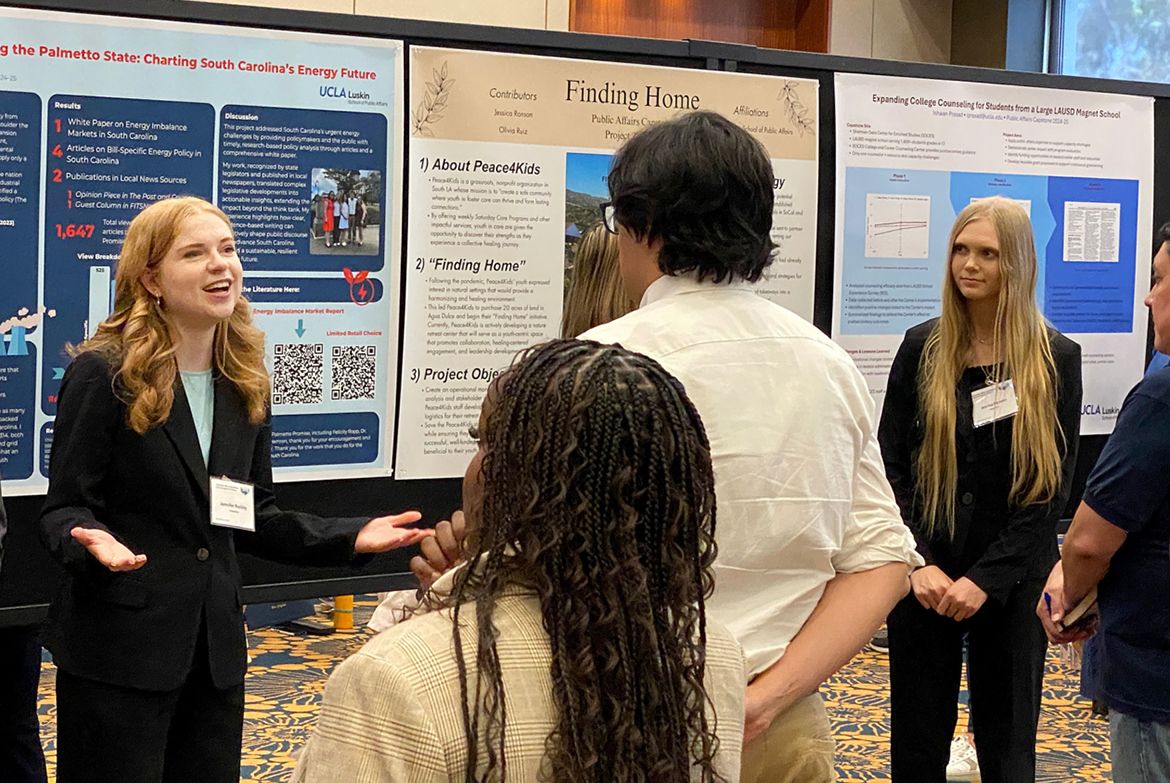
Jennifer Buckley was one of the Luskin class of 2025 members displaying work at the capstone showcase held June 4 in UCLA’s Carnesale Commons. As an incoming student, the Washington state native explored traditional majors — including economics and political science — but finally chose public affairs.
“Actually, the capstone was one of the elements of the Public Affairs program that drew me to it,” she said. “It’s one of the only majors that offers, in my opinion, a direct application of the skills that you learn in real time through the capstone internship.”
Through the capstone, students can connect with community-based organizations, regional governments and private companies, or pursue projects through one of three University of California programs.
Read more about Jennifer Buckley on UCLA Luskin’s website.
UCLA Samueli’s class of 2025 awardees and presenters
Ryan Chaiyakul, who is graduating with a B.S. in computer engineering, is one of the new graduates who have made special contributions and have distinguished accomplishments. He was honored as the Schoolwide Outstanding Bachelor of Science.
During his time at UCLA, Chaiyakul contributed to the Structures-Computer Interaction Lab, led by mechanical and aerospace engineering associate professor M. Khalid Jawed, by creating and maintaining a Python-based physics simulator that models soft, flexible structures. His open-source project is now a major pillar of a multi-university effort to create a complete simulation framework for modelling soft robotics.
Previously, as a member of electrical and computer engineering associate professor Sam Emaminejad’s Interconnected & Integrated Bioelectronics Lab, Chaiyakul developed miniature biosensing electrodes that could analyze electrochemical reactions in the body.
Read more about Chaiyakul and other engineering graduates on the UCLA Samueli website.
Harvesting a dream at UCLA
Arismel Tena Meza, known to her friends and mentors as Ari, has traveled an extraordinary path to reach this year’s UCLA commencement stage, where she celebrates earning her Ph.D. in chemistry.
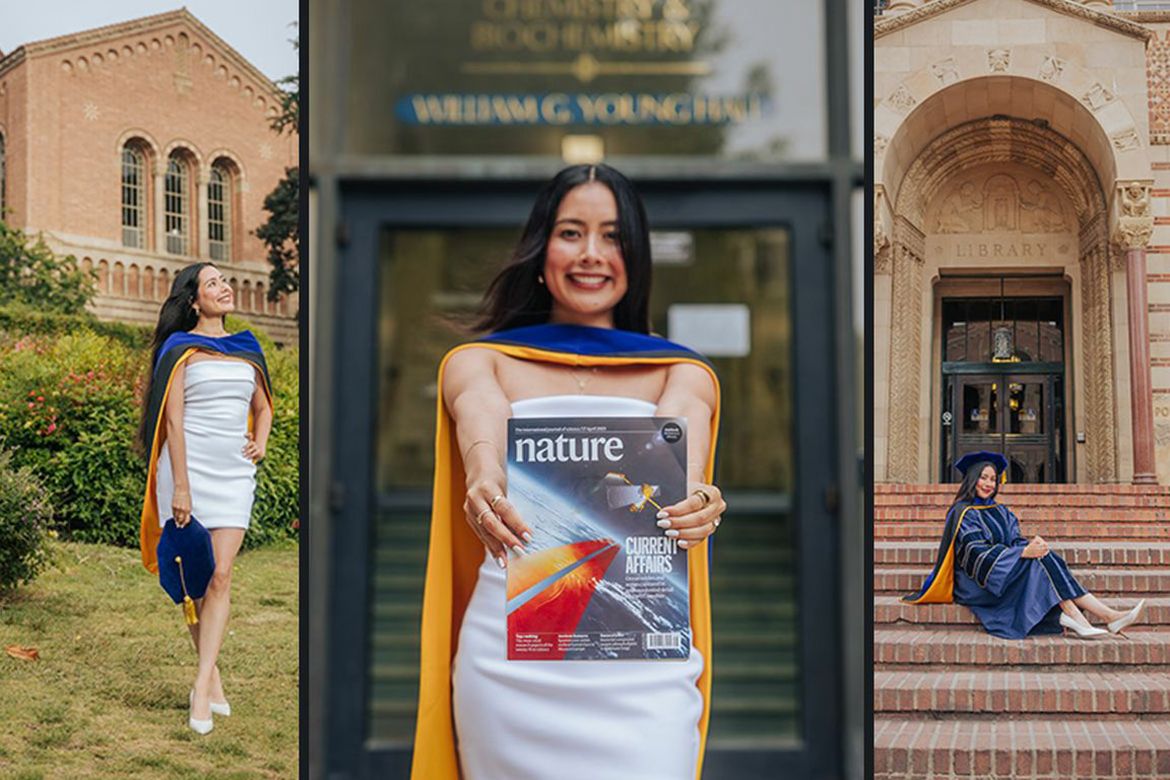
Her journey began over a thousand miles away in Michoacán, Mexico, in a small rancho surrounded by farmland. At the age of 5, she immigrated to the United States with her mother and five siblings, joining her father, who was working in California’s fields through the Bracero program. Soon, the reunited family settled in Salinas, California, a small agricultural town where her parents picked strawberries and raised their family in a modest trailer park.
Growing up in a community of farmworkers was not always easy, but it gave Tena Meza an important perspective. “We didn’t have much, but we had what we needed,” she said. “My parents worked so hard to give us a better life, and they always reminded us how important education was.”
Read more about Arismel Tena Meza on UCLA Newsroom.
Duo spotlights the struggles of students who juggle classes and jobs
As a kid growing up in the New Jersey suburbs, Ritika Sarma, who was often described as an argumentative but diplomatic child, never doubted what she wanted to be when she grew up.
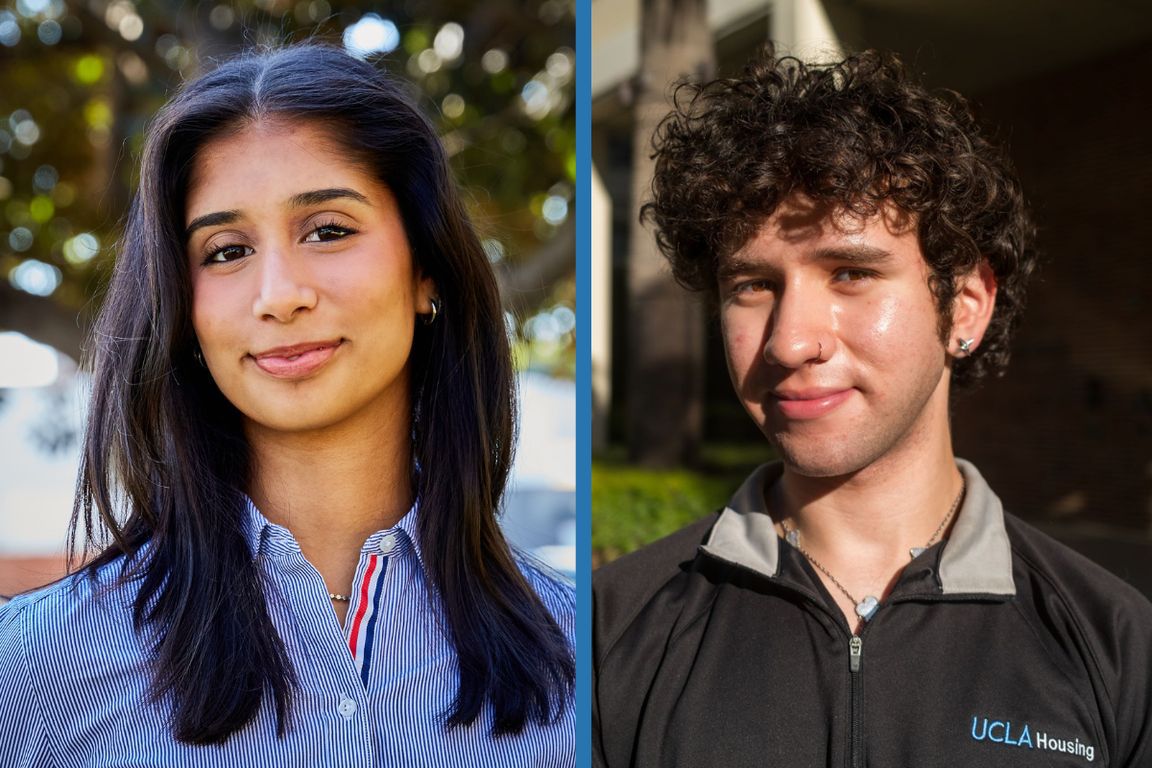
“My fourth-grade teacher decided to do a mock trial with our class for a month, and I remember having so much fun. After that, I didn’t have a question in my head of what I wanted to be: a lawyer,” Sarma said.
Last summer, Sarma, who majored in political science and took on a double minor in labor studies and global studies, enrolled in a research intensive offered through UCLA’s labor studies program that investigates the struggles faced by young people who juggle school and work across Los Angeles County colleges and universities.
So did Jimmy Mancilla, a labor studies and political science double major who was struck by how many of his peers faced the same circumstances he did as a student worker.
Read more about Ritika Sarma and Jimmy Mancilla on UCLA Newsroom.
A major switch from biology to English and Chicano studies
Sometimes, a single question can change everything.
For Evelyn Giron, who is graduating from UCLA with degrees in both English and Chicano studies, with a minor in Central American studies, that question was: “Where is all the Central American literature?”
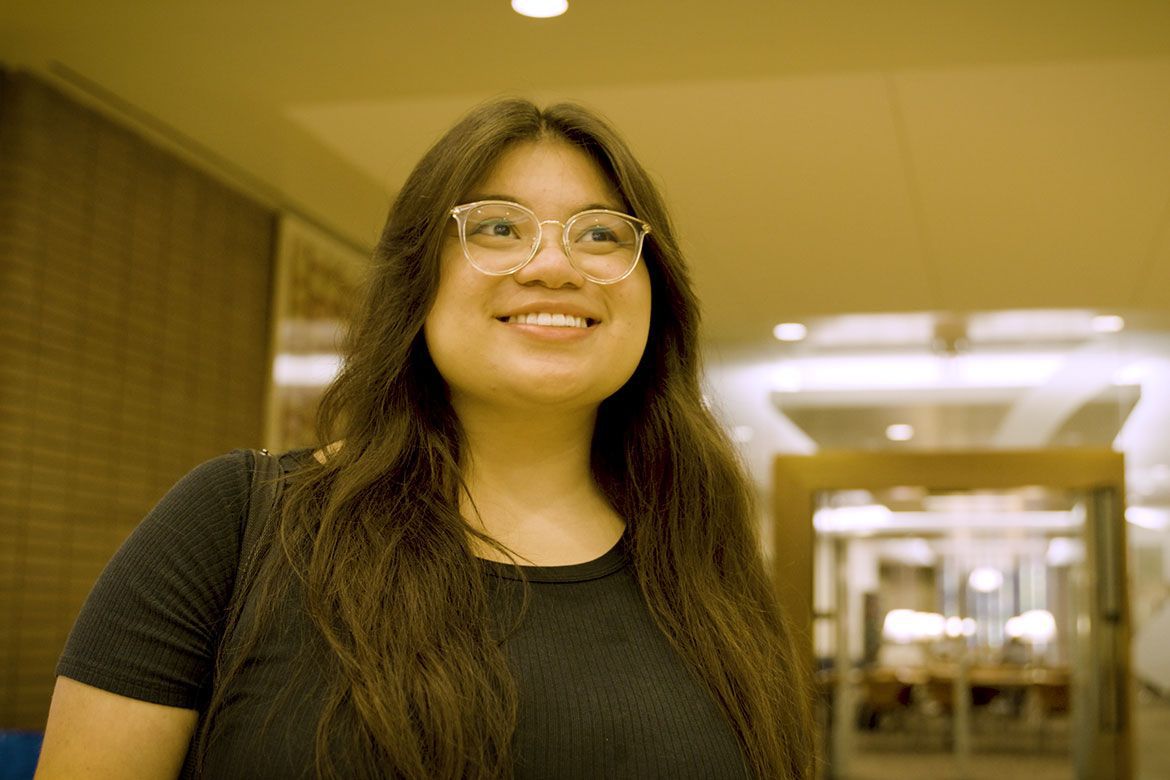
It was a moment of curiosity during office hours with UCLA’s Marissa López, a professor with appointments in English and Chicano studies, that set Giron on a transformative academic journey. López responded by pulling books off her shelf, among them “I, Rigoberta Menchú” and “The Tattooed Soldier.”
“I remember I went home and read both books back-to-back in two days because I was so excited,” Giron said. “That one question changed the trajectory of my undergraduate experience.”
Giron, who graduates in June, didn’t always imagine herself immersed in literature and research. She originally started at UCLA as a biology major, partly because of how much she loved biology as a high school student.
Read more about Evelyn Giron on UCLA Newsroom.
He turned cheesemaking into award-winning research
When Guillermo Miranda’s grandmother flew in from Mexico to visit his family several years back, she packed light on clothes and heavy on cheese. Wrapped in salmon-pink butcher paper, over 100 pounds of homemade queso de cincho filled his Abuelita’s checked bag, resulting in a hefty overweight baggage fee.
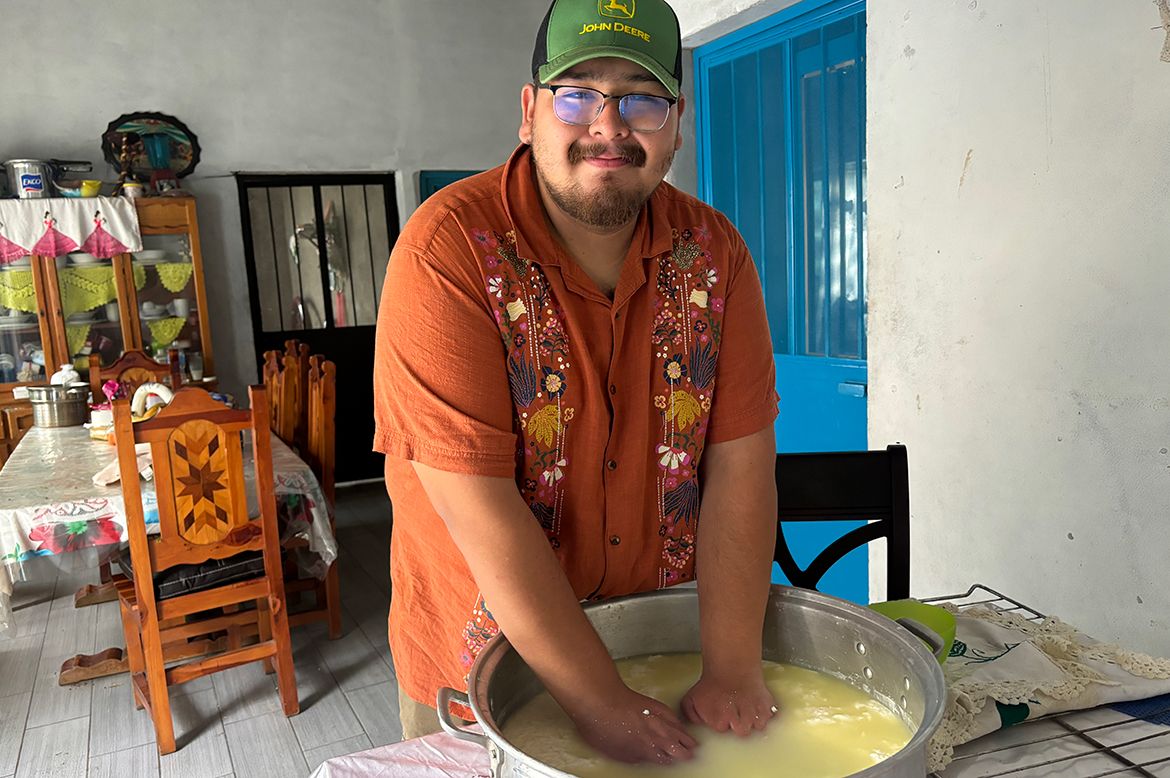
Those cheese wheels and their roughly $300 ride to California became a running joke in Miranda’s family, but the experience stuck with the UCLA history major. Miranda loved cheese and revered the generations of artisans and ranchers in his family who had upheld traditional dairy practices in their respective states of Guerrero and Michoacán, Mexico.
But why was cheese so important to his grandmother that she would dedicate an entire suitcase to it — and pay extra for it? What did those wheels of cheese represent beyond flavorful food? And what did it say about the dairy practices in Mexico that have survived over centuries?
Read more about Guillermo Miranda on UCLA Newsroom.
Composing her path
On the morning of Jan. 7, 2025, a fire had started in the Santa Monica mountains and Mia Ruhman, a music composition major at the UCLA Herb Alpert School of Music who will graduate this June, was recording tracks for her original pop opera, “Nannerl,” at her family home in the Pacific Palisades. She preferred record in the quiet of home, and chance had it she was home that day rather than at UCLA.
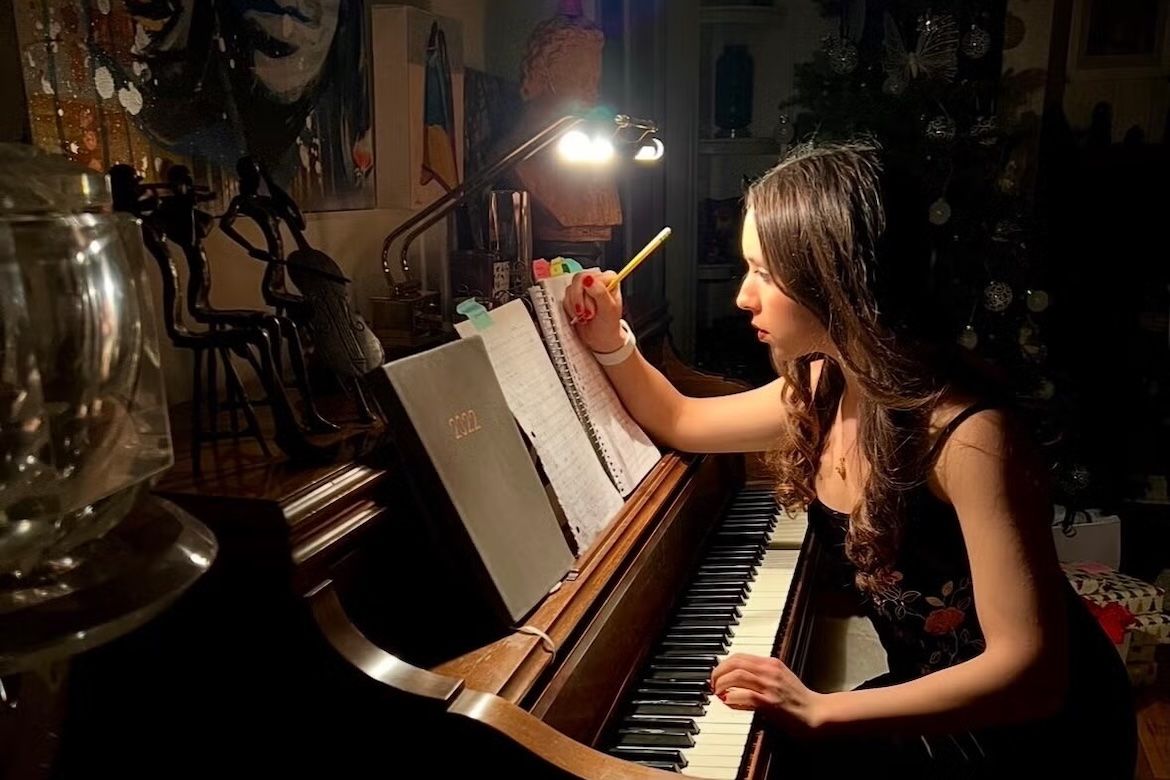
The Santa Ana winds kicked the fire into a frenzy, and the flames began closing in. Ruhman took shifts with her father, spraying down her house and yard, occasionally retreating to her studio to continue recording. Her opera was set for June.
The resulting tragedy was one she couldn’t have planned for. But she did have a plan — at least as it regarded her music.
Ultimately, Ruhman, who will be the undergraduate speaker at the school of music’s commencement on June 13, completed the piano vocal score for her pop opera, and after graduation she will orchestrate the score for a small orchestra.
Read more about Mia Ruhman on the UCLA Herb Alpert School of Music website.
‘Power to the transfer’
UCLA’s Center for Community College Partnerships, which strives to support transfer students holistically, has been changing lives since 2001, and this year is no different. Meet four of the center’s peer advisors — graduating seniors who paid their own experience forward with thoughtful compassion and Bruin-to-the-bone verve.
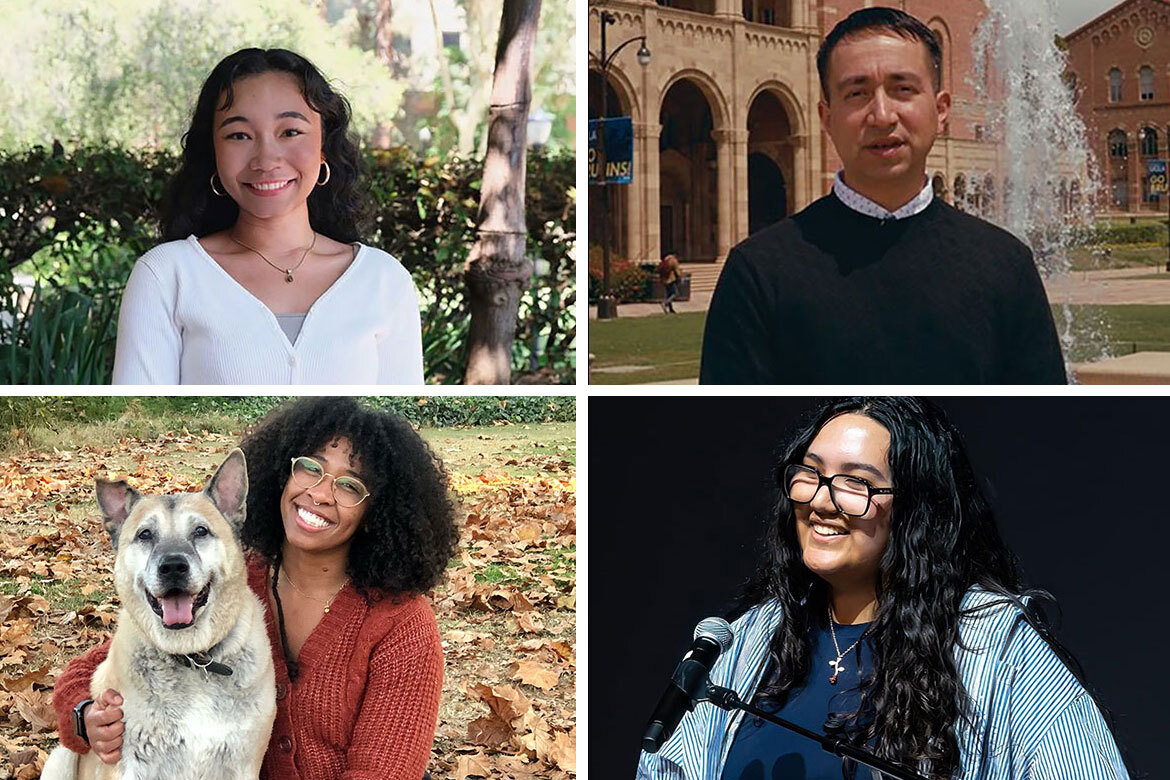
Shanti Fukasaku: Being a peer advisor allows me to encourage students from various backgrounds to know that they all belong in higher education; it’s not unattainable.
Francisco Reyes: It’s an incredibly fulfilling role that allows me to bridge two communities I deeply care about: the one I’m part of now at UCLA, and the community college community that truly shaped my path.
Keo Vutheikun: As a first-generation, nontraditional student, being a peer advisor means a great deal to me and my communities as I get to work with students to help build their navigational, linguistic and social capital.
Natalia Zeledon: Being a peer advisor allowed me to work with students to ensure they are supported, feel prepared to transfer and build community.
Read more about the CCCP peer advisors on UCLA Newsroom.
‘I feel very lucky that I know what I care about’
The research project Victoria Gutierrez is completing as a UCLA senior was inspired by a set of photographs she saw years before she set foot on campus.
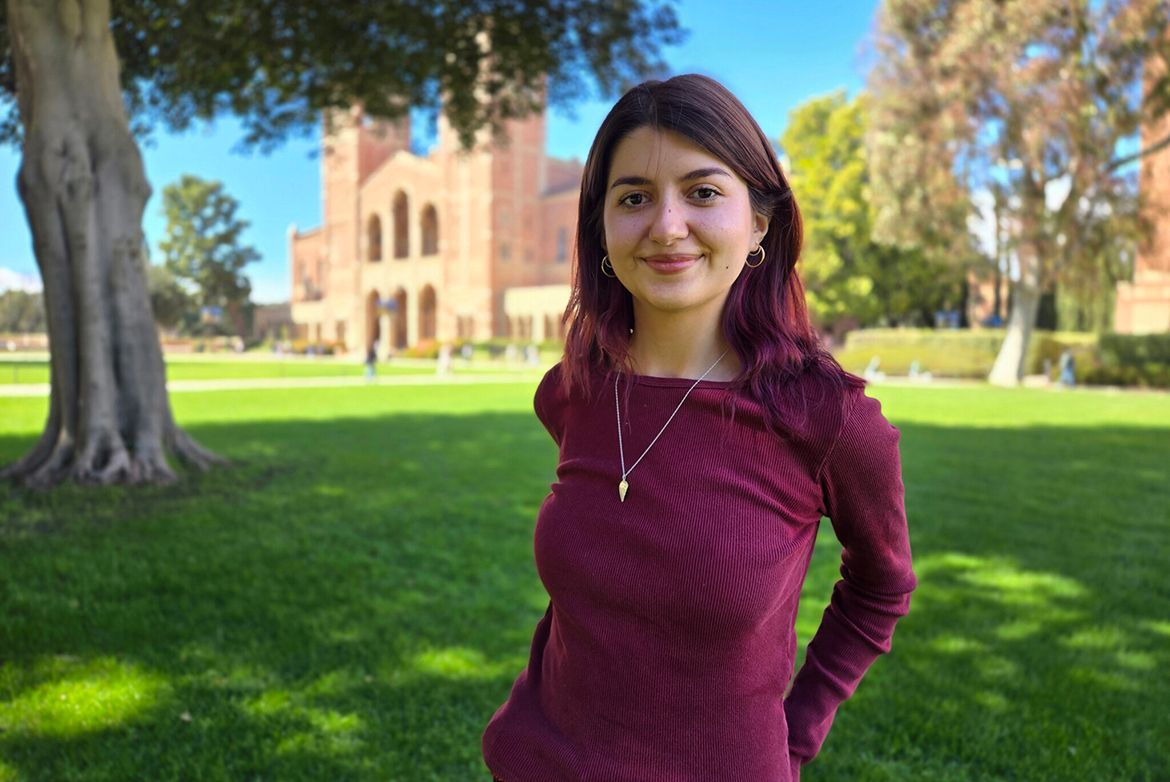
As a 14-year-old, Gutierrez came across pictures of Salvation Mountain, the massive, colorfully painted folk art installation in the midst of a barren desert landscape in the Salton Sea region of southern California.
“I remember thinking, ‘What is this place? I have to go there,’” she said. The thought stayed with her over the next few years, and she pondered the small communities of people living there.
“It’s very beautiful, but it’s very desolate, plants don’t really grow and it’s known for having toxic dust that comes from the Salton Sea,” Gutierrez said. “I just wondered, how do people live there, how do they cook, how do they do this? Those questions just lived in my brain for a long time.”
Shortly after Gutierrez arrived at UCLA — the Rhode Island native transferred in 2023 from Saddleback College — the opportunity to explore those questions arose.
Read more about Victoria Gutierrez on the UCLA Humanities website.
How 3 former foster youth found community and a shared purpose
Justin Monk grew up unaware he had spent time in foster care as an infant. Soraya Leonard was in foster care in two different countries. Anna James’ time in foster care ended with her grandmother assuming guardianship of her.
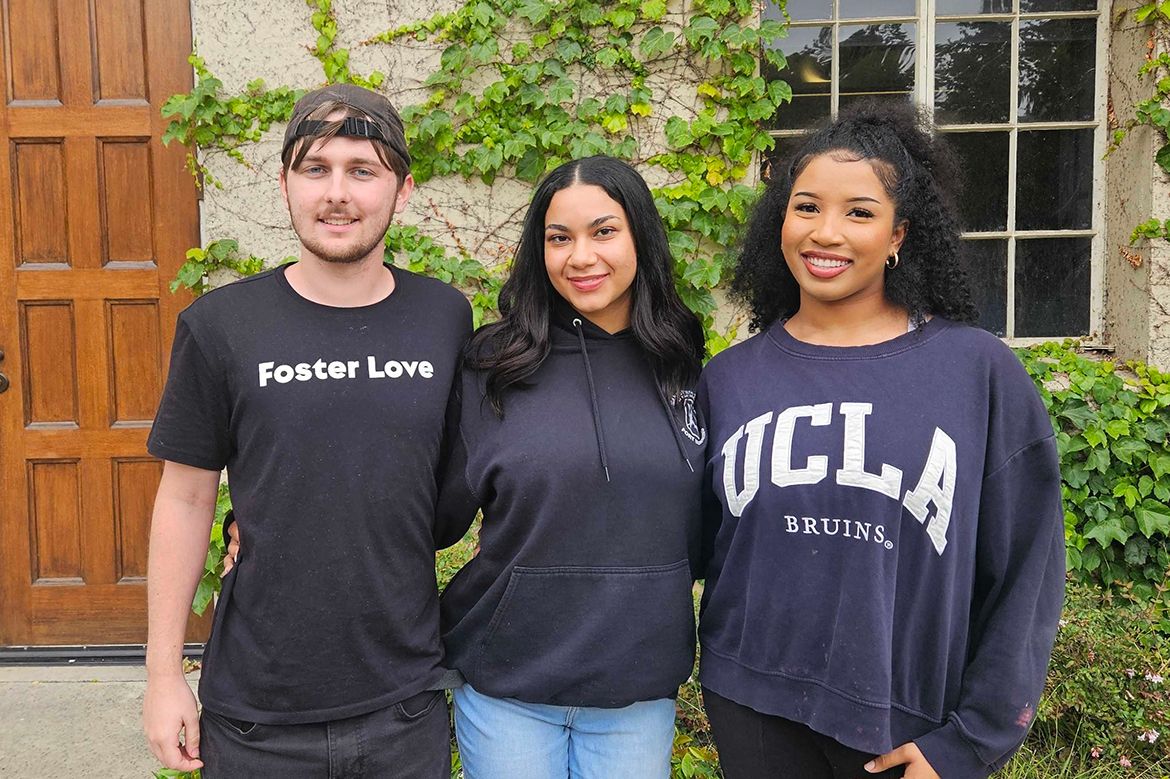
These three Bruins, all of whom will be graduating this June, had vastly different journeys as youth in foster care but share a similar pact to help peers who also have been system-impacted.
At UCLA, Monk, Leonard and James all served within UCLA’s Bruin Guardian Scholars program, which provides resources, financial assistance, mentoring and social and other support for students. They also benefited from the program’s resources and close-knit community.
“Even if you’ve been in foster care for a day as a child, or any kind of alternative guardianship where your parents lost custody of you, you qualify,” Monk said.
Read more about Monk, Leonard and James on UCLA Newsroom.
This global studies major learned how to be a doula
When she envisioned her senior research project, Leila Chiddick never figured she’d end up learning how to be a doula.
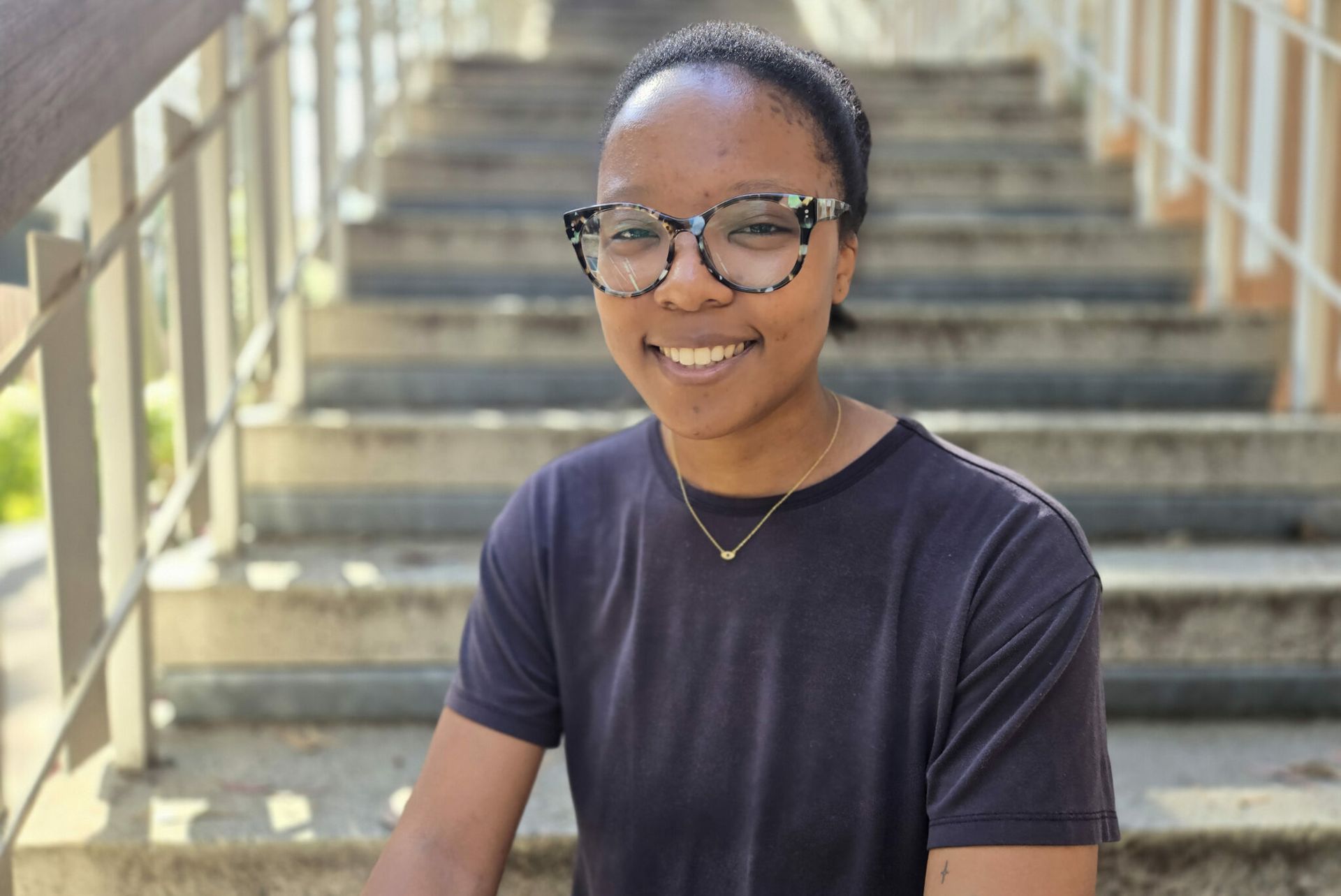
Doulas are non-medical professionals who are trained to support people through the perinatal process, and their work became an interest of Chiddick’s for both academic and personal reasons.
As a global studies major, Chiddick learned how unaccommodating health care policies and guidelines can be for Black birthing people around the world. She also had heard family members’ stories of harrowing experiences giving birth in hospitals.
So with the support of the UCLA/Keck Humanistic Inquiry Undergraduate Research Awards program, Chiddick set out to investigate how doulas support Black women and birthing people. Her goal: to create a community-guided framework that global health organizations like the World Health Organization could adopt as part of their guidelines.
Read more about Leila Chiddick on the UCLA Humanities website.
A future astronaut takes flight
Brandon Lazard, who will graduate in June with a master’s in space physics, is all about the love. Take, for example, his answer when asked about the polarizing Blue Origin space flight.
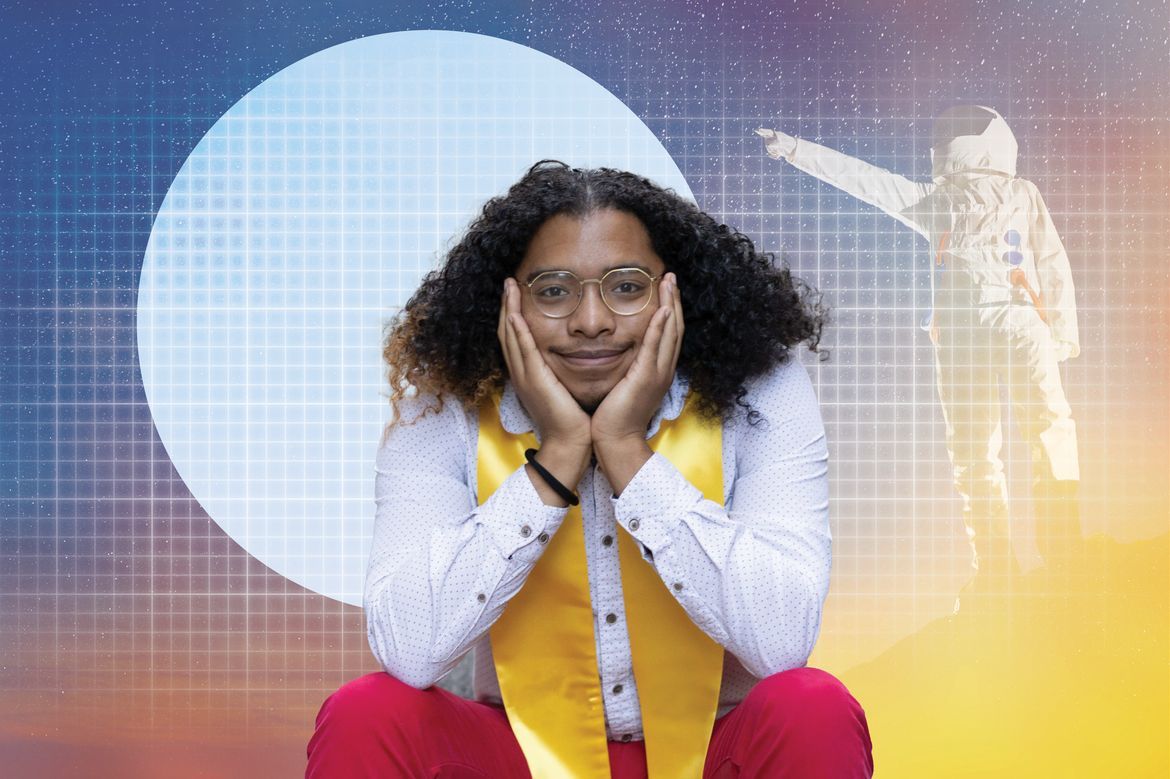
“I have a lot of complicated feelings about that venture, but the most important part for me is that one of the people aboard was Amanda Nguyen,” he said. “She always wanted to go into space but when her rights were stripped away, she responded by becoming an advocate and activist who helped so many people. The fact that she finally achieved her goal is the highlight we should all be talking about.”
In fact, Lazard shares both Nguyen’s commitment to social justice as well as her dream — he, too, hopes to be an astronaut who makes a difference.
“I want to go to space to be an advocate that space is for everyone, not just the rich or people who look a certain way,” Lazard said.
Read more about Brandon Lazard on UCLA Newsroom.
Finding confidence through research
When Ananya Ravikumar moved from Bangalore, India, to Los Angeles to start her journey at UCLA, she was stepping into the unknown. New place, new school, new independence — it was a lot to take in.
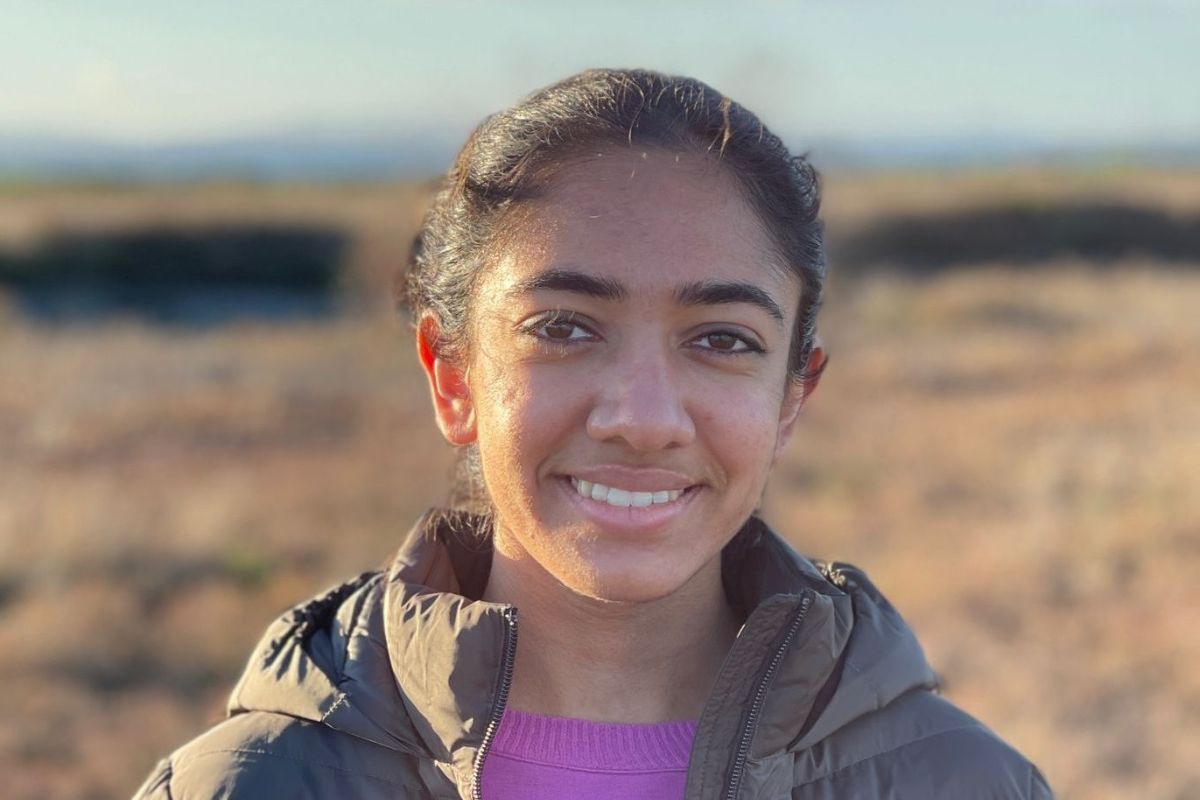
“I came in feeling very overwhelmed,” she said. “Now, standing on the other side, I feel more secure and know that I can handle change a lot better than I would have before.”
Ravikumar is graduating this June with a bachelor’s degree in molecular, cell and developmental biology with a minor in biomedical research. She sees her time in college as a journey toward self-confidence — in the lab, classroom and life.
Academically, she found clarity early on. Her high school interest in biology evolved into a passion for understanding disease at the molecular level.
“I was interested in immunology because it connects to public health,” she said. “But I’ve always wanted to know why things happen in the body.”
Read more about Ananya Ravikumar on UCLA Newsroom.
‘We wanted every student to feel like they belonged’
For Sohan Talluri, science has always been personal. The San Jose, California, native’s academic path was shaped as much by what happened in doctors’ offices as in classrooms and labs.
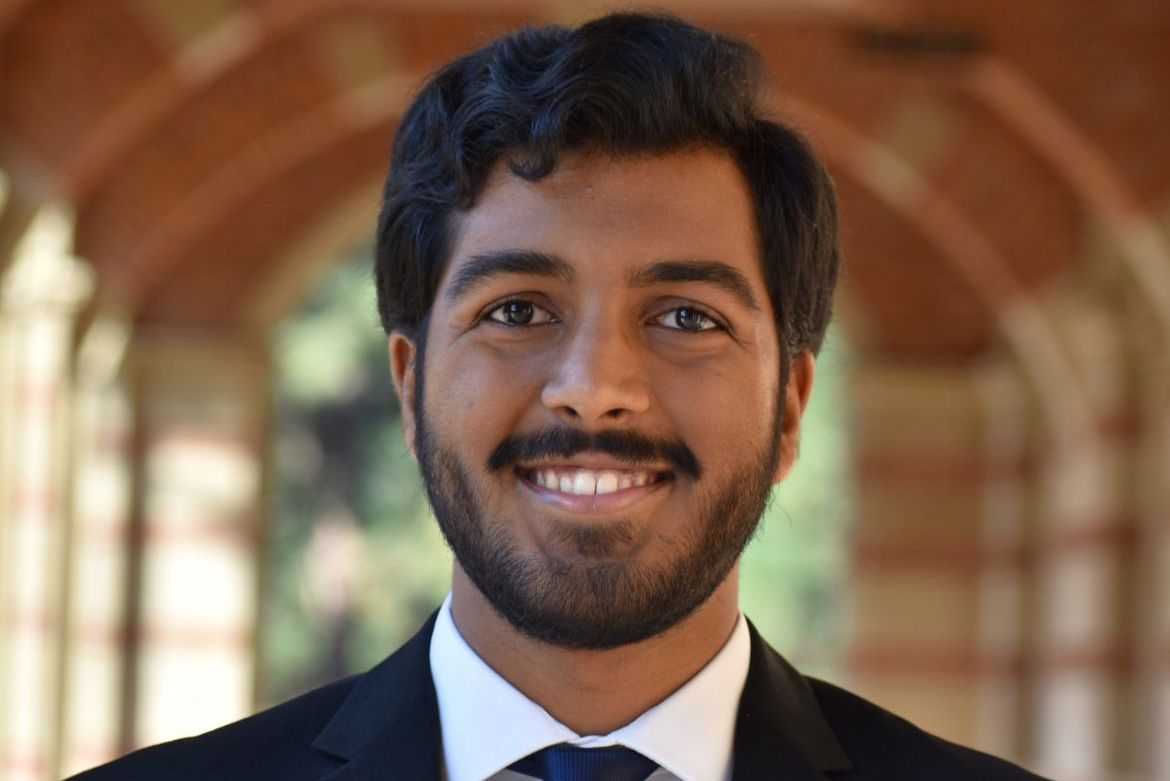
Talluri grew up managing severe food allergies, often visiting specialists and hoping for a cure. “I had hopes that whatever they would give me would sort of fix this problem,” he said. “This was not the case.”
While Talluri was diligent about managing his allergies and never experienced a severe reaction, his younger brother landed in the emergency room on several occasions. Seeing his brother suffer through those complications sparked Talluri’s interest in understanding immunology.
“I was looking into labs, and I knew that food allergies and asthma had not only affected me, but my family,” he said. “Getting into research about immunotherapy treatments felt like a natural next step.”
Read more about Sohan Talluri on UCLA Newsroom.
She turned a love of reading into care and community for patients
Amanda Penichet first learned the power of reading aloud from her grandmother, Mimi, who came to Los Angeles from Cuba on a visa to care for her and her older brother.
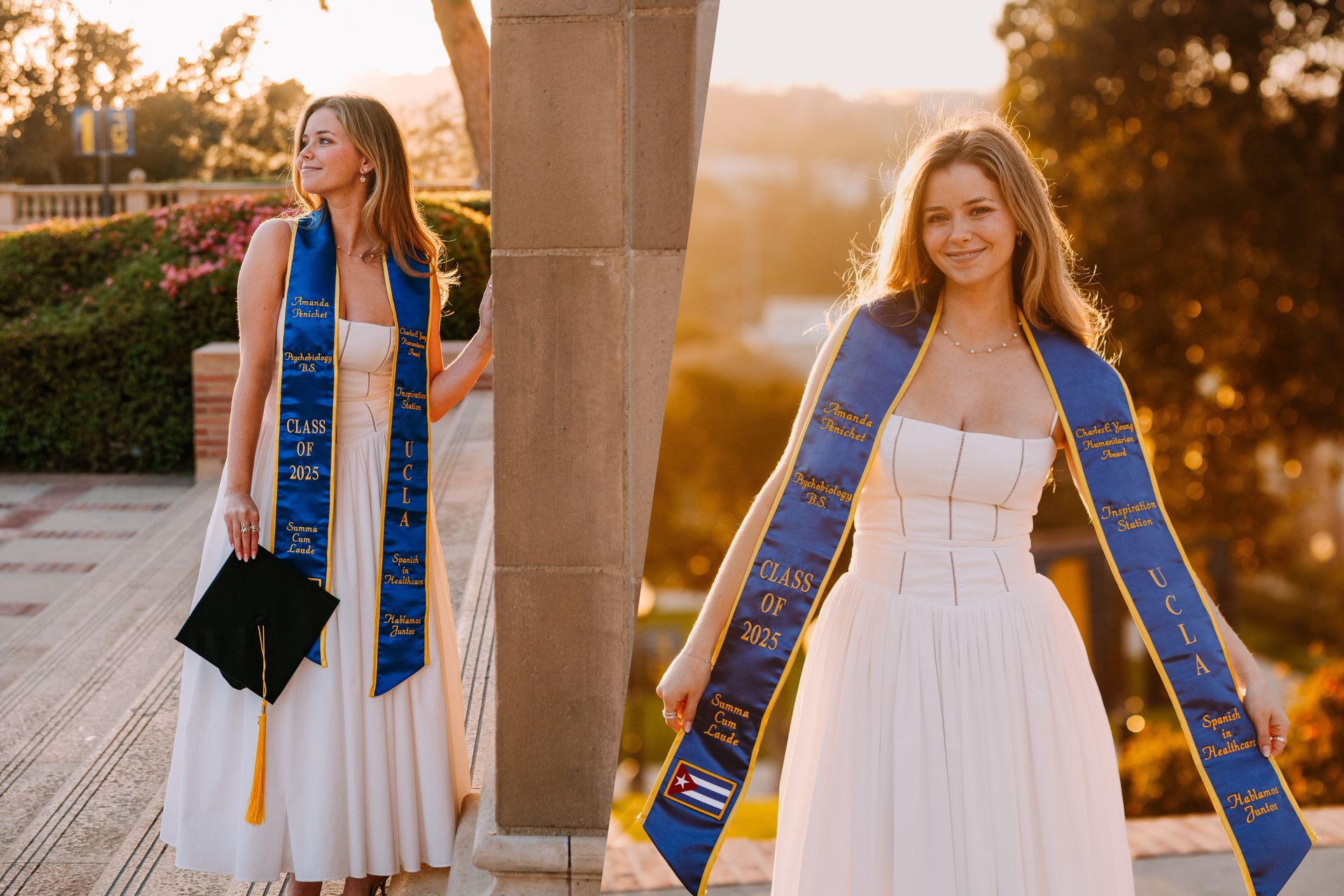
As Penichet’s parents, both Cuban physicians who immigrated to Los Angeles in 1995, worked to rebuild their medical careers in a new country, Mimi nurtured the children, passing on life lessons, culture, art and Cuban cuisine.
“In my earliest memories of poetry and medicine, I’m sitting at my abuela’s kitchen counter,” said Penichet, who is graduating from UCLA with a degree in psychobiology. “She would read me Cuban poetry, especially the verses of José Martí, while slicing plantains and stirring black beans.”
Those early experiences led to a lifelong love of reading for the trilingual Penichet, which sparked a volunteer passion project she would go on to develop at UCLA: the “Inspiration Station,” a bilingual (English-Spanish) bedside reading program.
Read more about Amanda Penichet on UCLA Newsroom.
‘Our stories matter, our voices matter’
When Ryan Horio arrived at UCLA in fall 2021, the COVID-19 pandemic was still dominating the headlines. So, too, was the spate of anti-Asian discrimination and violence that followed in its wake, fueled by racist rhetoric about the pandemic’s causes. Pew Research reported at the time that one-third of Asian Americans were living in fear of threats or physical attacks — a crisis that affected Horio at a profound level.
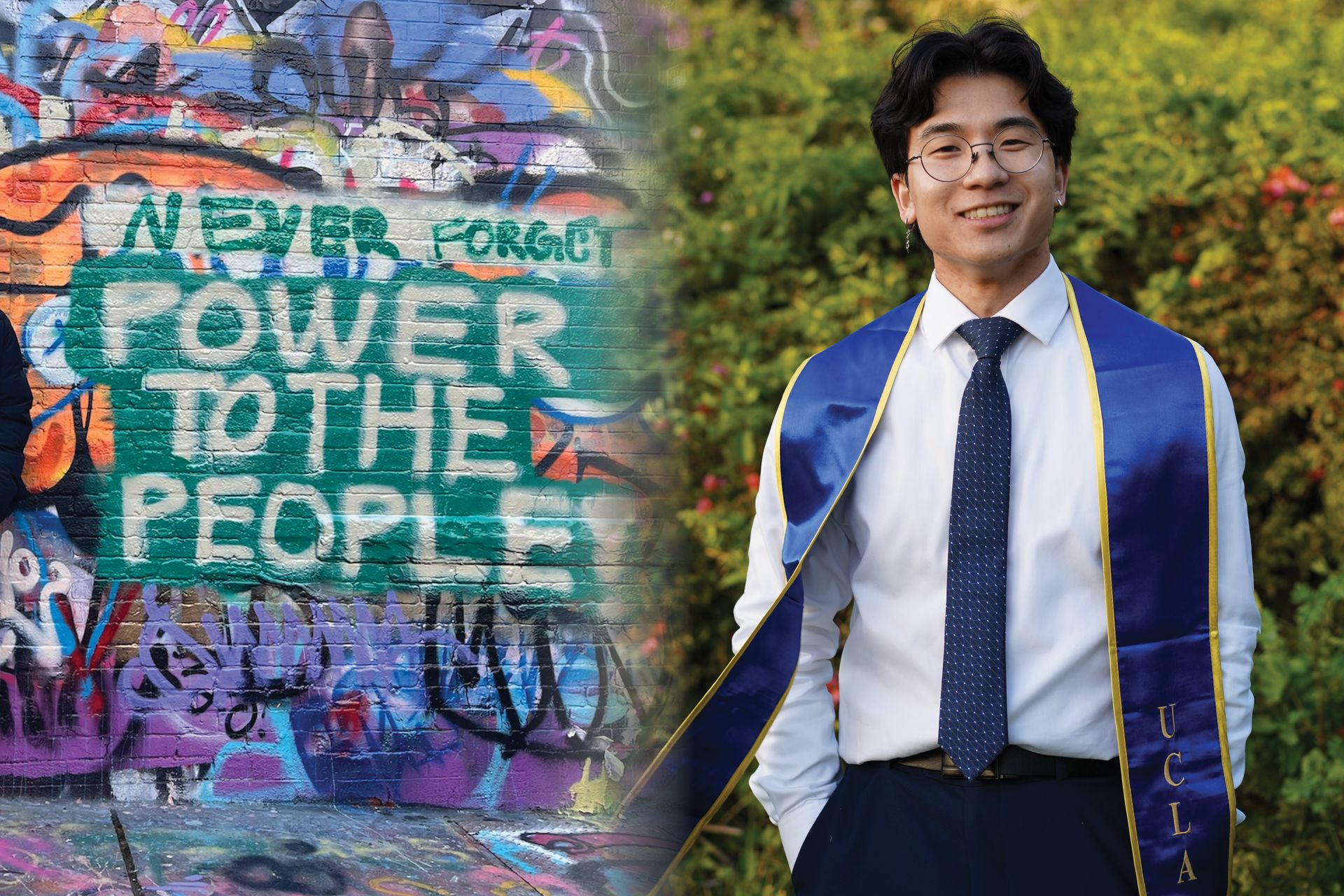
So that winter quarter, when he took an upper-division seminar analyzing the mass incarceration of Japanese Americans during World War II and drew a connection to his own grandmother’s story as a survivor, it was a turning point. Learning for the first time about what she had endured — something his family had not discussed for decades — Horio also gained a new awareness about his own experiences.
“At first, I was frustrated. Why didn’t I know about what had happened to my Obachan, my grandmother, and the struggles and injustices she went through?” said Horio.
Read more about Ryan Horio on UCLA Newsroom.
An English major’s video games are opening ‘new passages into the future’
A new video game developed by a UCLA senior explores the concepts of grief, diaspora, intergenerational conflict and unconditional love — all from the perspective of a young girl’s emotional support animal.
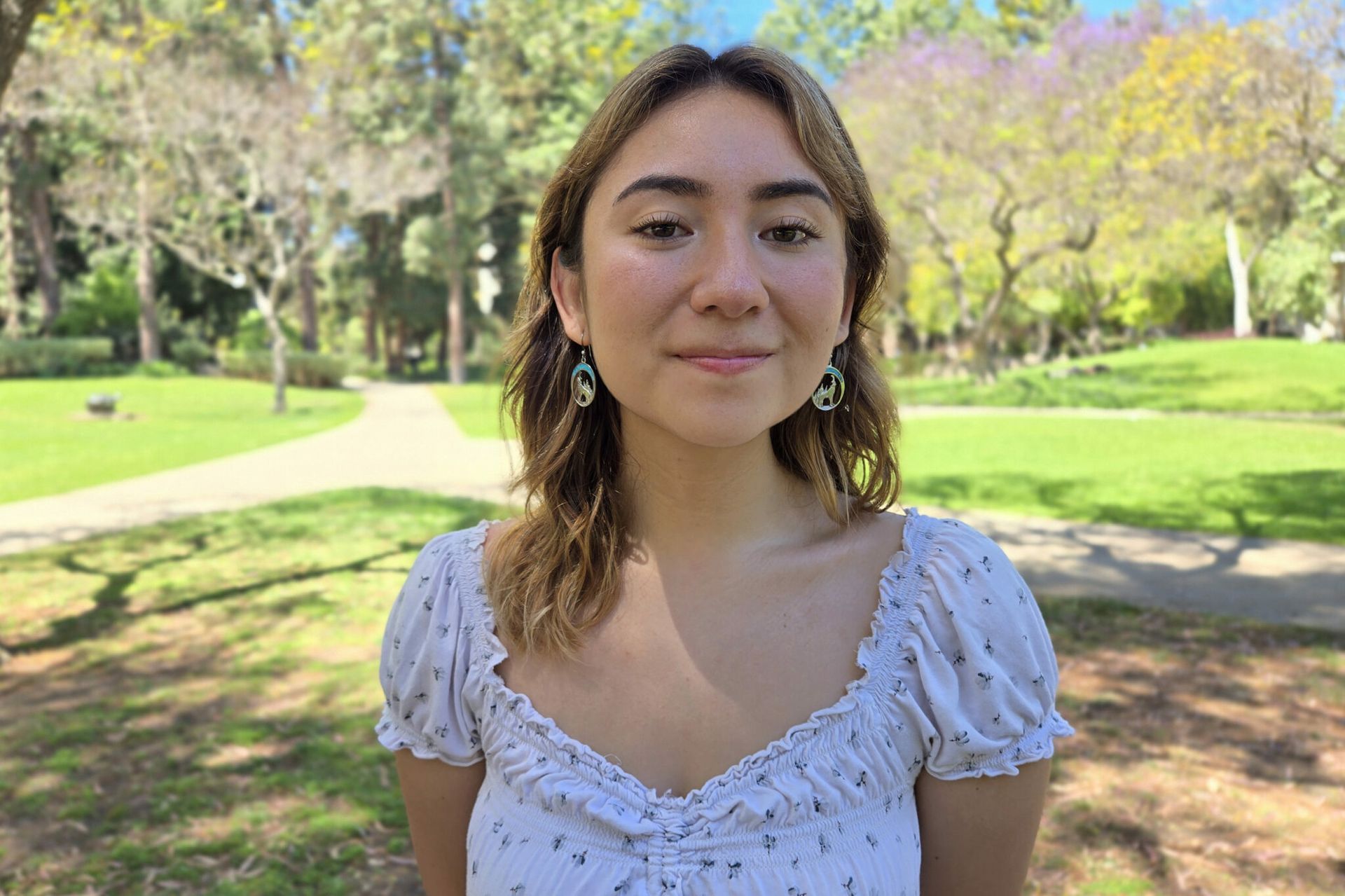
The game, called Your Lola, was created by Nicolette Bond, who in June will graduate with a degree in English and a minor in digital humanities. From the perspective of a cat named Lola, players move through a family’s apartment, collecting new “smells” such as a dusty Doris Day album, old clothes and adobo. Each new smell helps the player piece together a narrative.
As the story progresses, players hear conversations between a girl named Sofia and her mother, who are grieving the loss of Sofia’s grandmother. Creating Your Lola took on special meaning for Bond because it allowed her to delve into her upbringing as a second-generation Filipino American.
Read more about Nicolette Bond on the UCLA Humanities website.
A lifelong commitment to justice
For Grace Harris, a graduating senior majoring in international development studies (IDS) with a minor in geography, UCLA has been more than an academic home — it has been a launching pad for a lifelong commitment to justice.
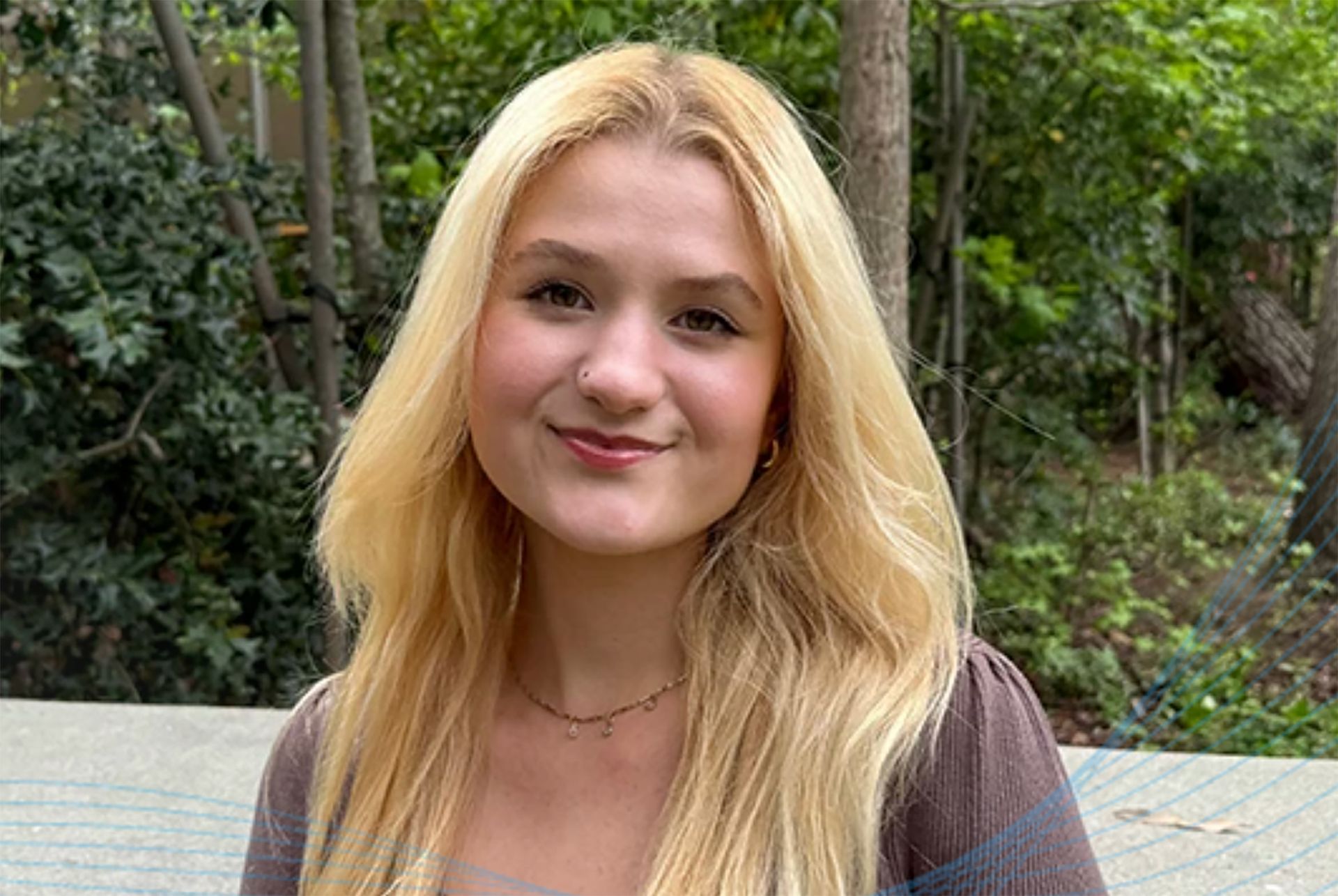
Raised in Tampa, Florida, Harris first became politically engaged in high school, reacting to book bans, criminalized protests and an increasingly repressive political climate. “They’re making a new category to criminalize protests because of Black Lives Matter — that’s crazy,” she recalled. This feeling of injustice carried her across the country to UCLA, where she found a university community that aligned with her values.
Drawn initially by the university’s reputation and California’s cultural scene, Harris quickly discovered that the IDS program offered something distinct: an interdisciplinary framework that explored not just international systems, but the roots of injustice.
Read more about Grace Harris on the UCLA International Institute website.