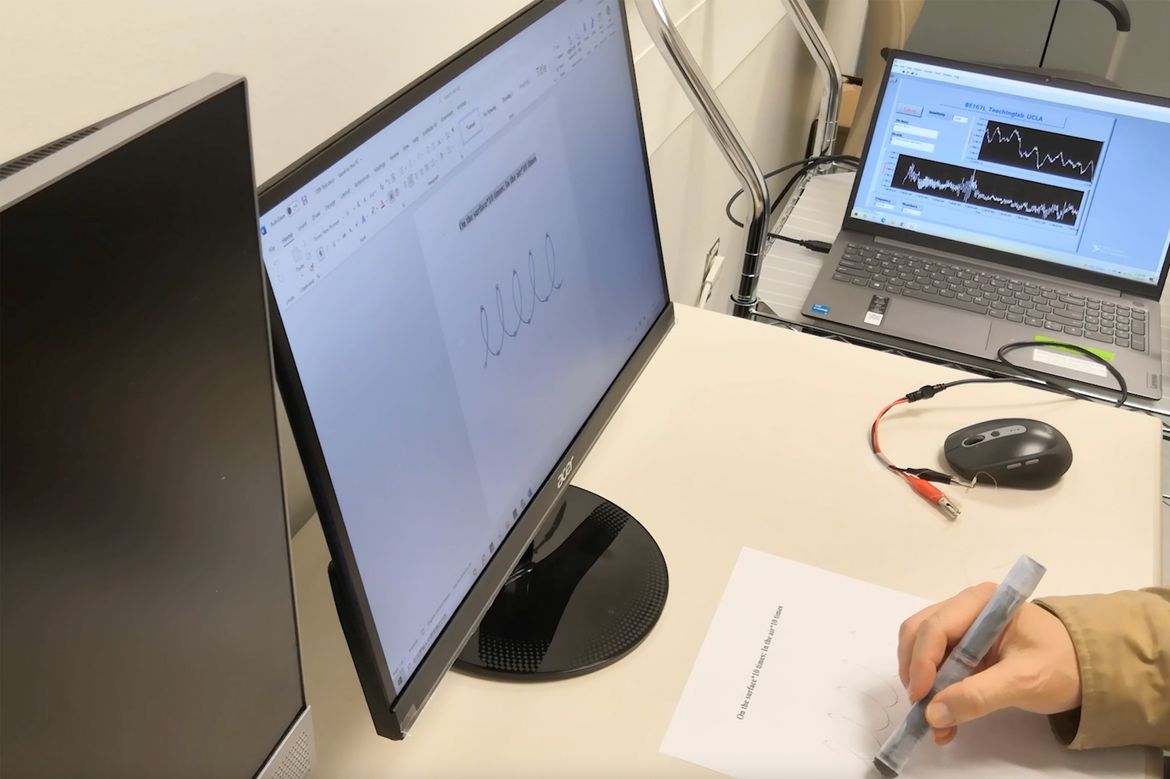
Researchers led by Jun Chen, an associate professor of bioengineering at the UCLA Samueli School of Engineering, have developed a seemingly simple yet effective tool: a smart, self-powered magnetoelastic pen that could help detect early signs of Parkinson’s disease by analyzing a person’s handwriting.
Every year, tens of thousands of people with signs of Parkinson’s go unnoticed until the incurable neurodegenerative condition has already progressed. Motor symptoms, such as tremors or rigidity, often emerge only after significant neurological damage has occurred. By the time patients are diagnosed, more than half of their dopamine-producing neurons may already be lost.
This kind of diagnostic delay can limit treatment options and slow progress on early-stage interventions. While there are existing tests to detect biomarkers of Parkinson’s, including cell loss in the brain and inflammatory markers in blood, they typically require access to specialists and costly equipment at major medical centers, which may be out of reach for many.
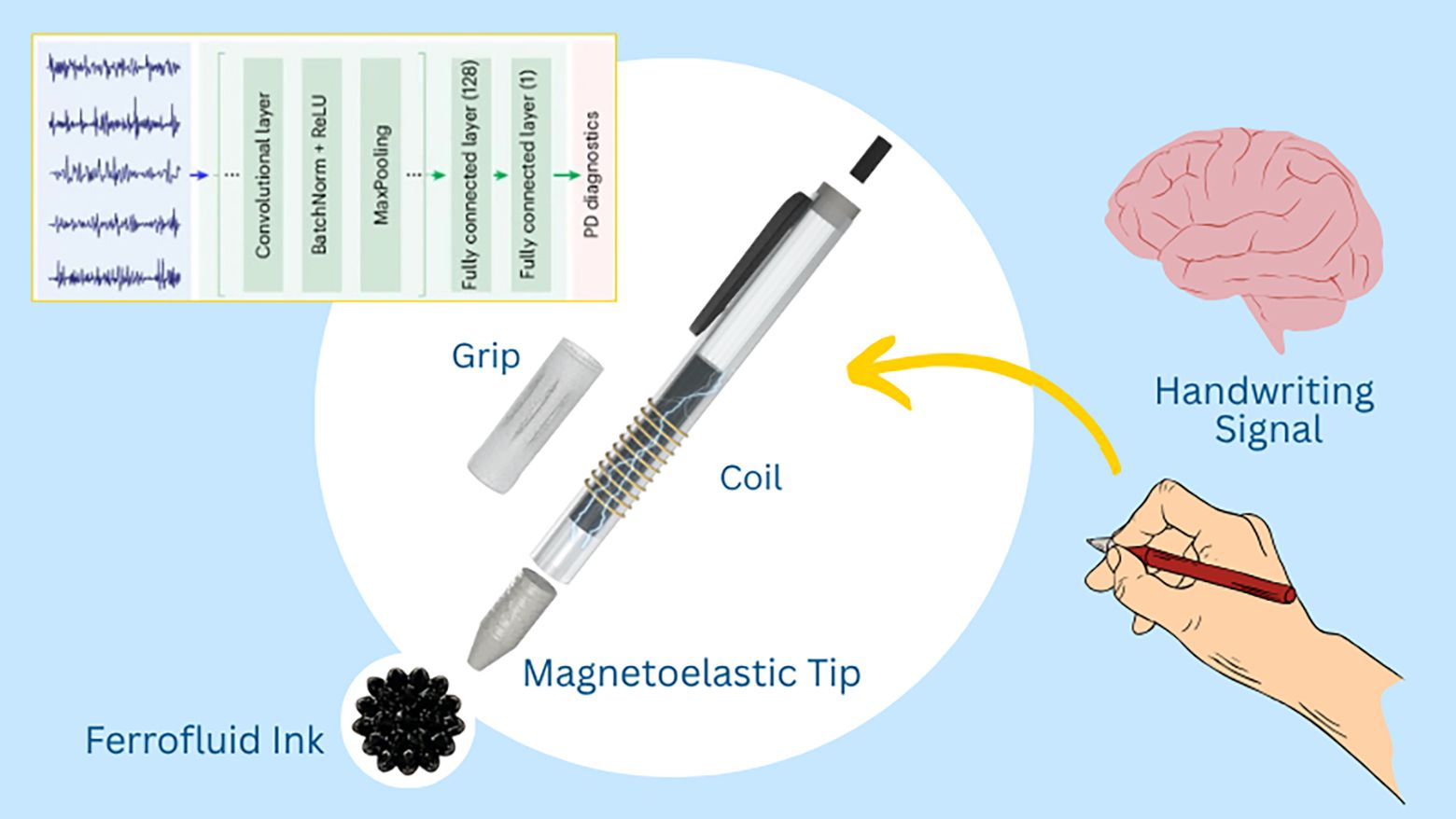
The highly sensitive diagnostic pen, described in a UCLA-led study and published as a cover story in the June issue of Natural Chemical Engineering, features a soft, silicon magnetoelastic tip and ferrofluid ink — a special liquid containing tiny magnetic particles. When the pen’s tip is pressed against a surface or moved in the air, the pen converts both on-surface and in-air writing motions into high-fidelity, quantifiable signals through a coil of conductive yarn wrapped around the pen’s barrel.
Although not intended for writing, the pen is self-powered leveraging changes in the magnetic properties of its tip and the dynamic flow of the ferrofluid ink to generate data.



