In an effort to support the region’s recovery in the aftermath of the 2025 Los Angeles County wildfires, a team of UCLA researchers is joining with community partners to test soil samples from neighborhoods hit hard by the blazes.
“Soil screening is a necessary first step, but it’s not a solution,” said Kirsten Schwarz, an associate professor of environmental health sciences at the UCLA Fielding School School of Public Health and a leader of the LA Urban Soil Social Impact Collaborative, a community-university partnership funded by UCLA’s Center for Community Engagement.
“Fire-impacted communities," Schwarz said, "are eager for actionable solutions and soil amendments, like compost and mulch — low-cost, accessible options that help us manage risk.”
The January blazes in the Pacific Palisades–Malibu area, adjacent to the Santa Monica Mountains, and the Altadena –Pasadena communities in the foothills of the San Gabriel Mountains, claimed at least 31 lives and damaged or destroyed more than 18,000 structures, according to county officials.
“After the Eaton fire, so many residents were left wondering what was in their soil — what they were walking on, planting in and breathing around their homes,” said Kristy Brauch, a master gardener from Pasadena who works with the project. “There’s a real mix of fear and urgency, but also an incredible desire to understand and take action.”
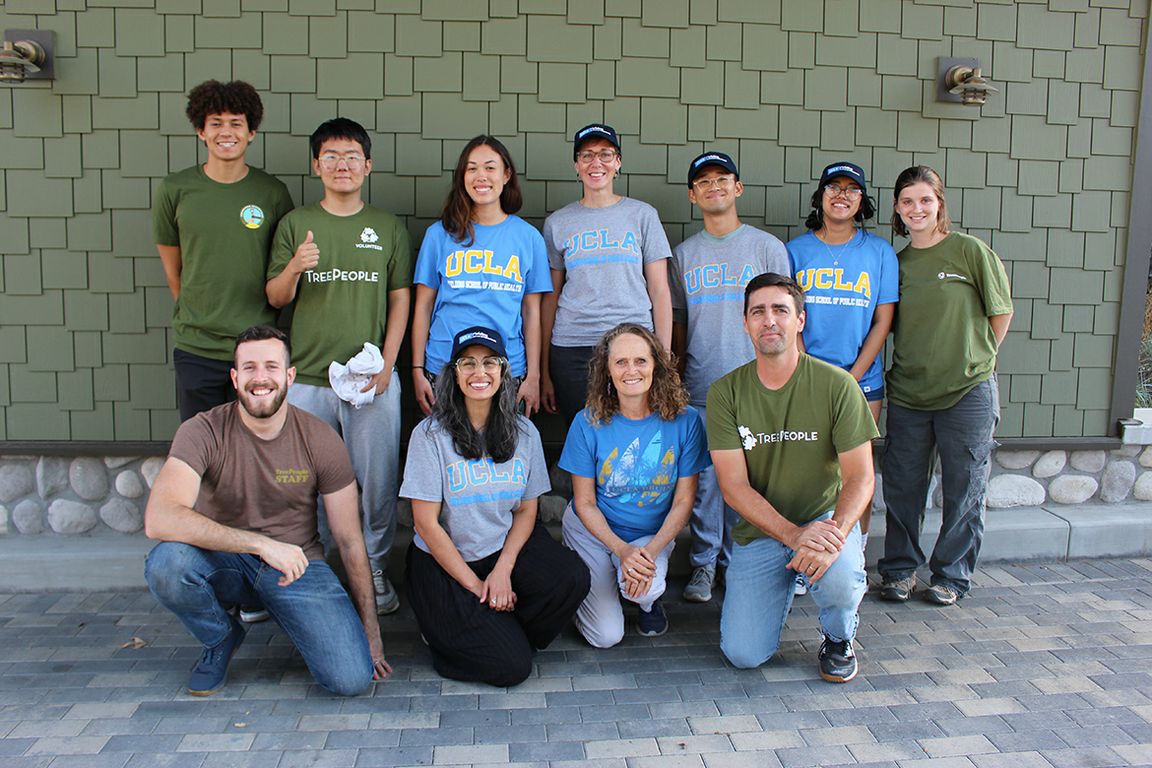
The collaborative, which includes researchers from across UCLA and Los Angeles–based organizations, including the nonprofit TreePeople, is hosting additional pop-up soil testing events, workshops and remediation projects across the region, with the next soil testing event scheduled for Dec. 6, organizers said.
On Oct. 4, an event was held at the Washington Park Community Center in Pasadena. The team welcomed more than 80 residents and screened more than 200 soil samples using portable X-ray fluorescence analyzers to detect heavy metals, including lead, a known cause of significant illness. Participants were able to have as many as three soil samples screened at the event and received personalized consultations on how to improve soil health and safety in their yards and gardens.
“These testing events meet people where they are, transforming worry into knowledge,” Brauch said. “The response has been overwhelmingly positive; my neighbors are already asking when the next one will be.”
The collaborative, co-led by Schwarz, who also teaches at the UCLA Luskin School of Public Affairs, and Jennifer Jay, a professor of civil and environmental engineering at the UCLA Samueli School of Engineering, aims to leverage university research and resources and apply local and Indigenous knowledge to advance equitable access to healthy soils. It includes community-based, tribal, private and academic partners from across Los Angeles.
“Addressing soil pollution in Los Angeles and beyond requires community-engaged approaches that center local knowledge and priorities,” said Monika Shankar, a doctoral candidate in environmental health sciences at UCLA Fielding and a principal investigator on the project. “Our collaborative serves as a proof of concept that meaningful and impactful research emerges when communities are partners throughout the entire process.”



