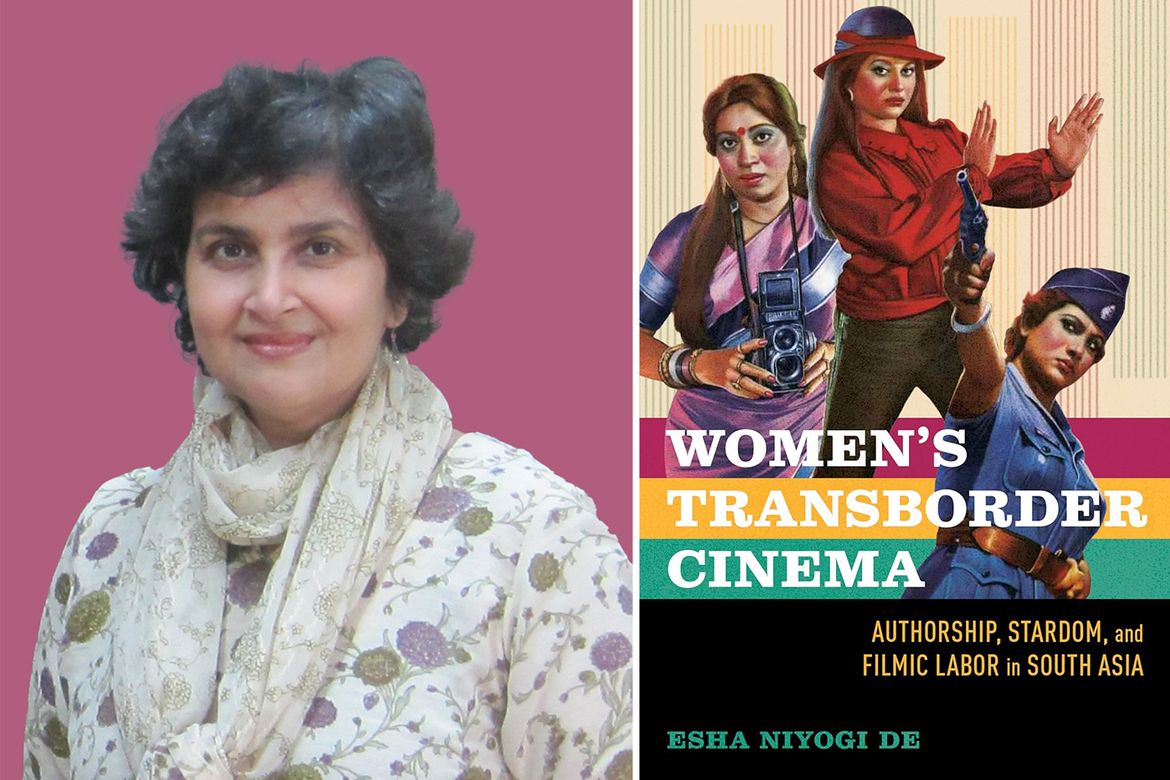
When Esha Niyogi De traveled to South Asia at the end of 2013 to research women in cinema, she uncovered an unexpected narrative.
De, a senior lecturer in UCLA Writing Programs, was visiting the region with the support of a Fulbright regional research award. The work she began then led to her second monograph, “Women’s Transborder Cinema: Authorship, Stardom, and Filmic Labor in South Asia,” which was published in December by University of Illinois Press.
The book unearths a previously hidden history of “star-authors” — women who produced and starred in their own films — in Pakistan, Bangladesh and India during the latter half of the 20th century. De’s research found that star-authors crossed territorial, conceptual and institutional borders in both the aesthetics and production of their films as a form of resistance.
Go to the UCLA Humanities website to read a Q&A with De, who discusses how the framing for her book evolved, the surprises and challenges she encountered throughout her research and the importance of the term “transborder” in the book’s title.