Playwright Funmilola Fagbamila anticipates that audience members of her newest production will clutch their proverbial pearls while experiencing the one-woman show. At face value, how could they not? The UCLA alumna’s play, “The Underbelly,” which will premiere in Los Angeles later this year, features two archetypes of modern gender wars — the often politized sociological and cultural debates currently surrounding gender identity and roles — and their respective ideologies that are “flawed, complex, sound and paradoxical in nature,” said Fagbamila, who will star in the two-act play.
In a video teaser for the production, male character Steph is shown splayed on a maroon velvet chair, smoking a cigar and delivering a spoken word-like monologue: “Old broads, menopause, frozen eggs … Y’all talking about sexual harassment, but if he’s got the bag and the swag, he’s attractive.” The video then cuts to Genevive in the chair, clad in a voluminous red gown cinched high to reveal gracefully crossed legs and slingback heels: “You’re addicted to porn; you have no real career. Tell me I’m going to die alone because it’s your greatest fear. … Always talk about how women should submit. How about you submit an application (for a job)?”
Steph and Genevive are contentious and controversial, even triggering. But, Fagbamila guesses, after the initial shock of meeting them, her audience will “release their pearls,” breathe and hopefully move into the next phase of processing what Steph and Genevive are saying. While she suspects many will silently agree with Steph or Genevive — as the comments on Instagram about the video are already suggesting — Fagbamila hopes the audience can see that current cultural conversations about masculinity and femininity are as flawed as they are valid.
“I do find it somewhat concerning that audiences might simply gravitate toward agreeing with the character they identify with rather than critically engaging with the ideas presented,” said Fagbamila, who examined similar themes of connection across differences in her internationally touring play “The Intersection,” written during her fellowship at UCLA’s Activist-in-Residence Program. The play, also a one-woman show, features four different characters whose stories shine light on the complexities surrounding Black political identity.
“The desire for consensus and the need to be right frequently undermine the potential for coalition-building, and we find ourselves in perpetual conflict with those who, in many cases, we could and should be collaborating with to improve our societies,” Fagbamila said.
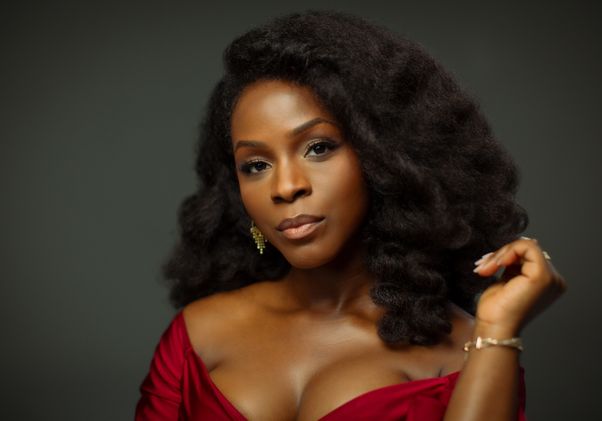
Fagbamila is a founding member of Black Lives Matter, having contributed to the organization’s inception in 2013 and served as the arts and culture director of the L.A. chapter for years following. She attended UCLA as a graduate student in African American studies and now is a lecturer in the Pan-African studies department at Cal State Los Angeles.
Newsroom caught up with Fagbamila to speak about the creative process for “The Underbelly,” what society may be missing in its ongoing examination of gender identity and why structures that define identity can — and must — be challenged where necessary.
In “The Intersection,” you explored identity through character-driven narratives. “The Underbelly” seems to carry a similar thematic focus. How has the creative experience of the former influenced the conception and execution of the latter?
“The Intersection” and the audience’s reaction to the characters allowed me to explore the profound impact of holding up a mirror to people and prompting them to reflect on their ideas and how they project those ideas into the world.
When you place people in a room with characters they agree with, admire or feel represented by — alongside characters they disagree with or even dislike — you quickly see how people gravitate toward the former. Confirmation bias often prevents these people from recognizing the flaws in the arguments. The audience may even be met with the discomfort of silently enduring moments where the character they oppose speaks their truth.
I created Steph and Genevive — flawed, complex, sometimes illogical, yet at times sound in their sociopolitical assessments — to help us navigate our troubling relationship with this kind of nuance. As I learned with “The Intersection,” audiences are more than willing to engage with complex topics and the necessary nuance. It is crucial to be principled, clear and unrelenting in your stances — most especially when you are opposing ideologies and structures that are harmful and unjust. But amid this clarity, we must also leave room for the gray area if we are to foster intellectual honesty and deeper connectivity. People often fear being labeled as “fence-sitters,” when in reality, the truth often resides in that uncomfortable gray space.
A central theme in my creative work is examining our collective need to be “right.” In order for us to be right — and, thus, valuable and worthy — our ideological opponent must always be “wrong.” This thinking gets us nowhere, particularly for my movement makers, culture shifters and those of us striving to do good in this world. We will never get to a point of consensus. And conflict is to be expected, but we must be willing to engage with each other with greater sophistication.
The production level of the video teaser for “The Underbelly” is fantastic. The editing allows for an almost rhythmic battle of ideologies between Steph and Genevive. How will this look in a live stage play setting?
We’ll see a continuation of this in the full-length stage play, complete with live instrumentation. I’ve always been deeply inspired by the layers of musical theater — instrumentation, dialogue, dance, underscoring — and how all of these elements come together to enhance the work of storytelling. While I’ve staged my previous projects with live piano, DJing and other musical elements, “The Underbelly” will elevate those components to a new level — perhaps more than I can even anticipate before opening night. Without saying too much too soon, I plan to incorporate violin, as well as a broader diversity of live instruments and vocals, creating a richer soundscape.
True to my previous work, the stage play will take the form of a one-woman show, where I’ll stage the individual character monologues. With the creative use of technology, the audience will witness these two characters — portrayed by one performer — interact with one another.
What do you want people to take away from the play?
At the end of the first promotional video for the project, we hear audio from the well-known 1971 conversation between two iconic, beloved figures from the Civil Rights to Black Power era, James Baldwin and Nikki Giovanni. Giovanni says, “Because I love you, I get the least of you.” She’s reflecting on the painful dynamics between Black men and Black women in 1970s Black America — and unfortunately, many, if not most, of the questions and concerns she raised still resonate today.
In this moment, I am acutely aware of the deep pain between Black men and Black women. While this reflects broader societal struggles, the specific pain exchanged within Black communities is far more layered and nuanced than what the general public might understand. When you take a global Black peoples that has had to assert — by force — their humanity, their wholeness, their dignity and their beauty — navigating within a colonial, then neocolonial and ultimately an anti-intellectual, post-racial context — you encounter a profound and often debilitating dilemma. Despite the odds, self-determination remains the ultimate goal.
In the character introduction video, I included a quote by Ghanaian author Ayi Kwei Armah: “Pain too long absorbed dulls intelligence. Pain endured, channeled for energy, used for conscious work aimed at ending the source of pain, sharpens intelligence.” This quote speaks to the essence of what I hope people take away: We are in pain and we must address it. It’s not just about ideological differences or disagreements; it’s about a pervasive, generational pain that is fueled by a fear of inadequacy. This pain is the root of much of the chaos we see in the world today. And rather than relying on the typical pain management and coping mechanisms, we must confront and work to dismantle the source of this pain. This will require a level of sophistication that we have yet to fully reach.
I’d love to hear a little bit more about your time at UCLA as a graduate student. What inspired you to come here and what has inspired you to continue to be so connected with the university?
While convenience certainly played a role initially, it was the transformative mentorship and community within UCLA’s African American Studies department, as well as departments such as UCLA Sociology, that would tremendously influence my development as both a thinker and an artist. For that, I will always be deeply grateful.
In my graduate program, I was introduced to a new level of intellectual rigor, one that influenced me in ways I hadn’t anticipated. My confidence in my knowledge grew exponentially, and it opened doors for me to share my understanding of the world and my creative productions with global audiences.
I am interested in the artist’s role as mirror, the role as disruptor, the role as bridge, the role as healer and the duty to reflect the times. During my years at UCLA, I was able to refine my vision for my creative contributions to this world. Concurrently, Los Angeles-based artists, thinkers and organizers were giving legs to what would become an international movement for racial justice. It was the beginning of something none of us could have ever imagined.