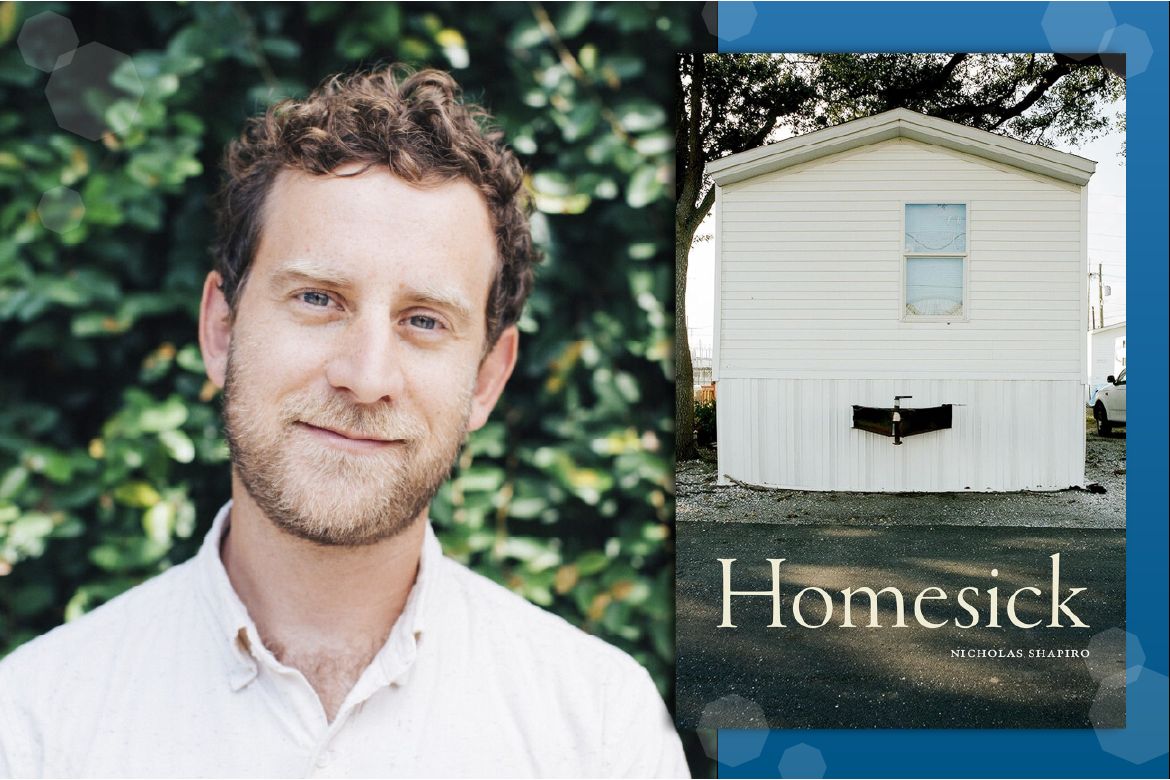
Although 20 years have passed since Hurricane Katrina made landfall, its devastating impacts on public health, the environment and the economy are still widely felt. But for the average American, one lesser-known branch of the disaster — which UCLA’s Nicholas Shapiro has been studying — may hit particularly close to home.
After the storm, the Federal Emergency Management Agency issued mobile homes as temporary shelters for survivors. Despite being found to contain alarming levels of harmful chemicals, including formaldehyde — a carcinogen used as a binding agent in engineered woods — the trailers were later resold as permanent housing, exposing multitudes of people to these toxins. The health impacts have been catastrophic, and a $40 million class-action settlement did little to help plaintiffs.
For Shapiro, a professor in UCLA’s Institute for Society and Genetics and Institute of the Environment and Sustainability, the tragedy spurred a 15-year research journey to physically track down toxic FEMA trailers and work with impacted communities to examine evidence, monitor exposure and build environmental remediation systems.
Thanks to funding support by Mark Cappellano and the Skyscrape Foundation, Shapiro compiled his findings in a new book. In “Homesick,” out Oct. 3, Shapiro draws a line from the crisis to an even farther-reaching disaster: the toxins found in those trailers also reside in the average American home, owing to a shift in building practices since the 1950s.
“In investigating this massive public health threat, I wanted to ask: How did we get here, and how can we get to a better place?” said Shapiro, who received a 2024 UCLA Public Impact Research Award for his multidisciplinary, community-engaged work related to chemical contamination, climate change and medical forensics. “The book is not just about uncovering this tragedy, but also about testing accountability and how we move toward healthier futures.”
In an interview, Shapiro spoke about the urgent need for this work — especially as Los Angeles rebuilds after the Southern California wildfires — and some good reasons for hope.
What inspired the 15-year research journey behind “Homesick”?
Housing is supposed to be this fundamental shelter — the place that health grows from. And over the past half-century, it’s become the seat of chemical exposure. I’m interested in grappling with that paradox, and I’m interested in accountability. In the case of a sick home, the lines of accountability are often unclear; it’s a private space that the government doesn’t regulate as well as other spaces. I’m interested in how we can better regulate them so they can live up to the dream of homes being truly safe spaces.
The FEMA trailers are an inroad to understanding how all of our homes became toxic. The average American home has enough formaldehyde to exacerbate asthma and allergies and cause respiratory harm. Mobile homes are much worse, and then these FEMA trailers were much worse even than that, because of the emergency circumstances when they were built. So I’m looking at these extraordinary toxic events and how they relate to the everyday, mundane toxicity that the average American is facing all the time.
You traveled thousands of miles to meet with residents in this “diaspora” of toxic trailers. What did this work mean to you?
I met some incredible people and learned a lot during those 15 years. “Homesick” refers to multiple things — it’s about homes making people sick (the subject of the book); it’s about the sick markets and concepts that we’re at home in that perpetuate predatory housing inclusion (the condition we all live under). The method is also homesick in a way, desirous for something better than now. A lot of writing the book was me feeling homesick in my own discipline and trying to build more robust methods that are accountable to the people whose stories make this book possible. That’s part of why the research took so long, because I was re-skilling: performing analytical chemistry, doing environmental engineering, collaborating with physicists. The book is structured around these experiments, where I’m not only single-handedly trying to uncover and piece together a national public health crisis but also trying to figure out how change can really happen.
In the book, you speak to a “desire for a radically different future.” What gives you hope for that future?
Trailers have really high formaldehyde levels, but they are also the No. 1 source of unsubsidized, low-cost housing in America. And unfortunately, that low cost is subsidized by invisible costs to people’s health. But at the same time, the thing that makes mobile homes vulnerable, legally and fiscally — that is, the separation from the land — has led to some amazing mobile home communities on collectively owned land. All over the country, people in mobile home parks are collectively buying the land, creating housing security at an affordable cost. And there is still work to be done — that original “homesick” part of the toxicity of these homes decreases as they age. But I think mobile homes are really teaching us about ways that we can collectivize our resources while maintaining our private homes. They also have the most concentrated ownership of any form of home construction making scalable change much faster than in conventional homes.
What changes do you hope the book will ultimately inspire?
Locally and nationally, all sides of the political spectrum are pointing toward the lack of affordability of housing. A key part of the housing solution for the post-World War II housing crisis was manufactured housing, amounting to over 40% of sold homes in 1969.
With imaginative collaborations between environmental health engineers and these cooperative trailer parks to work toward creating safety standards. When I spoke with people in these co-ops, that’s the thing they said they needed to work on most: making clear standards for how to climate-proof these homes, waterproof them, reduce the chemical exposure, increase the ventilation. That’s a dialogue that I hope to be a part of, in thinking about how to create self-determined, healthy communities.



