Madeline Adamo is the features writer for UCLA Newsroom and a contributor to UCLA Magazine. She visited UCLA Library Special Collections on March 5, 2025, to experience the “Dorothy Arzner papers” after learning about the director’s connection to UCLA.
As I waited for a curator at UCLA Library Special Collections to open freshly wheeled-out boxes, pristine and almost sterile on the outside, I felt nervous, as if the former owner of archival items within, filmmaker Dorothy Arnzner, was going to emerge from behind the boxes herself.
Located off the Ahmanson-Murphy Reading Room — a space that inspires awe for its encased centuries-old books and other relics — the Smith Room viewing area is like a stately vault. Windowless, it has only a small door through which staff materialize to present any of the millions of items requested in advance that UCLA Library Special Collections has in its holdings.
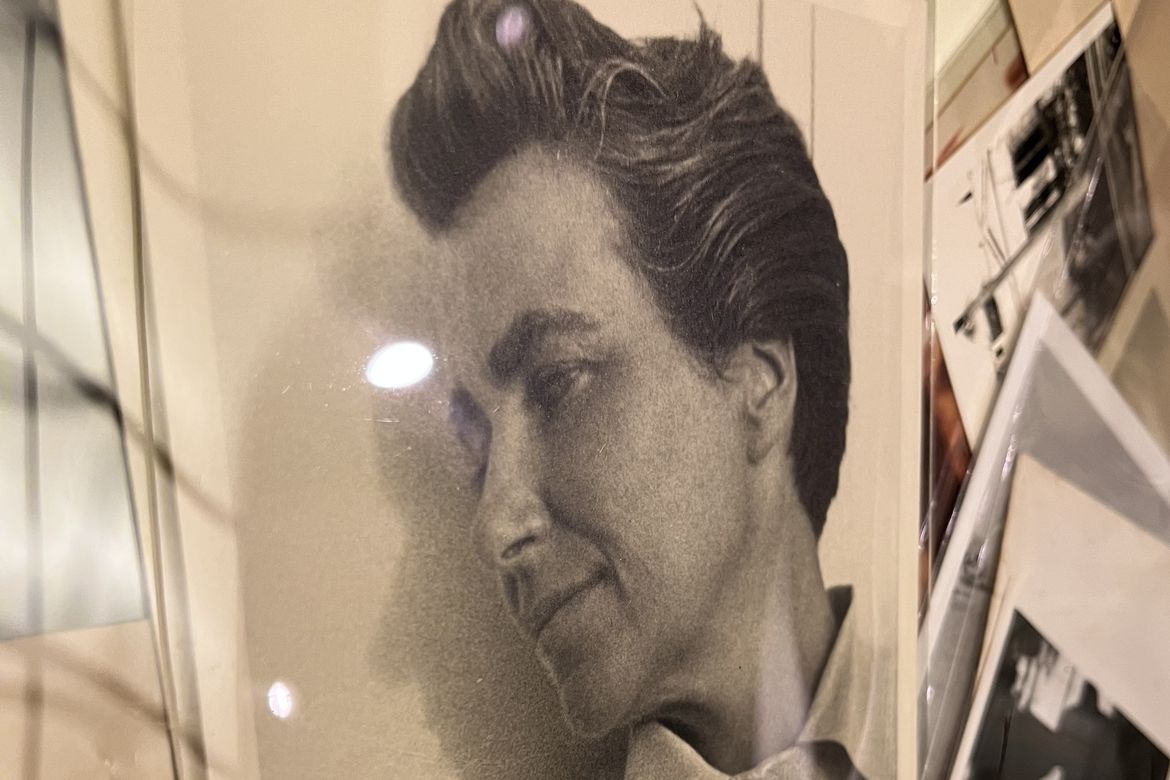
After the curator placed seven boxes on the table in front of me, I began to leaf through what I immediately realized was a treasure trove. The “Dorothy Arzner papers,” which were given to the UCLA Library in 1985, is a collection of personal items belonging to the filmmaker and former UCLA professor who was one of the most historically significant women in Hollywood’s Studio Era.
The papers reflect the life of this trailblazing woman whose career in Hollywood stretched from 1919 to 1943, during which time she was credited by name as director of 16 features. Arzner had an eye for talent, casting Rosalind Russell, Lucille Ball and Katharine Hepburn in early roles that helped propel them to stardom. She also wrote scripts and edited.
Arzner, who was born in 1897, was the first female member of the Directors Guild of America. She’s also credited with inventing the Boom Microphone, being the first woman to direct a talking feature film and was openly out as a lesbian when much of Hollywood’s queer community kept their true selves hidden from the public eye.
To those who study film history, LGBTQ+ studies, and those who revere classic movies, Arzner should be a household name. But for them and even those who discover Arzner by chance, as I did, even small details about her life and career seem to spark a desire to dive deeper.
Luckily, UCLA Library offers a unique advantage for those wishing to peek into Arzner’s world, making it a top destination for Arzner researchers. The Arzner papers in Library Special Collections contains clippings, sketches, photographs, motion picture stills, correspondence, scrapbooks, audio recordings and other ephemera related to Arzner’s life and career.
The UCLA Film & Television Archive, a department of the UCLA Library, has also worked to preserve Arzner’s legacy. The archive houses 10 of her films, six of which it has restored and which can be viewed at its Archive Research and Study Center located in Powell Library.
‘Quite a boy’
A formal round table takes up most of the Smith Room. The space is peppered with smells of antiquity and is covered almost wall-to-wall with bookshelves, antique filing drawers and paintings from bygone eras. Large pillows on the table cradle delicate materials as they’re viewed, adding an element of ceremony to the experience. It’s a former humanities major’s dream.
Miki Bulos, performing arts curator for Library Special Collections, began handing me old Arzner photo albums. Black and white pictures showing the faces of dozens of strangers smiled back at me, many in Victorian-era hats and dresses. These would have been photos of Arzner’s parents and their intimate circle. Then, photos of a little girl possessing that Arzner spunk began to grace the pages. Turn-of-the-century dresses were quickly replaced with mostly trousers in the photos showing Arzner as a teen in the 1910s.
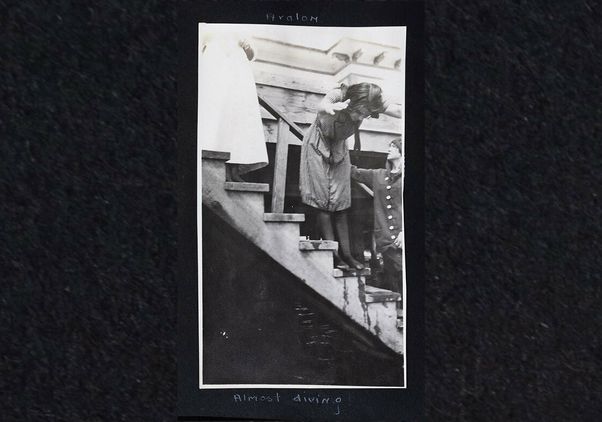
Almost more entertaining than the pictures were the accompanying captions penned by Arzner herself, sometimes in silver ink or pencil etching against the black construction paper holding the photos. “Some athlete,” Arzner wrote as a caption to a picture showing her as a teen on a pull-up bar. “Some rider” accompanies another photo of her,
this time with a bike, followed by “Almost diving,” captioning a shot in which Arzner is seen in a cumbersome early 1900s bathing costume, poised to dive off wooden steps into the water. For what it’s worth, the form looked perfect to me.
The tone of playful self-deprecation reminded me of the captions we all write for our own social media posts today. It struck me that more than a century later, the voice of Arzner’s captions feels remarkably familiar.
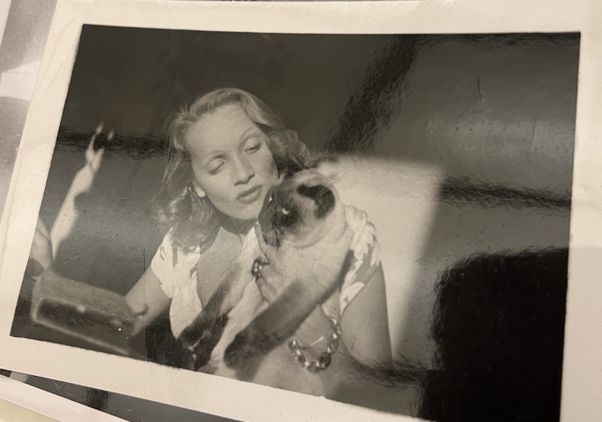
And so does the love Arzner had for cats. Felines showcased in Arzner’s photo albums range in the dozens, starting with a pair of family kittens in a photo so old that the metallic silver forming the shapes in the print is nearly faded away. A Polaroid featured a cat named “Whiskers,” whom Arzner must have owned in her final years spent in
La Quinta, California. Arzner died there in 1979.
There’s also a photo of Hollywood A-lister Marlene Dietrich, who was part of a women’s LGBTQ+ community in Hollywood with Arzner called “The Sewing Circle,” holding Arzner’s Siamese cat so lovingly you’d think it was her own. Another page revealed a photo of what must have been Arzner’s childhood pet tortoise, followed by photos from Arzner’s teen years of a coyote pup she and friends seemingly rescued on a trip to Idyllwild. The thought crossed my mind that that tortoise might still be alive.
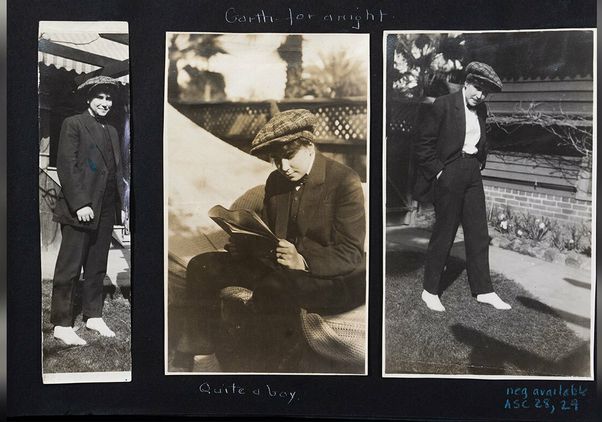
Looking through these albums, I was touched by Arzner’s comfort in her own skin. An undated trio of photos showed a teenage Arzner even then challenging gender norms, as she dressed in typical boy’s clothes from the period, posing in each with a confident flair. “Garth for a night,” the header caption reads. Under the photos, Arzner added, “Quite a boy,” a thought-provoking caption to read now, in 2025, in an era with greater acceptance of gender expression.
A private later life
The bulk of the collection’s boxes, which go somewhat in chronological order, contain a wealth of career ephemera. Newspaper clippings, headshots of various actors, professional letters, directors guild brochures and other markers of her myriad accolades show the prominence of Arzner, who still holds the record for directing 16 features in roughly as many years — a feat unmatched by other women in Hollywood to date.
There are also letters from fans, including a charming one from a middle-school-aged girl with whom Arzner’s influence in the industry made a big impression. Looking at these letters, as well as at humorous sketches and a cheeky — literally — postcard sent to Arzner by friends somewhere with naked Romanesque statues overseas, I can’t help but smile.
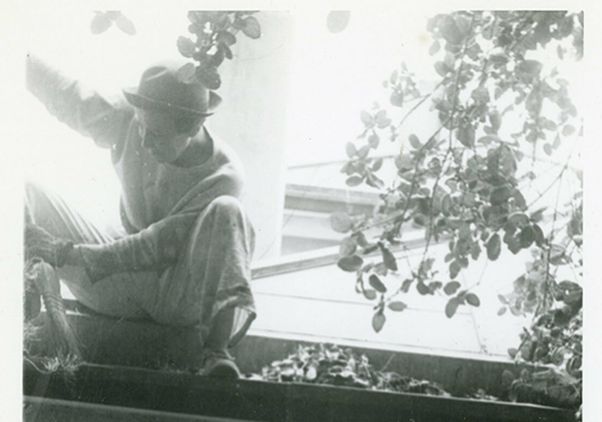
I’m still curious about the Arzner I see in her later years. Personal photos, no doubt taken by her partner of four decades, dancer and choreographer Marion Morgan, show her keenly focused on a rooftop remodeling project. Another shows a close-up of a sunlit Arzner, hair damp and tousled from the sea.
Arzner began teaching at the UCLA School of Theater, Film and Television around 1959 or 1960; the exact start date is hard to confirm. University records show she was listed as a lecturer in the UCLA General Catalog each year from 1960–61 through 1964–65.
Arzner’s hot streak as a director in Hollywood may have been slowed by the start of WWII and other professional setbacks. But what’s clear is that her influence in the industry persisted, as did her many friendships made along the way.
Joan Crawford, who acted in the 50 Pepsi commercials that Arzner directed in the 1950s, was still sending personal letters to Arzner in 1971, like the holiday greeting I found in the last of the collection’s boxes.
“Dorothy dear,
Merry Christmas, and may God’s gentle touch and blessings be with you and your loved ones throughout the New Year.
Love, Joan.”
As I left the Smith Room, I thought about how much Arzner gave to the worlds she moved through — and how much she still offers, to anyone willing to look. UCLA Library’s collection doesn’t just preserve her memory; it invites you to meet her.