In 2022, when the Supreme Court overturned Roe v. Wade with the Dobbs decision, many Americans were taken by surprise. However, for those who had been watching closely, the fall of Roe was neither sudden nor unpredictable. It was the culmination of decades of strategic, ideological and deeply personal work rooted in belief systems, political momentum and a sophisticated reimagining of science and law, all chronicled in the 2024 bestseller “The Fall of Roe: The Rise of a New America.”
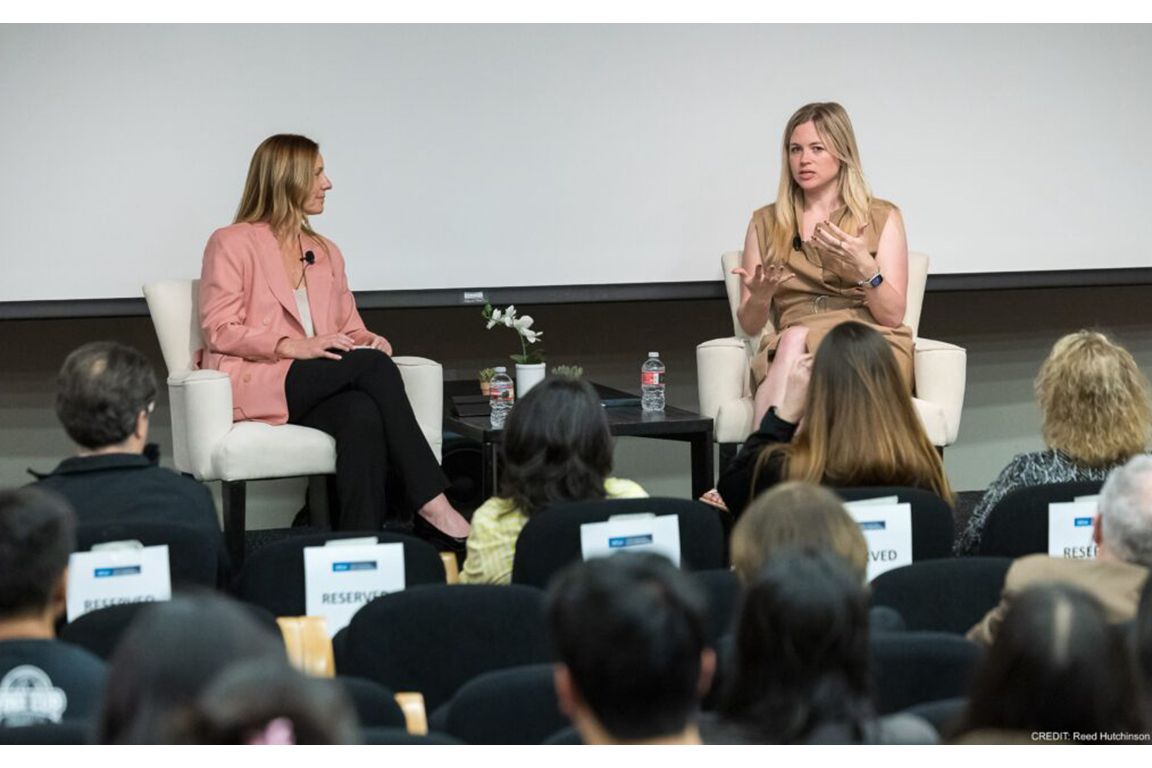
As part of its Distinguished Speaker Series, the UCLA Center for Reproductive Science, Health and Education (CRSHE) recently hosted New York Times journalist Elizabeth Dias, co-author of the book. The conversation, hosted by CRSHE founding director Amander Clark, focused on Dias’ insights from 15 years of reporting on religion and politics, including the extensive research that she and fellow New York Times journalist and co-author Lisa Lerer undertook for their book, which involved over 350 interviews with key figures vying to shape the Supreme Court’s stance on abortion.
During the discussion, Dias highlighted how a conservative minority of women played a pivotal role in ending Roe, spending decades of their careers toward eliminating abortion rights. The author also addressed how anti-abortion groups shaped the science they used in legal arguments.
“They knew that the mainstream science that was being used in law and government was working counter to their goal,” said Dias. “They developed their own institutions, funded by their own supporters, with scientists that were aligned with their philosophical views — and religious views at times — and they built up an alternate scientific stream … not just research and research papers, but also expert witnesses that could go to court hearings and lend scientific credibility to them. There was a lot of reverse engineering, and ultimately, this was effective.”
For a full wrap-up of the panel, including why abortion rights supporters were caught off guard by the outcome of Dobbs and Dias’ framework for understanding how future political issues may progress, go here.