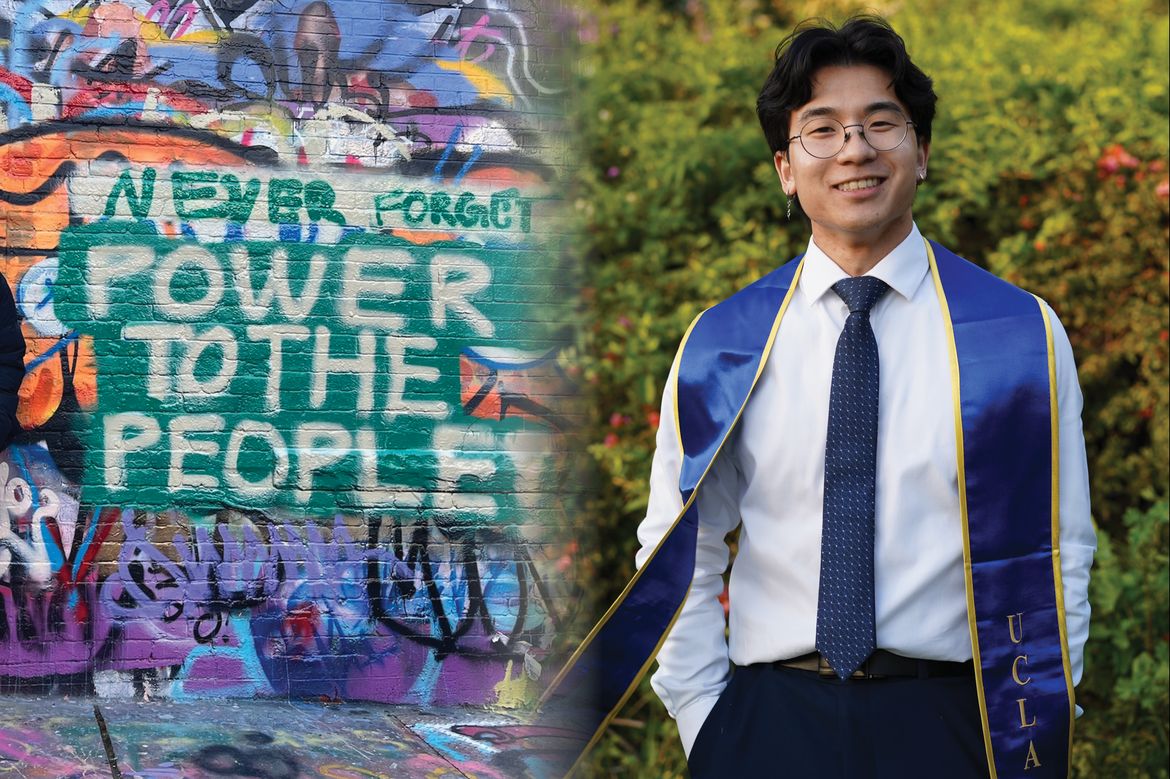
When Ryan Horio arrived at UCLA in fall 2021, the COVID-19 pandemic was still dominating the headlines. So, too, was the spate of anti-Asian discrimination and violence that followed in its wake, fueled by racist rhetoric about the pandemic’s causes. Pew Research reported at the time that one-third of Asian Americans were living in fear of threats or physical attacks — a crisis that affected Horio at a profound level.
So that winter quarter, when he took an upper-division seminar analyzing the mass incarceration of Japanese Americans during World War II and drew a connection to his own grandmother’s story as a survivor, it was a turning point. Learning for the first time about what she had endured — something his family had not discussed for decades — Horio also gained a new awareness about his own experiences.
“At first, I was frustrated. Why didn’t I know about what had happened to my Obachan, my grandmother, and the struggles and injustices she went through?” said Horio, who interviewed her and other family members for a documentary he created as part of the class. “I was disappointed in myself, but then that disappointment turned into a resolve. I realized there is power in our lived experience, and we shouldn’t hide that from the next generation because otherwise, they’re bound to make the same mistakes we did.”
That sense of resolve would steer the course of his undergraduate years and ultimately the direction of his life. Horio, who will earn dual bachelor’s degrees from UCLA this June, started as a premed human biology and society major but soon added a second major in Asian American studies and a minor in community engagement and social change. He’s earned multiple awards for his research and service across campus and beyond — among them, the sole grant to an undergraduate from the 2024–25 UCLA Initiative to Study Hate Research Innovation Fund, which prioritized projects with a tangible capacity for mitigating hate and engaging community.
This multifaceted work all points toward a common goal. Determined to become a doctor since high school — when he learned about an operation that, years prior, had saved his father’s life — Horio is now on the path to become a physician-activist. In this role and through continued research, he seeks to help shape a society that better supports minority and underserved communities.
How medicine and social justice are similar
“When you think about it, medicine is very similar to social justice. Both are, essentially, about saving lives,” he said. “My goal is to give people back their agency and their autonomy — whether that’s through medicine, social justice or a combination of the two. And I think that research and data-driven work is what really leads to the systemic change that can make that possible.”
That work begins, as Horio has learned, with stories. Completing his thesis with support from a UCLA/Keck Humanistic Inquiry Undergraduate Research Award, he is analyzing the effects of pandemic-era anti-Asian hate on young Asian Americans — specifically their mental health, conceptualizations of identity and introduction to activism. In addition to interviewing young people who experienced discrimination firsthand, Horio offers concrete suggestions for implementation geared toward institutions and local governments.
“I feel that for a lot of people, the anti-Asian hate that we witnessed during the pandemic registered as just a blip in time. But for me, it’s something that will follow me for the rest of my life,” he said. “So this thesis is to honor my experiences and the experiences of others, and to have our stories be told. And with this work, I hope to influence communities to recognize that our stories matter, our voices matter, and to change our systems to support people in a more equitable way.”
Horio himself has made strides as a provider of such support, earning honors including a 2024 Robert S. Michaels Leadership in Service Award for his work. As a volunteer caseworker with SCOPE Patient Health Advocates at UCLA, he helps connect underserved patients to resources in their communities; when the program offered Horio the opportunity to work with the addiction management consult team at Ronald Reagan UCLA Medical Center, he gained an interest in addiction medicine as a specialty moving forward. Beyond campus, he delivers basic needs services to unhoused residents in Little Tokyo through mutual aid work, and he has served as external vice president for Bruin Shelter, the nation’s first student-run housing shelter for college students.
With graduation on the horizon, Horio shows no signs of breaking the pace. This year, he received an Active Minds, Inc. Emerging Scholars Fellowship — an honor awarded annually to just 12 college students nationwide. In the summer, he’ll head to the Lee Kum Sheung Center for Health and Happiness at Harvard T.H. Chan School of Public Health, where he will work on a meta-analysis of how mindfulness and meditation can alter physiological brain structures. And this fall, he will start work on his master’s degree in Asian American studies, which he plans to complete at UCLA before going on to medical school.
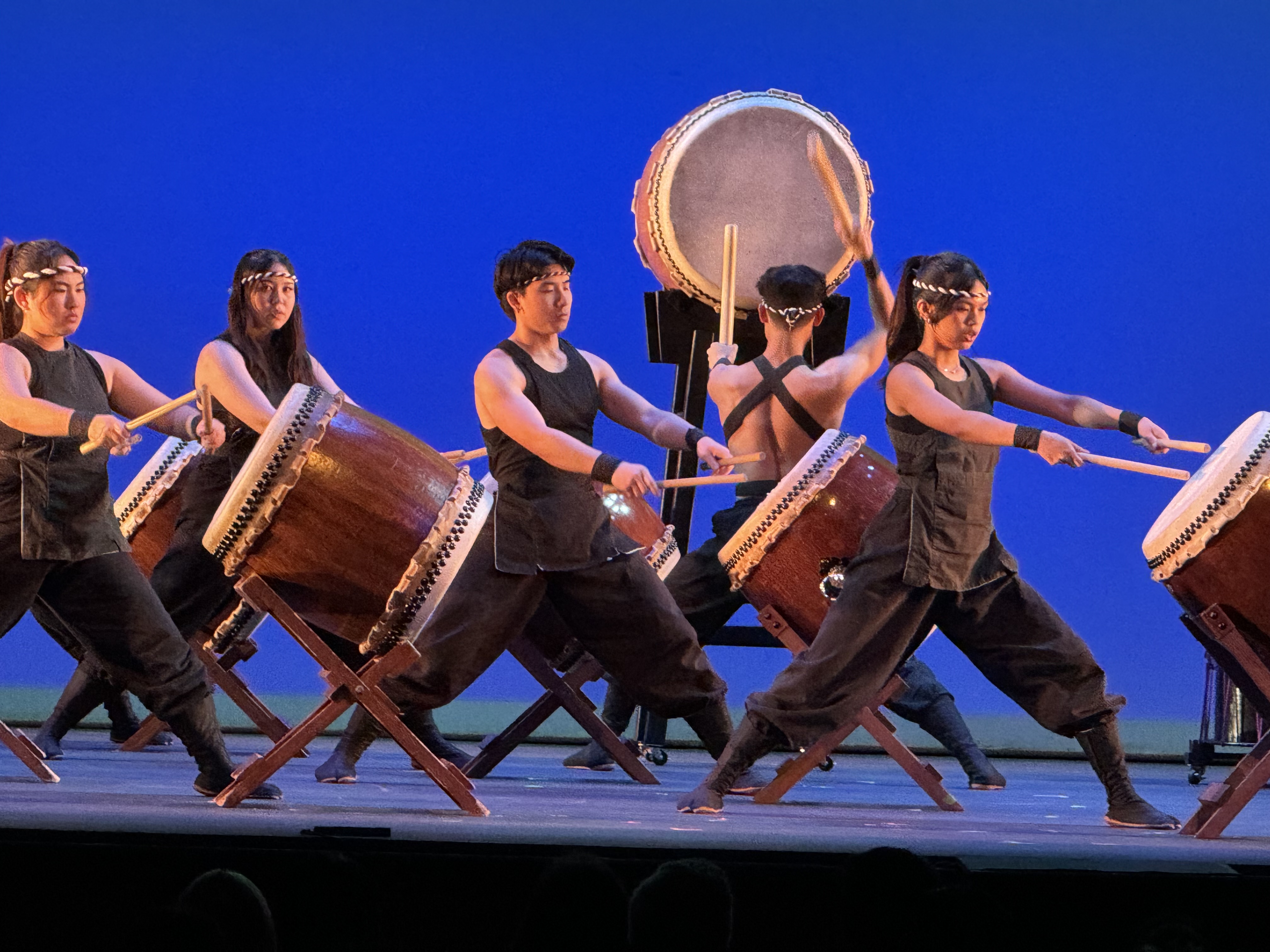
Amid his fast-paced schedule, Horio finds joy and relieves stress through UCLA Kyodo Taiko, a student-run Japanese drumming ensemble on campus that he calls the backbone of his entire college experience. In fact, it was through his Kyodo Taiko friends that he learned about the first-year seminar that changed everything. It’s a fitting example of the kind of community connection and support that inspires his work as a whole.
“When I think about all the people I’ve met — people who shared their stories and experiences with me, or their knowledge and advice, or who invested in my research — I see that I have a responsibility now to carry this work forward,” Horio said. “As a student at UCLA, I’m in a position of power and privilege, and I need to use that for good, to help create the change we need to see.”