The summer of 2022 brought worrying news for California’s water supply.
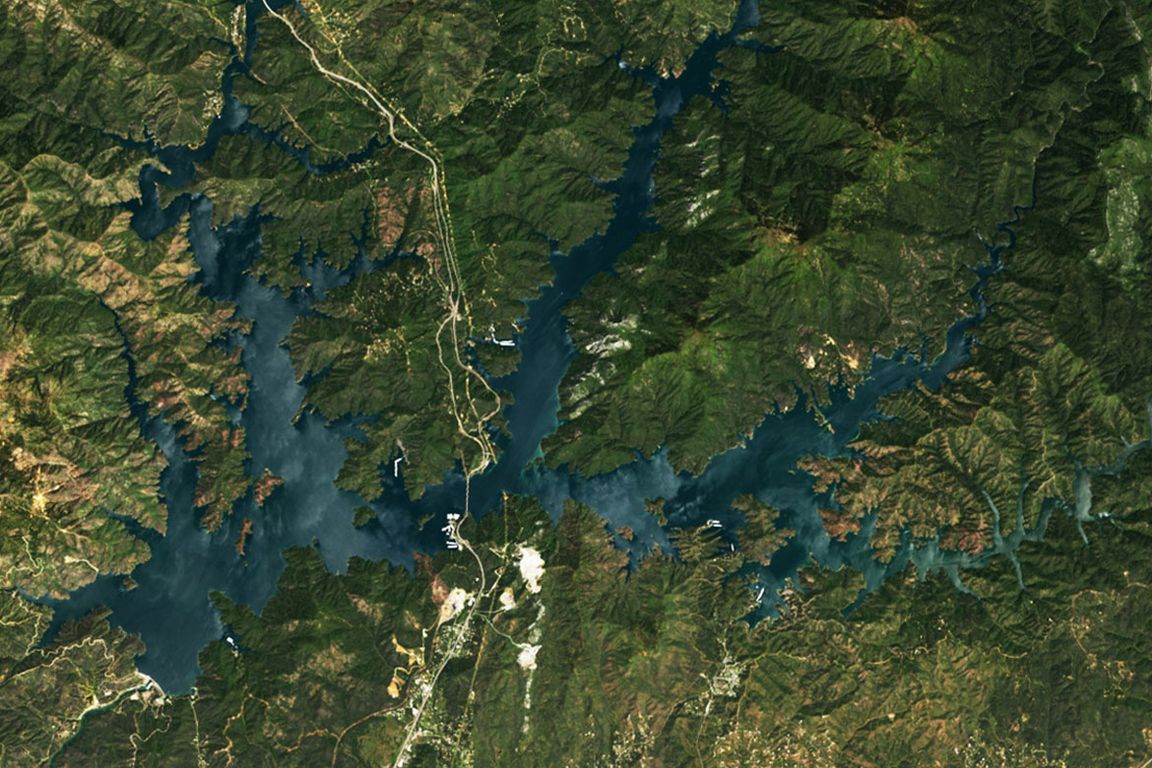
Shasta Lake (seen above in 2024, having filled back up), the state’s largest reservoir and a critical source of water for millions, saw its levels drop to 38% of capacity in July — a historic low for that time of year. That drought laid bare a growing challenge: how to balance immediate water demand with long-term supply in an era of increasing climate uncertainty.
In a working paper, UCLA Anderson’s Felipe Caro, University of Mannheim’s Martin Glanzer and UCLA Anderson’s Kumar Rajaram develop a model for the management of reservoir systems over the long term. It’s designed to minimize societal costs of a water shortage. In a case study of California’s Sacramento River Basin, the authors’ management policy reduced average shortage costs — the cost of getting water from other, last-resort sources — by 40% compared with the current policy, potentially remarkable savings.
The study focuses on three major reservoirs in the Sacramento River Basin, each with unique characteristics: Shasta Lake (slow to fill, large capacity), Trinity Lake (moderate filling rate) and Folsom Lake (the smallest of the three, quick to fill). The researchers used publicly available data from the California Data Exchange Center covering the period from May 1, 2000, to April 30, 2024. The data included daily inflow measurements, evaporation rates and reservoir capacities. May marks the beginning of the dry season, so the data enables the researchers to analyze 24 complete seasonal changes.
To learn more about the research, read the full article at the UCLA Anderson Review.



