Key Takeaways
- Campus-wide call for AI ideas results in nearly 70 innovative projects led by UCLA students, faculty and staff.
- Project data will help identify initiatives suitable for broader campus adoption.
- UCLA’s AI strategy includes building a community of practice, offering consulting and support, increasing AI literacy, piloting new tools, techniques and technologies and establishing an AI governance framework.
Artificial intelligence is no longer just a buzzword — it’s a driving force behind real change in higher education. At UCLA, that change is already underway, with students, faculty and staff leading the charge.
In fall 2024, UCLA became the first university in California to incorporate ChatGPT Enterprise, an advanced version of OpenAI's ChatGPT designed to meet the specific needs of large organizations and businesses, into its operations. Soon after, UCLA students and employees were invited to submit their project ideas about ways that the technology could be leveraged to support AI-powered automation, education enhancements, operational efficiency, process improvements and other areas of campus life.
“The quality of the proposals was robust,” said Chris Mattmann, UCLA’s chief data and artificial intelligence officer, who noted that roughly 70 projects were approved.
Among those selected is an effort led by Dr. W. Scott Comulada, professor-in-residence in the department of psychiatry and biobehavioral sciences and department of health policy and management, and director of the Semel Institute Center for Community Health. He and his collaborators are exploring how AI can help train future doctors to better communicate with patients, especially when delivering bad news.
“People are increasingly interested in the possibility of creating AI-simulated patients, either as an avatar on a computer screen or a simulated patient you can interact with using virtual reality goggles, and how the technology can be used to drive conversations as a way to practice,” Comulada said.
Comulada’s project is in the early stages, and he acknowledges that while it’s always better for students to practice engaging in these types of conversations with a real person — often a medical actor— AI can be beneficial. “It’s very scalable and students can practice it on their own time, 24/7, so that's really the starting point for the project,” he said.
Nicole Lim, portfolio coordinator in the department of engineering at UCLA Extension, has harnessed AI to analyze enrollment trends, student feedback and demand data, refine course offerings and improve business processes and educational outcomes across the department’s programs. She noted that while UCLA Extension offers a range of machine learning and AI classes, the pilot program provided a valuable opportunity to integrate these tools into the school’s operational strategy.
“One of the main things we accomplished was an increase in enrollments through improved communication with our students,” said Lim, who supports the planning and alignment of multiple professional programs, initiatives and strategic projects. “We've been able to build an even better relationship with them, and we achieved a 90% retention rate for graduation this spring. Overall, it was a great improvement toward keeping students interested in the program and making sure that they graduate.”
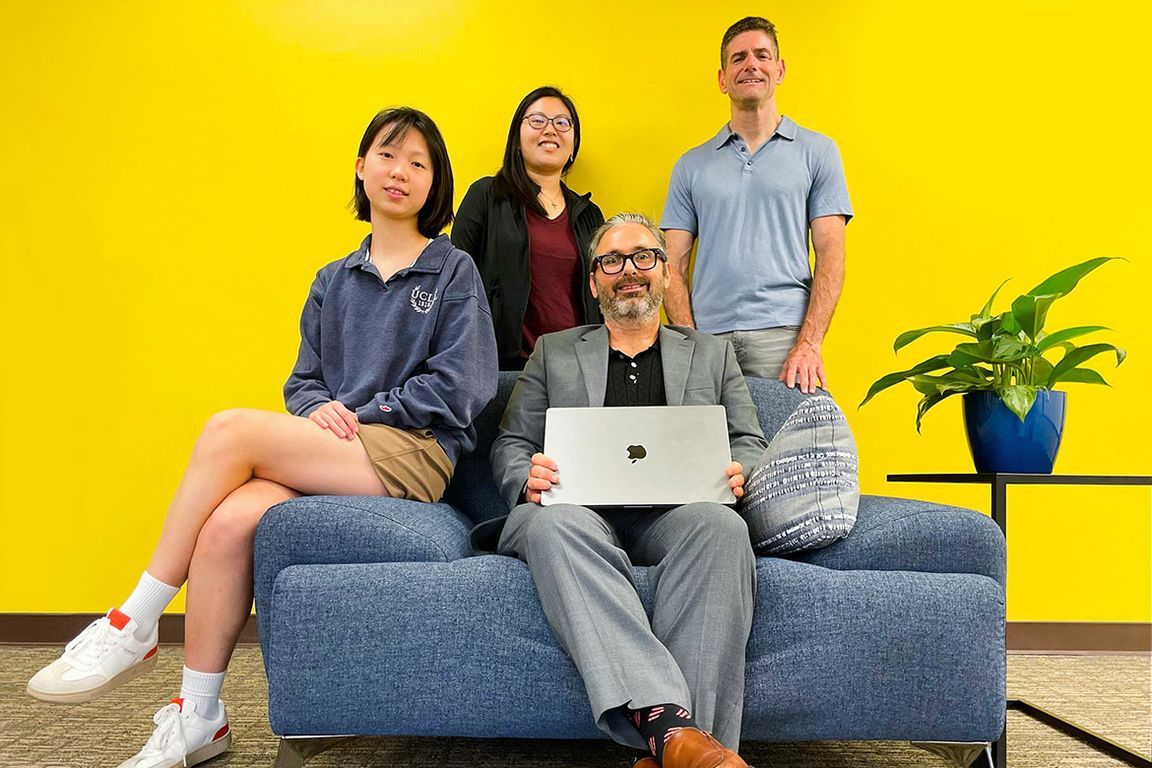
Student-led innovation has also flourished, with Wanxin Xiao and a team of five other undergraduates in the Samueli School of Engineering preparing to launch UCLA Xplore, an AI-powered app that tailors event recommendations based on students’ interests and schedules, this fall. Through a simple chat interface, users can quickly connect with clubs and events that match their schedules, enhancing campus engagement and resource use, said Xiao, a sophomore.
“This personalized approach simplifies the overwhelming task of manually navigating long club lists or extensive event calendars, ensuring students quickly find meaningful opportunities that also align with their schedules and interests,” she said.
Xiao said the experience of being involved in the pilot program has enhanced her educational experience by providing hands-on experience with advanced AI tools, including OpenAI’s embedding models — which transform words, phrases and documents into numerical representations — and the Milvus vector database, an open-source database used to store, index and manage these representations. This exposure to unstructured data management that is often overlooked in traditional coursework proved invaluable, she said, adding that the experience also offered real-world insight into software architecture and deployment.
The grassroots efforts initiated by Bruins through this pilot program are helping shape UCLA’s broader AI strategy, said Mattmann, noting that building a campus-wide AI community of practice, offering AI consulting and support, increasing AI literacy, piloting new tools, techniques and technologies and establishing a governance framework are all part of the mix.
And the timing couldn’t be better. With the recent release of the White House’s National AI Action Plan, Mattmann is also identifying areas of overlap with the UCLA campus AI strategy and the one proposed by the White House.
In addition, he is currently analyzing project data to inform which initiatives may be suitable for broader campus adoption, with final determinations to be made through the campuswide IT governance process. He is also developing a four-part AI training module for UCLA faculty and staff. The first module, AI Foundations, is already available. Key concepts include AI fundamentals and responsible use; AI for increasing productivity, prompt engineering and generative AI; and AI ethics. Future modules will focus on more advanced aspects of AI, including how to use the technology to work with datasets and how to evaluate models.
“This pilot taught us a lot about deploying AI at the enterprise level,” said Mattmann. “It’s not just about the tools — it’s about empowering people to use them responsibly and creatively. That’s how we build a future-ready university.”