Below, get the latest on UCLA research and innovations covered in news media outlets.
Amid cuts to teacher training programs, UCLA policy brief aims to mitigate ‘lasting negative effects’
(Sept. 2) In a new brief from UCLA’s Center for the Transformation of Schools, recommendations for school leaders include seeking alternative funding and supporting teachers pursuing certification.
“The loss of federal funding will hinder efforts to address educational disparities and reduce the pipeline of teachers equipped to serve diverse student populations,” said Stanley Johnson Jr., senior project scientist at the UCLA center and the brief’s lead author.
From K-12 Dive: Learn why authors say federal cuts could have ‘catastrophic outcomes for many students.’

Study links this elephant’s extinction with ebony decline. That’s not great for music
(Aug. 30) With African elephants endangered, a UCLA-led study says their decline could ripple from the rainforest to the concert stage — revealing a critical link between the threatened species and pianos and guitars.
The critical link: ebony, the dense black wood commonly used for piano keys and for guitar and violin fretboards.
From KTLA-TV: Learn what researchers at UCLA’s Congo Basin Institute are doing to restore ecological functions in the region. (Also: National Public Radio, The Telegraph, Earth.com and Mongabay.)
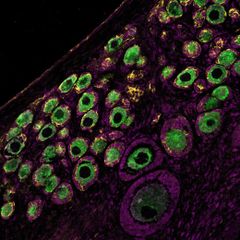
A road map on primates’ egg supply could help research into reproductive and fertility issues
(Aug. 30) UCLA scientists have studied female monkey embryos to map how, when and where the egg supply develops. This can now be used to build realistic models of ovaries in the lab to search for the causes of reproductive health issues that lead to infertility.
This fills in some of the blanks in "really important areas of just unknown biology," said study co-author Amander Clark, a developmental biologist at UCLA.
From Live Science: Learn how the results could help revolutionize treatments for hormonal disorders such as polycystic ovary syndrome, or PCOS.

Researchers identify brain circuit regulating stress and social behavior in mice
(Aug. 27) In a groundbreaking study published in Nature, researchers at UCLA have unraveled some of the intricate neural circuits within the mouse medial prefrontal cortex that orchestrate the brain’s response to stress and social behavior.
This milestone in neuroscience not only advances our understanding of fundamental brain processes but also paves the way for innovative treatments targeting complex neuropsychiatric disorders such as post-traumatic stress disorder, depression and anxiety.
From Scienmag: Learn why the study is setting a new standard for investigating brain architecture at the mesoscale level.
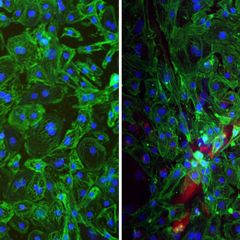
UCLA researchers use mini-organ models to study hantaviruses, offering hope for potential treatments
(Aug. 26) Hantaviruses — rare but often deadly viruses spread by rodents — have been a global health concern since the 1950s, when they caused thousands of cases of hemorrhagic fever during the Korean War.
Today, they continue to cause sporadic outbreaks around the world, with mortality rates ranging from 1% to 40%, depending on the strain of the virus.
From Medical Xpress: Learn how the findings point to the possibility of new antiviral therapies — plus, why a warming planet and habitat shifts could make the virus more widespread.

Study finds that gun-related suicides among older women are rising
(Aug. 26) Senior women are becoming more likely to use a gun to end their lives, a new study says, up from about 35% in 2014, according to a new study led by Boston University School of Public Health, in collaboration with the UCLA Luskin School of Public Affairs.
"When firearms are involved, older adults are less likely to survive a suicide attempt, as the chances of rescue in these situations are significantly reduced," said senior researcher Mark Kaplan, a research professor of social welfare at the Luskin School.
From United Press International: Learn what recommendations the researchers have for clinicians based on the findings.
Many cancer patients say doctors aren't honoring their treatment desires
(Aug. 26) In a new study, cancer patients reported they’re receiving treatment focused on extending their lives rather than easing their pain. In fact, they are twice as likely to say they’re receiving unwanted life-extending care than patients with other critical illnesses.
“This disconnect between what patients want and what they feel they’re getting is an important issue,” said UCLA’s Dr. Manan Shah, lead researcher on the study.
From U.S. News & World Report: Learn how these insights could improve patient-physician communication.

UCLA report shows Los Angeles area unemployment claims surged following January wildfires
(Aug. 25) Unemployment claims in the Los Angeles metropolitan area climbed by 12 percent to 17 percent due to the devastating effects of the Palisades and Eaton blazes.
The jobless claims soared not only within the fire zones but also in neighborhoods farther from the blazes, such as south and central Los Angeles, according to a report released by the nonpartisan California Policy Lab at UCLA.
From The Hill: Learn why the insights are helpful for future disaster response planning. (Also: Spectrum News 1.)
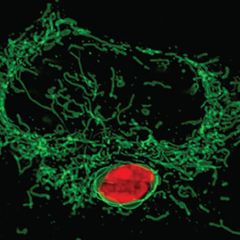
Scientists uncover cellular secret weapon in the fight against pathogens
(Aug. 25) In a groundbreaking study that could redefine our understanding of cellular defenses, researchers at UCLA have uncovered a novel role for mitochondria extending far beyond their traditional identity as the cell’s energy generators.
The discovery raises the possibility that manipulating vitamin intake could rewire mitochondrial metabolism to make it even more effective at preventing infections, such as toxoplasmosis, in people.
From Scienmag: Learn how the findings could contribute to a new frontier in infectious disease management.
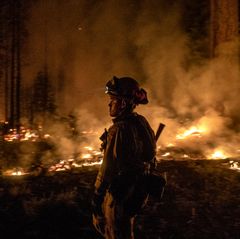
Wildfires could be raising local death rates by two-thirds
(Aug. 22) UCLA researchers teamed up with several universities to examine the devastating blazes that struck Maui, Hawaii, in August 2023, and linked 82 “excess deaths” to the fires — or two-thirds more fatalities than they would have otherwise expected for that month.
“Wildfires can cause death in a variety of ways,” UCLA’s Kekoa Taparra, the study’s co-lead author, noted, adding that health care disruptions and lack of access to medications also may have played a sizable role.
From The Hill: Learn why these public health insights are crucial to post-disaster analysis and improving preparedness as wildfires increase.

A study on music and memory could lead to helping people keep their minds sharp as they age
(Aug. 19) A new study from scientists at UCLA shows that music can shape how well we remember something — if it makes us feel the right way. This effect is not influenced by whether the song is happy, sad, or even familiar. It’s about how much emotion the music stirs in you.
“Music has the ability to influence a part of your brain called the hippocampus, which is essential for turning experiences into memories,” [said UCLA integrative biology and physiology professor Stephanie Leal]. “We think it should be possible to tap into that in a selective way to boost or impair memory depending on the therapeutic goals.”
From Earth.com: Learn how the findings could help support new, low-cost therapies for early-stage Alzheimer’s disease or even PTSD.
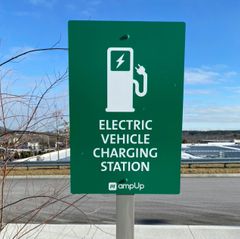
EV fast chargers have a surprising health downside
(Aug. 15) Hundreds of public fast chargers are popping up across the U.S. to serve electric vehicle drivers seeking a cleaner alternative to gas-powered cars. But they come with a surprising risk: charging stations create air pollution.
While EVs contribute vastly less to air pollution than combustion-powered vehicles, fast-charging stations are what a recent UCLA study called an “overlooked source of air pollution.”
From Bloomberg: Learn why researchers are confident the problem can be solved to ensure EV adoption is clean. (Also: Gizmodo and Los Angeles Times.)

UCLA research informs multi-state negotiations over dwindling Colorado River basin water supply
(Aug. 15) If current policies aren’t updated, the reservoirs are highly likely to reach deadpool — the level at which water can no longer be released — at least once in the coming decades, according to a soon-to-be published study.
“There’s a risk of these reservoirs dipping into lower water levels that can make them inoperable,” the study’s lead author Benjamin Bass, a researcher at UCLA’s Center for Climate Science, told CalMatters. “That’s really why we need to shift away from existing policy to something more stringent.”
From CalMatters: Learn why research on the river basin is crucial for new Colorado River operating guidelines. (Also: ABC News.)

The medical field still lacks clear answers as to what constitutes long COVID-19. One study is trying to change that
(Aug. 13) The definition of long COVID-19 varies so widely that the percentage of people identified as having the ailment can differ dramatically, making it harder to properly diagnose and treat patients, researchers said. “The findings highlight the need for a standard definition for long COVID-19,” lead researcher Lauren Wisk, an assistant professor of medicine at UCLA’s David Geffen School of Medicine, said in a news release.
From U.S. News & World Report: Why standardizing definitions of long COVID-19 will make for better patient outcomes.

UCLA researchers are inching closer to stopping parasitic worms from getting under your skin
(Aug. 13) Threadworms, which are a type of parasitic nematode, spend a lot of time crawling around on human skin, poking and prodding to find the best place for entry before burrowing in. But disrupting a particular dopamine-sensing pathway causes them to lose interest, UCLA neurobiologists said in a paper published in Nature Communications.
Globally, over 600 million people are infected with the skin-penetrating threadworm, mostly in tropical and subtropical regions with poor sanitation infrastructure.
From Medical Xpress: Learn how a simple topical solution could prevent infections before they even get started.

The solar system’s third interstellar visitor, 3I/ATLAS, is zooming by at 130,000 mph
(Aug. 12) A remarkable object is rocketing through our solar system. It’s a comet known as 3I/ATLAS. NASA caught a sharp image of it, which is striking because [UCLA] astronomer David Jewitt says that’s like glimpsing a rifle bullet for a thousandth of a second.
Jewitt, who is a professor of astrology at UCLA, is lead author of a forthcoming paper about the object. He also leads analysis of images captured by the Hubble Space Telescope.
From NPR’s “All Things Considered”: Hear from Jewitt about what differentiates this object from its two predecessors, and more.
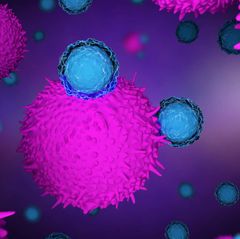
One-size-fits-all pancreatic cancer vaccine shows promise in early trial
(Aug. 11) In an early trial, a one-size-fits-all vaccine showed promise in preventing hard-to-treat pancreatic cancers from returning. Pancreatic cancer is of particular concern. The five-year survival rate is about 13%, and up to 80% of pancreatic cancers may come back.
“If you were to ask me what disease most needs something to prevent recurrences, I’d say this one,” said Dr. Zev Wainberg, co-director UCLA Health’s gastrointestinal oncology program, who co-led the phase 1 clinical trial.
From NBC News: Learn how the treatment could target certain mutations without the complexity or cost of fully personalized vaccines. (Also: The Independent, The Hill and HealthDay News.)

Image reveals unprecedented view of the third interstellar object observed passing through our solar system
(Aug. 7) A new image from the Hubble Telescope and its Wide Field Camera 3 has revealed the clearest glimpse yet of an interstellar visitor zipping through our solar system. But big questions about the object remain, some of which may be impossible to answer — including where exactly it came from.
“No one knows where the comet came from. It’s like glimpsing a rifle bullet for a thousandth of a second. You can’t project that back with any accuracy to figure out where it started on its path,” said lead study author David Jewitt, professor of astronomy at UCLA.
(Also: New Scientist, Scienmag, BBC and Phys.org.)
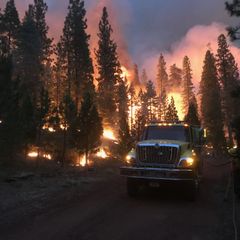
As Earth warms, California fire season is starting earlier, study finds
(Aug. 6) When blazes get going earlier in the year, “there’s more time for the environment to be primed for large fires that can come later in the season when it’s really hot,” said Gavin Madakumbura, a postdoctoral climate researcher at the University of California, Los Angeles, and the study’s lead author. “The vegetation has more time to dry out.”
In the New York Times: Learn more about the factors influencing the timing of fire season. (Also: Los Angeles Times, San Francisco Chronicle and The Conversation.)
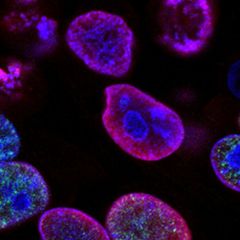
A turning point in colon cancer: young people are finding it earlier
(Aug. 4) A trial of more than 20,000 people age 45 to 49 was published by a separate group of researchers, showing that testing uptake increases when people are mailed stool tests by default, versus when they are asked if they want a test or a colonoscopy … “We probably shouldn’t be wasting time asking patients first; we should send them what they need,” said Dr. Folasade May, the trial’s senior author and a gastroenterologist at UCLA Health.
In the Wall Street Journal: Learn more about how this simple, low-cost screening intervention could save lives. (Also: HealthDaily News.)
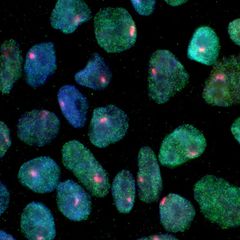
Reprogramming stem cells to make cancer-fighting T cells
(Aug. 1) In a first-of-its-kind clinical trial, UCLA scientists have shown it’s possible to reprogram a patient’s blood-forming stem cells to generate a continuous supply of functional T cells, the immune system’s most powerful cancer-killing agents. This approach suggests a new way to deliver immunotherapy, acting as an internal factory that produces tumor-targeting immune cells over time and potentially offering longer-lasting protection.
In Medical Xpress: Learn how the study holds promise for a future in which cancer isn’t just treated, but prevented from coming back.
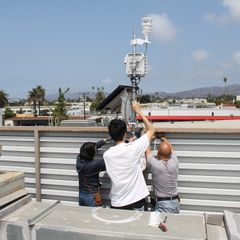
Fire recovery: UCLA researchers set up a network of air pollution monitors near the Palisades burn zone
(July 24) Families struggling to recover from January’s Palisades fire worry about a long list of unknowns, from whether they can afford to rebuild to what their old neighborhoods will be like if they return. A project by the UCLA Fielding School of Public Health may help calm concerns over at least one other variable — the quality of the air in and near the burn zone.
In the Los Angeles Times: Learn about how residents are using the project’s real-time data to inform recovery and rebuilding efforts. (Also KNX News, Palisades News, LAist, Los Angeles Times.)
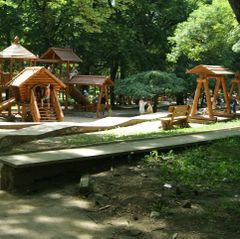
UCLA teams up with USC and civic partners to cool the Los Angeles region
(July 21) As the City of Angels prepares for a plethora of major sporting events that will bring an influx of visitors over the next few years, a local initiative is working to improve shade in the region to help. In an effort led by USC Dornsife Public Exchange in collaboration with UCLA Luskin Center for Innovation, “ShadeLA” will bring together the county, city, LA Metro, LA28 and community partners to bring more shade around the city.
In NBC News: Learn how this joint effort is informing neighborhood-specific decisions about expanding shade. (Also LAist.)
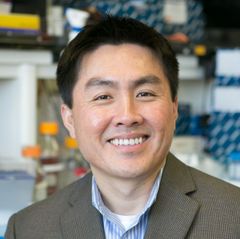
UCLA researchers get boost in effort to develop drug therapies targeting lung cancer, melanomas
(July 21) While many cancer treatments can be highly effective at first, cancers often become resistant over time. UCLA Health’s Roger Lo and his team aim to prevent resistance pathways from developing in the first place. This involves blocking residual tumor cells, left unscathed by the therapies, from mutating their DNA and evolving escape pathways. This summer, the group received two grants to bolster this promising research.
In The Los Angeles Business Journal: Learn how the team hopes to uncouple the word “relapse” from “remission” in cancer journeys.

UCLA study connects depression in adults with two common medical conditions
(July 17) “Insomnia not only robs older adults of rest but also primes their immune system to make them uniquely vulnerable to depression when faced with inflammation,” said lead researcher Michael Irwin, director of UCLA Health’s Cousins Center for Psychoneuroimmunology. “Treatments targeted at this inflammation-related depression may prevent depression and benefit these patients to improve their overall quality of life.”
In United Press International: Learn why insomniacs with inflammation are more prone to depression.
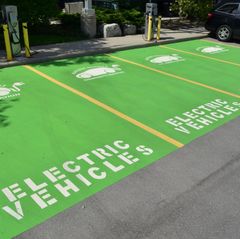
UCLA study finds a significant gap in EV charging access in certain L.A. neighborhoods
(July 17) People in Los Angeles’ lower-income communities have a significantly harder time accessing electric vehicle chargers, according to a new UCLA study. The study highlighted a significant gap in EV charging access, showing that about 70% fewer charging stations per capita are accessible in disadvantaged neighborhoods compared to others. The researchers also emphasized that equitable access to charging infrastructure is vital for the transition to electrified transportation.
In NBC News: Learn how the study is challenging previous government data about the supply of EV charging access.

UCLA analysis shows the harmful effects of cuts to CalFresh
(July 11) No state has more CalFresh recipients than California, and the forthcoming overhaul is set to “have really important consequences for the state,” according to UCLA researcher Arturo Vargas Bustamante. He and co-authors from the UCLA Latino Policy and Politics Institute released a study exploring who uses the program, and why cuts to the program could hurt Latinos the hardest.
UCLA-developed model reports early outcomes from a Los Angeles County homelessness initiative
(July 10) A new report from the California Policy Lab at UCLA shows promising early results from Los Angeles County’s Homelessness Prevention Unit. The report — generated from a first-of-its-kind predictive model developed at the UCLA lab —found that people in the HPU program were 71% less likely to enter a homeless shelter or have contact with street outreach teams within 18 months, compared to similar high-risk people who didn't enroll.
In LAist: Learn how the model is helping services reach out to high-risk individuals before they experience a crisis. (Also Phys.org)
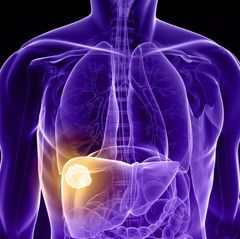
UCLA study identifies a key driver of liver cancer recurrence, introduces a potential new therapeutic target
(July 10) A new study led by investigators at the UCLA Health Jonsson Comprehensive Cancer Center may help explain why certain liver tumors return quickly after thermal ablation, a widely used minimally invasive, image-guided technique that kills cancer cells by applying intense heat through a needle-like probe.
In Medical Xpress: Learn about how findings could lead to more effective liver cancer therapies.

UCLA study finds duration of heat waves accelerating faster than global warming
(July 8) New research finds that not only will climate change make heat waves hotter and longer, but the lengthening of heat waves will accelerate with each additional fraction of a degree of warming. Researchers found that the longest heat waves will see the greatest acceleration, and the frequency of the most extreme heat waves will increase the most.
In the Los Angeles Times: Learn what this study can do for improving risk management in worsening climate events. (Also: CBS News, KNX News and New York Times)

Unique UCLA Health program offers early heart screenings for vulnerable group
(July 4) Anurag Mehta had no idea he was at high risk for heart disease until he had a heart attack at just 33 years old. He isn’t alone. South Asian people are up to four times more likely to develop heart disease, with UCLA research showing that they also tend to experience heart issues up to 10 years earlier than other ethnic groups.
Dr. Ravi Dave, director of UCLA’s South Asian Heart Program — the only one of its kind in Southern California — says early intervention is key.
On Spectrum News 1: Learn how Mehta’s story is helping connect others with the UCLA program.
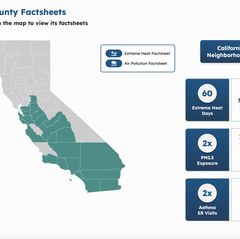
UCLA dashboard highlights health disparities in Latino neighborhoods throughout California
(July 3) A new data dashboard focusing on Latino communities is confirming what many local groups already knew: Latino neighborhoods are more impacted by heat and air pollution. UCLA's Latino Policy and Politics Institute debuted its Latino Climate and Health Dashboard last month, focusing on how heat and pollution are impacting Latino neighborhoods.
In The Bakersfield Californian: Learn how the data is empowering public health advocates and residents alike.
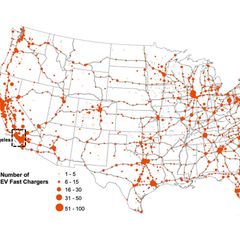
UCLA study finds high levels of particulate matter near EV charging stations in L.A.
(July 3) Levels of fine particulate matter (PM2.5) in the air near 50 electric vehicle fast-charging stations across Los Angeles County were significantly higher than those measured at urban sites used for comparison, according to a UCLA study.
“For anyone, exposure to fine particles can contribute to health issues, and for those with existing conditions or heightened sensitivity, the risks are even greater,” said study author Michael Jerrett, a professor at UCLA Fielding’s Department of Environmental Health Sciences.
In U.S. News & World Report: Learn how the findings can help inform clean transportation infrastructure.
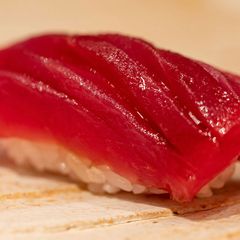
A potential tool for safer seafood consumption could safeguard fetal brain development in instances of in utero mercury exposure
(July 2) UCLA biologist Elaine Hsiao, who studies how the maternal microbiome affects fetal brain development, is part of a team engineering a commensal bacterium with mercury-resistant genes capable of lowering the amounts of harmful methylmercury derived from a fish diet in pregnant mice … the team envisions developing a probiotic to help lower mercury-related health risks associated with a fish-rich diet.
In The Scientist: Learn how the findings could one day increase the benefits of eating fish.

UCLA study finds Black Angelenos feel the brunt of evictions from corporate landlords
(July 2) In L.A. neighborhoods with relatively modest Black populations — like Hollywood, Woodland Hills and Koreatown — some Black tenants are disproportionately being evicted by Real Estate Investment Trusts, or REITs, a new UCLA study finds.
On KCRW’s “Press Play” with Madeleine Brand: Learn more about the study and hear directly from those impacted.
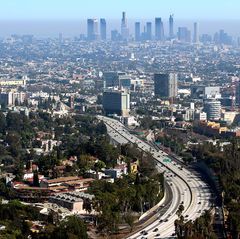
New UCLA data tool reveals environmental health disparities between L.A. communities
(July 1) The UCLA Latino Policy and Politics Institute has a new data tool helping researchers and community leaders understand how extreme heat factors into health for California’s Latino population. Marcos Magaña, a researcher at the UCLA Institute of Environment and Sustainability, explains why circumstances may be worsened by the current ICE raids and what it all means for the average person living in these communities.
In the Los Angeles Times: Learn how the program helped turn data into community-driven action plans.