UCLA spine surgeon Dr. Jeffrey Wang loves professional football, but he often winces when he watches players hit the ground.
"I don’t think the average sports fan understands the physical consequences of playing football," said Wang, co-director of the UCLA Spine Center who treats former National Football League players. "As a doctor, I can only imagine the toll that hit took on the guy’s body."

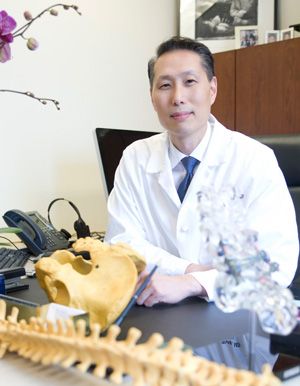
UCLA spine surgeon Dr. Jeffrey Wang says fans don't realize how damaging playing professional football is. Photo by Margaret Sison Photography.
Many of the retired athletes have osteoarthritis, a "wear and tear" condition commonly seen in the elderly. Others suffer from degenerative disc disease, disc herniation and bone spurs in the back and neck, which can cause severe nerve and sciatica pain.
"Football is a very physical game — even brutal at times — and that takes a toll on players’ bodies," Wang said. "When you look at their X-rays and MRIs, they often have spines that look as though they are more than twice their chronological ages."
UCLA is one of five top-rated medical centers nationwide that treats retired NFL players suffering from neck and spine problems.
The UCLA orthopaedic team led by Wang offers retired football players the full range of nonsurgical and surgical treatments available for spine and neck problems. About 80 percent of the players treated at UCLA find relief from back or neck pain without having to undergo surgery, Wang said.
"Teaching them about their spines is one of the most valuable things we do," Wang said. "These guys are used to high-level workouts, eating a lot, bench-pressing the weight of a small car and throwing 300-pound linemen off them. We try to educate them about how to be as healthy as possible by eating less and doing activities like core-strengthening, physical therapy, yoga and Pilates — some things they might not do as a football player."
This article originally appeared in the May 2013 issue of UCLA Health Employee News.