Theater-maker and UCLA professor Marike Splint often begins her work not with a script, but with a place.
Her work might begin in a meadow, on a train, in a city park or within the virtual map of Google Earth. Wherever it unfolds, the question is frequently the same: Can we reshape how we experience the places we think we know?
“I would qualify my work as site-specific or site-responsive,” said Splint, who is a professor in the UCLA School of Theater, Film & Television. She’s part of a generation of women artists redefining how performance is made and experienced.
“I’m very interested in people’s relationship to place and themes of belonging,” she said.
Originally from the Netherlands, Splint developed her artistic voice within a European performance landscape where the site-specific theatre scene often shared ground with visual art. Since coming to UCLA more than a decade ago, she has built an international body of work presented across Europe and the United States, which adapts to and interrogates both cultural and physical conditions. Splint has long been inspired by the diasporic history of her family. Her mother, Lucienne Mimouni, was born in Tunisia (which was under French colonial rule at the time), moved to France and then to the Netherlands.
“The migration story that has defined our family has influenced the themes I explore in my practice,” Splint said.
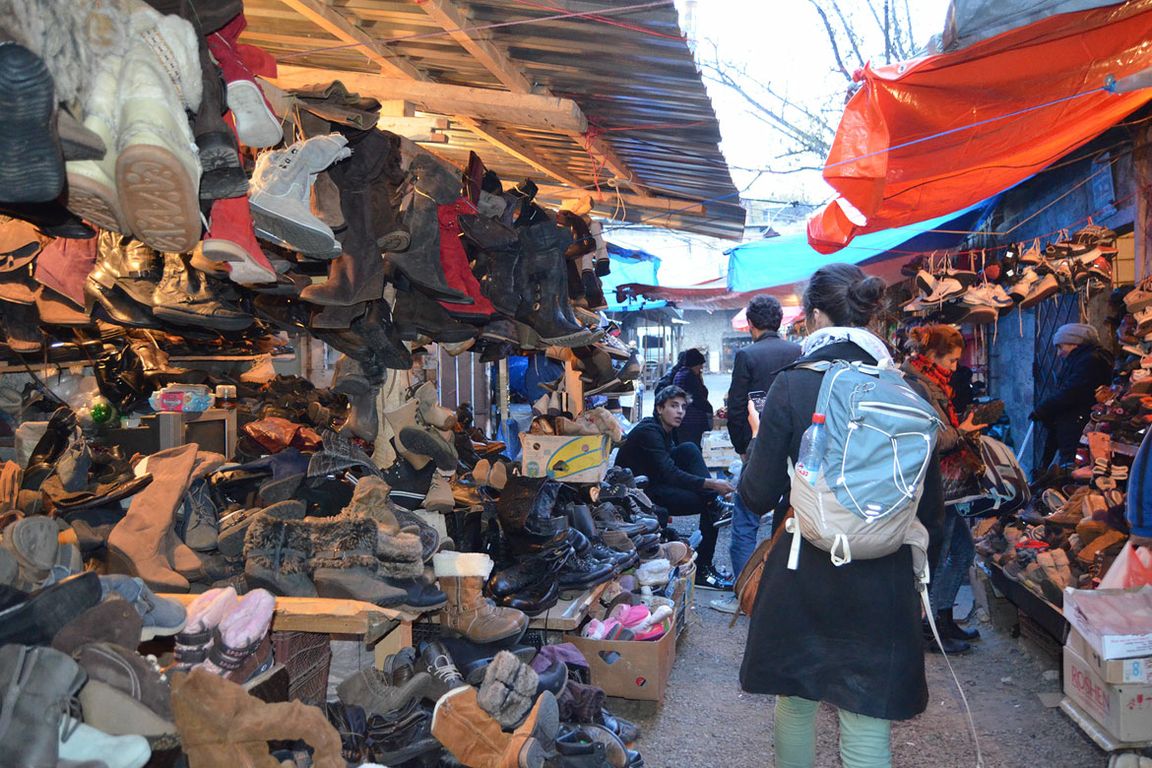
Past internationally presented works include “Façade,” a road-movie performance staged inside moving taxis in Amsterdam and Casablanca, and the “Dezerters Bazaar Soundwalk,” an interactive soundwalk built from migrant stories and how cultural identities are expressed through food, held at the largest produce market in Tbilisi, Georgia.
Splint’s “Among Us” series, an audio-theater experience, has guided participants through city streets (including Los Angeles), inviting active observation, quiet contemplation and self-revelation to explore the tension between a desire to belong and a desire to be free. The audience members served as protagonists, and the cities/spaces were the stage. UCLA’s Center for the Art of Performance commissioned Splint to create a version of “Among US” in honor of the university’s centennial.
In 2020, her piece “Don’t Look Back” took audiences on a sonic journey through the L.A. Metro, inspired by the Greek legend of Orpheus and his travel to the underworld.
In these kinds of works, there are frequently no visible markers that indicate it is, in fact, a performance work for the outside eye. The public places that host pieces are operating as usual during the performances. Unpredictability is part of the design, Splint said. A passerby, a shift in light, a child playing nearby all become part of the piece.
“Those to me are interesting moments when theater and reality meet,” she said. “I try to create a heightened sense of reality.”
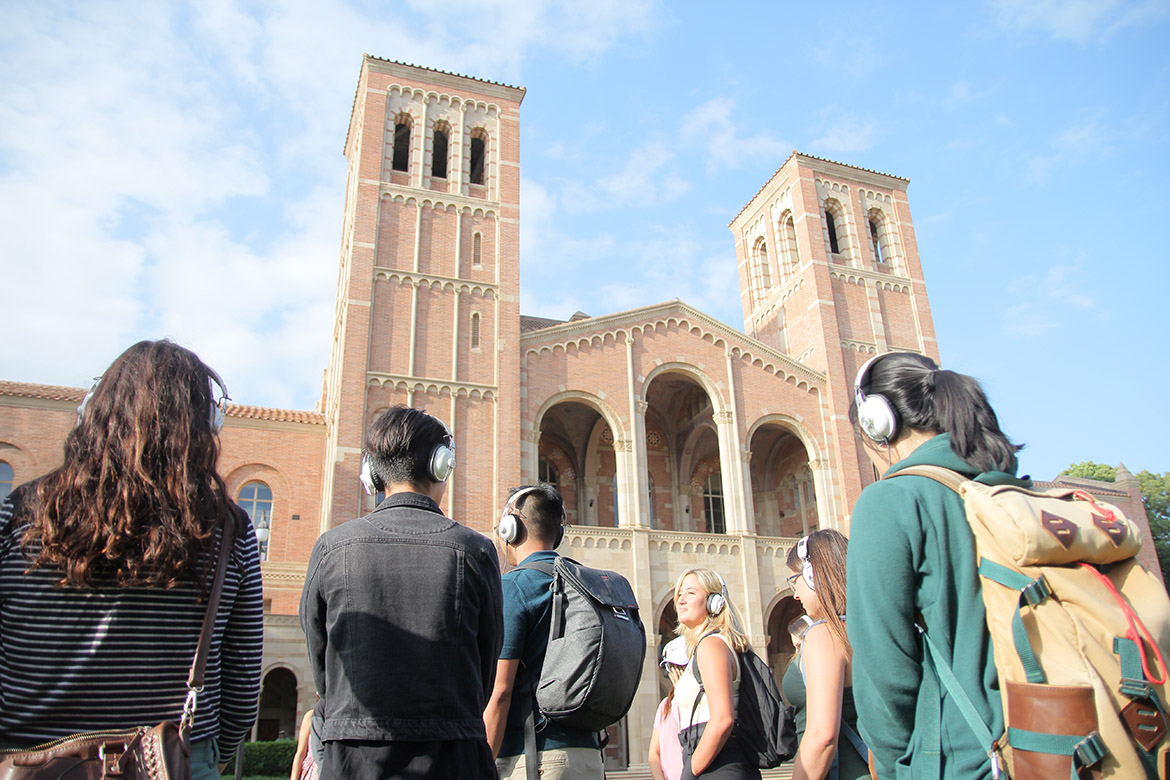
Her work is often grounded in what she describes as documentary or non-fiction theater, drawing from real places, real histories and lived experience rather than fictional narratives.
“It’s a way of presenting different forms of knowledge, different stories, different disciplines … in a way that reorganizes how we may think about an issue, and addresses the audience as citizens in the real world,” she said.
As examples, she pointed to artists and collectives working in similar modes, including the Mexican theater group Lagartijas Tiradas al Sol (a self-proclaimed “flock of artists” from Central America) and Argentine director Lola Arias, whose documentary-based works center on real people and lived histories.
That sensibility became especially visible during the pandemic, when traditional theater shut down and Splint’s practice offered a different path forward. Splint’s project “You Are Here,” commissioned by La Jolla Playhouse, unfolded live over Zoom as a virtual road trip through Google Earth. (It’s still available to view online.)
“I thought, if none of us can travel anymore in the physical world, let’s do it in the virtual world,” she said. The piece expanded into a broader inquiry about technology, mapping and power.
“It became about what does it mean to map the whole world and what places are not mapped and why?” she said.
That line of inquiry continues in her current project, “Show Full History,” supported by a Creative Capital Award and an Arts Initiative Seed Grant from the Chancellor’s Council on the Arts. Built for a theater setting but rooted in everyday digital behavior, the work uses internet search histories as a performance text.
“It reveals our obsessions, our most intimate thoughts, our existential questions and our very mundane questions,” she said, inspired by Splint’s own digital search “rabbit holes” of trying to discover forgotten family histories while simultaneously shopping for new baby supplies.
At UCLA, Splint teaches directing, advises student productions and often teaches an introductory course that familiarizes first-year students with a wide range of performance practices as well as the Los Angeles theater landscape.
Her approach begins with a strong foundation in directing, dramaturgy and theatrical form, giving students the tools to understand how performance is built before inviting them to push against it.
“In order to break the rules, you have to know the rules,” she said.