As a globally distributed foundational species, kelp, the backbone of the underwater forests of the ocean, plays a crucial role in sustaining marine life and maintaining an ecological balance that impacts us all.
Its global impact is underscored by a study published in Nature in 2023, which found that kelp generates approximately $500 billion per year, not only through its vital contributions to the world’s aquaculture industry — providing raw materials for food, feed, medicine, cosmetics and biofuels — but also through its crucial role in nitrogen removal in global oceans.
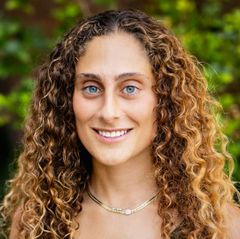
As a researcher focusing on California’s kelp forests, Lori Berberian, a UCLA geography doctoral student, can attest to this remarkable seaweed’s importance — and resilience.
“We don’t have a good understanding of how much kelp forests are impacted by wildfires, and this issue is becoming more important as the frequency and intensity of wildfires increases along the West Coast,” said Kyle Cavanaugh, Berberian’s mentor as well as vice director of the UCLA Institute of the Environment and Sustainability Marine Center and an associate professor of geography. “Lori’s research is addressing this knowledge gap.”
Under the tutelage of Cavanaugh, a lead KelpFire researcher, Berberian is focusing her dissertation on better understanding the physical factors that control kelp abundance and distribution in California. KelpFire, a dynamic collaboration of experts from multiple UC campuses, NASA and the Woods Hole Oceanographic Institute, is dedicated to studying how wildfire runoff impacts our coastal kelp forests.
Berberian recently made headlines for her work examining the impacts of wildfires — the 2025 L.A. wildfires as well as in general — on kelp forests. Berberian’s research outlines just how destructive wildfires are to kelp. For example, the increased erosion in burned areas can lead to sediment runoff that can reduce light availability on the seafloor and smother the rocky habitat that kelp requires. Furthermore, this runoff can also contain toxic materials which can harm kelp.
“Kelp, despite being sensitive to environmental changes, are also incredibly resilient,” Berberian said. “If we can better understand the mechanisms driving their decline, we can improve restoration efforts.”
After completing an undergraduate degree in geology from Occidental College and a master’s in Earth science at UC Santa Barbara, Berberian began an internship at NASA’s Jet Propulsion Laboratory, working on the KelpFire project.
KelpFire is where Berberian was first introduced to remote sensing — the process of collecting and analyzing information about an object or area from extraordinary distances — to map kelp canopies off the coast of Malibu before and after the 2018 Woolsey Fire using satellite-provided datasets to study the effects wildfires have on marine ecology.
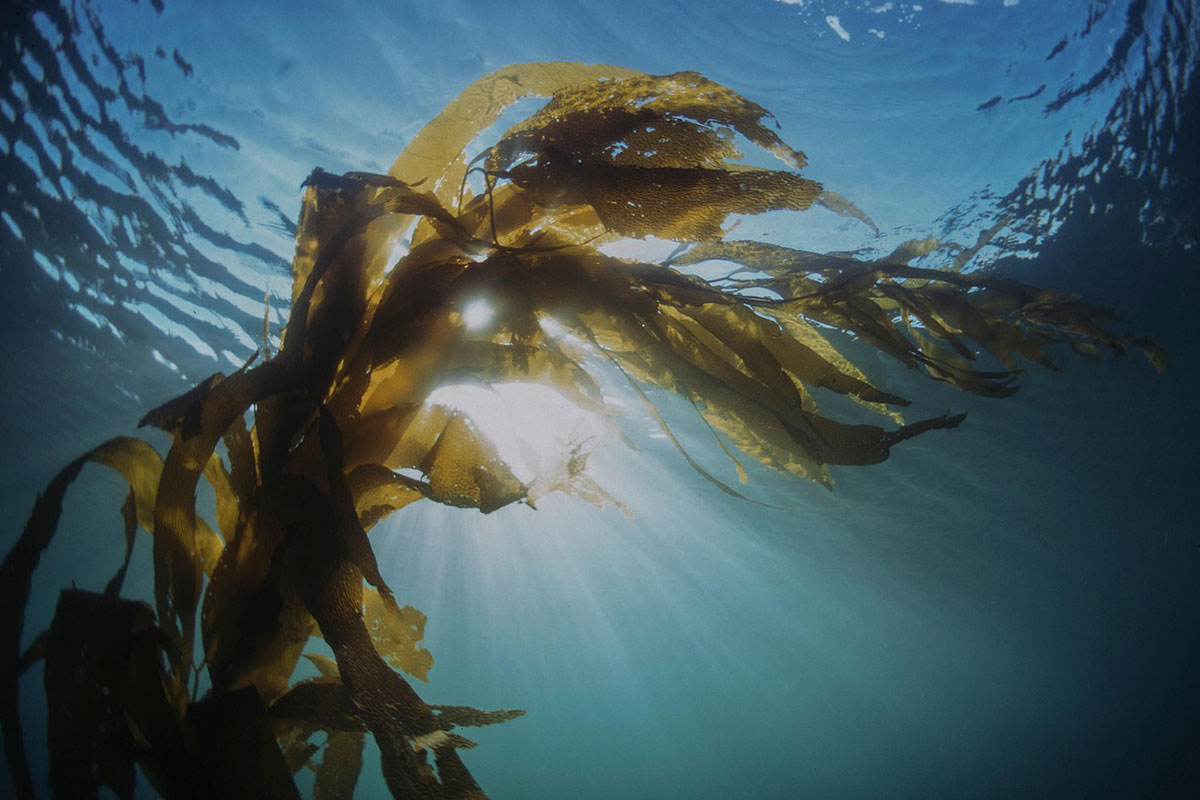
“Giant kelp in California is a canopy-forming species,” Berberian said. “Rooted into rocky reefs by their holdfasts, kelp blades — akin to plant leaves — are buoyed to the water’s surface by gas-filled bladders called pneumatocysts, making them distinctly detectable by satellites and drones.”
As her kelp-related wildfire research continues — and expands to include the impact wildfires have on benthic light, or light that reaches the bottom of a body of water, such as the ocean — Berberian is gaining additional invaluable experience.
She will travel to South Africa’s Greater Cape Floristic Region — one of the world’s 36 internationally recognized biodiversity hot spots — where she will contribute to the NASA-sponsored BioSCape project by helping build a spectral library of kelp species to improve the accuracy of satellite-based ecosystem monitoring.
Berberian is also eager to get certified to conduct in situ (“on-site”) measurements to supplement and validate her remotely sensed data. This spring, she will undergo formal training at a NASA-sponsored workshop on calibration and validation of ocean color remote sensing, preparing her for in-water measurements. She said it has been rewarding to grow as a researcher while helping to make a very real difference in the planet’s health.
“I feel lucky that my work with aquatic remote sensing, ocean science and kelp can be used to better understand and protect our world’s coastal ecosystems,” she said. “And, of course, any chance to get in the water is a bonus.”
Learn more about kelp
Kelpwatch.org is an interactive web platform that provides the world’s largest dynamic map of canopy-forming kelp species, covering the period from 1984 to the present.
A large part of the Cavanaugh Lab group’s research is enabled by publicly available remotely sensed data of kelp hosted by the Santa Barbara Long-Term Ecological Research program, which can be readily visualized on the platform.
Developed in collaboration with MIT’s Woods Hole Oceanographic Institution, UCLA, The Nature Conservancy and NASA, it offers an invaluable tool for studying kelp forests across broad spatial and temporal scales.
This platform makes long-term trends and disturbance analysis, such as those driven by wildfires, more accessible for researchers and conservation efforts. — Lori Berberian