When adult mice with Noonan syndrome were treated with lovastatin, their memory and ability to remember objects and navigate mazes improved dramatically.
Research funded by the grant will help scientists understand how disrupted genes affect brain structure, both in healthy individuals and in those with neurologic and psychiatric diseases.
UCLA researchers demonstrated that, in pregnant mice, inflammation can trigger an excessive division of neural stem cells that can cause “overgrowth” in the offspring’s brain.
In a small-scale study, nine of 10 people with the disease displayed subjective or objective improvement in their memories beginning within three to six months.
Symptoms of post-traumatic stress disorder can develop in adults even with no explicit memory of an early childhood trauma, UCLA psychologists report Aug. 15 in the journal Biological Psychiatry.
The largest-ever genomic study published on any psychiatric disorder provides important new insights about the biological causes of schizophrenia, and it could lead to new approaches to treatment.
The diverse group gathered at UCLA to learn about a bill authored by Assemblyman Ken Cooley that would require new football techniques and reduce high-impact contact during practice.
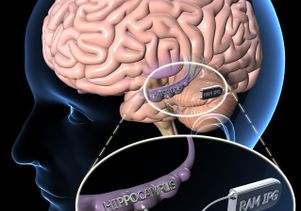
As part of a major federal initiative, campus researchers have been awarded $15 million to create a wireless, implantable device that could restore memory to millions.
The study suggests a new way to think about the human brain under anesthesia and could encourage physicians to reexamine how they approach monitoring anesthesia in the operating room.
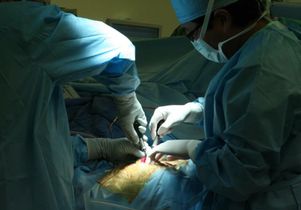
UCLA surgeons today operated on a patient with Superior Semicircular Canal Dehiscence, a disorder that forces her to hear noises from inside her own body. The surgery was covered live on Twitter and Instagram.
Led by Dr. Ming Guo, the team identified a new gene involved in the neurological disorder, a finding that could eventually lead to a new target for treatment.
The task force, which included UCLA's Dr. Gary Mathern, created a new definition that broadens the scope of the brain disease and expands the number of people who can be considered to have epilepsy.
Study results shed light on how genetic changes cause autism on a molecular level and will help scientists identify targets for future autism research.
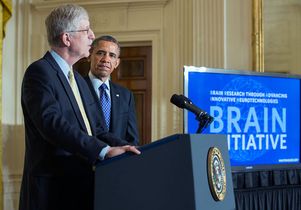
Members of the UCLA delegation are pioneering research related to the new initiative, which will fund projects seeking new ways to treat, cure and prevent brain disorders.
"Today, our scientists are mapping the human brain to unlock the answers to Alzheimer’s; developing drugs to regenerate damaged organs; devising new material to make batteries 10 times more powerful. ... Now is the time to reach a level of research ...