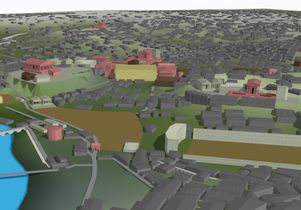
Intrigued by the question of whether Augustus Caesar transformed Rome from a city of bricks into a city of marble, as legend has it, UCLA professor Diane Favro decided to use advanced modeling software to reconstruct Rome at the time of his reign.
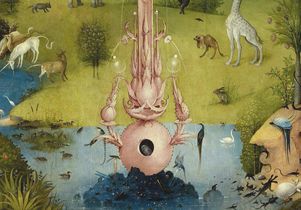
UCLA art history lecturer Gregory Harwell talks about the art, religion and influence of Dutch Renaissance painter Hieronymous Bosch on March 5, 12 p.m., 306 Royce Hall.
While war rages in Syria, that country's people can still experience the culture and history of the region’s Mesopotamian roots through an exhibit made possible by a Kurdish nonprofit organization and UCLA archaeologist Giorgio Buccellati.
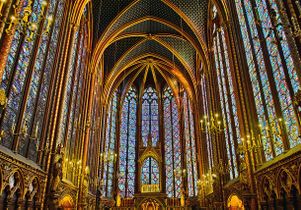
In a new book, UCLA art historian Meredith Cohen shows that the rich history and cultural significance of the 13th century Gothic chapel are equal in importance to its artistic merits.
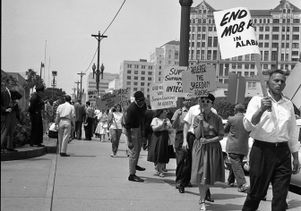
Allyson Nadia Field writes about how 100 years ago the racist film inspired black filmmakers to respond and that the film still resonates because the country still grapples with achieving racial justice.
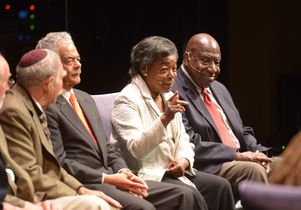
More than 800 people gathered in Royce Hall to applaud the courage of 16 civil rights activists — all UCLA alumni — who challenged segregation in the South in 1961 as Freedom Riders.
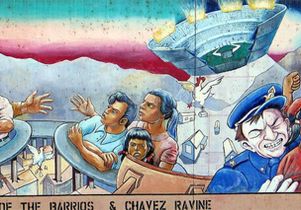
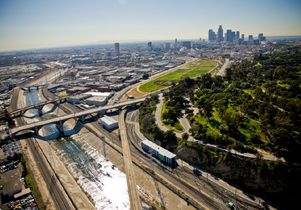
A new book by UCLA urban historian Eric Avila gives voice to the opponents of highway construction in the 1950s, ’60s and ’70s and, in particular, in communities of color.
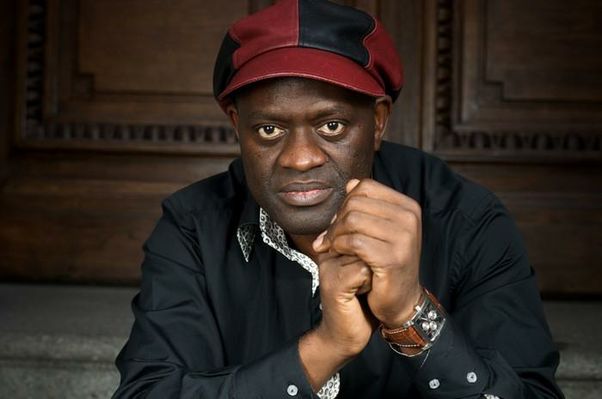
“Letter to Jimmy,” Alain Mabanckou’s much-lauded book, is a fitting tribute to the pivotal American essayist, activist and playwright, author of the novel, “Go Tell It on the Mountain” and a collection of essays, “Notes of a Native Son,” among other major works.
UCLA will honor alumni who joined a mass protest in 1961 and became Freedom Riders to protest segregation encountered by African Americans when they traveled between states on buses, trains and used public facilities.
In a forthcoming book, UCLA classics professor Kathryn Morgan shows how a tyrant who ruled an influential ancient Greek colony in the early part of the fifth century B.C. tried to bolster his position by trumpeting the successes of his horses in chariot races.
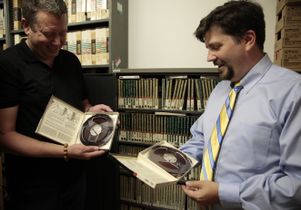
A lost recording of a 50-year-old speech delivered at UCLA by the late civil rights leader Martin Luther King Jr. has been unearthed in a storage room and put online.
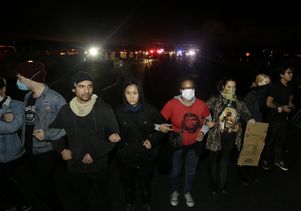
Eric Avila says it’s fitting that recent protests against police killing unarmed African American men disrupted traffic on freeways, which have a legacy of devastation to urban African American communities.
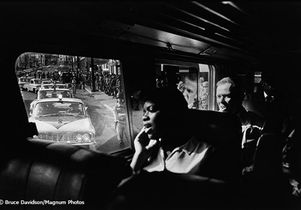
Robin D.G. Kelley, distinguished professor of history at UCLA, served as a consultant on the new documentary "Through a Lens Darkly: Black Photographers and the Emergence of a People."
With an office full of antique projectors known as “magic lanterns” and a conviction to retell media history, Erkki Huhtamo has pioneered the field of media archaeology.
That most people have never heard of Hatshepsut — a pharaoh of ancient Egypt, who was the greatest female ruler of the ancient world — is emblematic of the challenges women have always faced in politics, writes UCLA Egyptologist Kara Cooney.
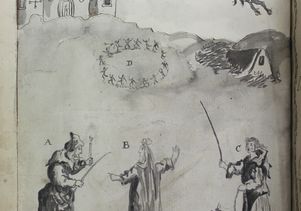
UCLA’s William Andrews Clark Memorial Library urges you to consult a 1665 treatise on the seven signs that witchcraft or necromancy is behind your ailments.
UCLA linguist Pamela Munro writes about the nearly forgotten language of the Gabrielino-Tongva Indians and her efforts to revive it for descendants of Southern California’s Tongva people.
After 10 years of research at UCLA, the first mobile website to function as a storytelling trail guide to help people explore the past, present and future of certain downtown L.A. neighborhoods — as they walk, bike or skateboard in those locations — was unveiled.
In a new mainstream biography, Kara Cooney sets out to rehabilitate the image of the pharaoh Hatshepsut, a woman whose successes were later erased or reassigned to male forebears.
A new book by a UCLA professor shows how ailments presented in 19th century French mental hospitals held up a kind of fun-house mirror to the often horrific political dramas of the country's post-revolutionary era.
UCLA’s communication studies department has posted full speeches given on campus between 1962 and 1973, featuring major figures of the era such as Cesar Chavez, Lenny Bruce, Jane Fonda and Eldridge Cleaver.
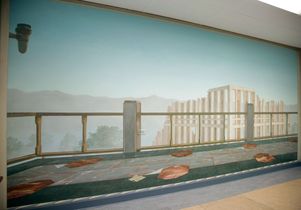
Hidden away in the history department student lounge on the sixth floor of Bunche Hall is one of UCLA’s greatest treasures, but not many people knew it until an emeritus history professor pointed out its significance and landmark status.