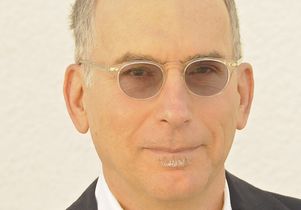
Behavioral economist Shlomo Benartzi’s research shows that smarter and simpler website and app design can guide people to save for retirement properly.
Political science professor Michael Chwe writes about having his book “Rational Ritual,” which is about the popularization of knowledge, chosen by Facebook founder Mark Zuckerberg as a book club selection.
Students in the UCLA School of Theater, Film and Television made the videos to provide insight into how young adults can handle circumstances related to alcohol use and sexual consent, micro-aggressions and body image.
People with both disorders had abnormal activity in the visual cortex of the brain during the very first instants when the brain processes “global” information, as opposed to a tiny detail.
Studies led by Rosario Signorello, a postdoctoral scholar in head and neck surgery at the David Geffen School of Medicine at UCLA, suggest that anyone can start sounding like a leader with voice training.
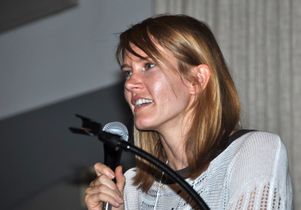
UCLA Anderson associate professor Maia Young studies organizational behavior, and some of her research involves your reputation as a leader, as someone who knows how to get things done. If you have a bit of mystique, that enhances people's perception of you.
UCLA’s Children's Pain and Comfort Care team at Mattel Children's Hospital works to succor pediatric, adolescent and young-adult patients in their days of need and to help their families grapple with the unfathomable: the death of that young patient.
New UCLA research indicates that use of social media such as Facebook and Twitter along with behavioral psychology can boost HIV testing rates, suggesting a valuable tool in the fight against the virus that causes AIDS.
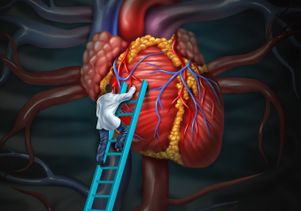
Forty years ago, it was unthinkable to live a life with an artificial heart, with someone else’s transplanted heart or with an assist-heart pump. Today, the technological advances of modern medicine make this possible. But how does that change a human being?
By encouraging patients to illustrate their pain with images such these from the exhibition "Pain," the Center for Educational Development and Research at the David Geffen School of Medicine at UCLA hopes to compel viewers to better understand those going through illness.
From 2005 to 2007, roughly 20 percent of people who committed suicide were intoxicated at death, but that percentage was notably higher during and after the recession, according to a study led by UCLA professor Mark Kaplan.
A team led by UCLA researchers found that the brain's response to viewing sexual images is related to the number of sex partners a person has had in the previous year.
Job loss among single mothers has significant negative effects on the well-being of their children as young adults, according to a new study by researchers at the California Center for Population Research at UCLA.
Phony laughter, unlike the real thing, is unique to humans, says Greg Bryant, who is studying the acoustic properties that differentiate the two types of cachinnation.