UCLA will create analytic tools to address the daunting challenges facing researchers in accessing, standardizing and sharing scientific data to foster new discoveries in medicine.
Part of UCLA’s Office of Information Technology, Rose Rocchio and her team helped UCLA move to mobile and has positioned the campus to stay at the forefront of fast-moving technological developments.
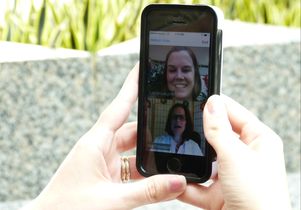
Doctors from UCLA Health System are now available on smartphones, tablets and laptops through LiveHealth Online, a telehealth solution ideal for business travelers, busy parents, students away at college or others who need non-emergency attention.
UCLA will host universities and technology companies who are working to promote the development and adoption of Named Data Networking, an emerging Internet architecture.
Willeke Wendrich first developed an interest in ancient Egyptian archaeology as a 20-year-old undergraduate student. Now an esteemed faculty member in UCLA’s Department of Near Eastern Languages and Cultures, she’s made a career out of her lifelong passion
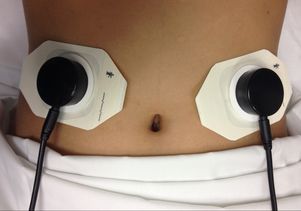
UCLA researchers have developed a disposable biosensor that attaches to the abdomen and may help doctors determine which patients should be fed following surgery.
Researchers at UCLA have set the stage for a watershed in mobile energy by using a unique graphene material to significantly boost the amount of energy supercapacitors can store.
Intellectual property — patents, copyright, trademarks, trade secrets — plays a vital role in economic growth and prosperity. Yet outside of law schools, most American colleges provide little or no opportunity for students to receive any substantive instruction in it.
The center will advance the study of “program obfuscation,” the use of new encryption methods to make a computer program invisible to an outside observer while preserving the way it works.
Unlike many of today's other imaging technologies that use light waves and radio waves, the device uses terahertz waves, which provide high efficiency and signal clarity.
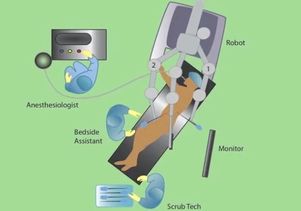
A UCLA-led study found that a new surgical technique is more effective than other current techniques to remove kidney tumors when the masses are located on the back of the kidney or when a patient has had previous abdominal surgery.
The Roseline project, headquartered at UCLA, will work to improve the accuracy and efficiency with which computers maintain their knowledge of physical time and synchronize it with a variety of networked devices.
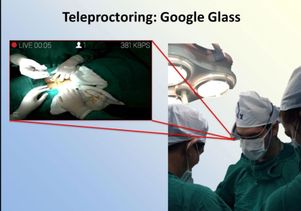
UCLA surgeon Dr. David Chen and surgical resident Dr. Justin Wagner have made it their mission to teach hernia surgery around the world and are using Google Glass as a training tool to watch procedures and comment in real time.
A rolling water treatment plant designed by UCLA researchers made a pit stop on campus this week before heading north to the San Joaquin Valley, where it will help address California’s inadequate water supply.
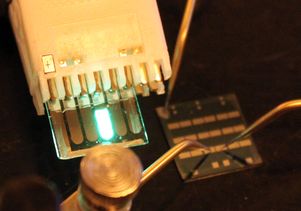
A device and manufacturing process created by UCLA researchers could lead to a significant leap in the quality of images on smartphones, computer displays, TVs and inkjet printers.
“I’ve always been interested in carrying out experiments to try to understand how things work,” said professor Richard Kaner, who knew from childhood that he wanted to become a scientist.
Professor John Villasenor, an electrical engineer in the Henry Samueli School of Engineering and Applied Science and the Luskin School of Public Affairs, is a widely published writer on the intersection of technology and public policy.