The animals, which are related to spiders and scorpions, “look terrifying, but are actually delicate, timid and afraid of you,” says UCLA doctoral candidate Kenneth Chapin.
Discovery provides scientists with critical information on the best way to create stem cells for purposes such as cell transplantation or organ regeneration.
Logic would suggest that millions of years of evolution would have perfected spatial localization in humans. A new UCLA study helps explain why that’s not the case.
The $1.75 million grant will be used to create a toolkit to analyze genomics data, allowing researchers to understand how threatened populations respond to changes in habitats and climate.
Archaeologist Matthew Curtis was part of a team that recently discovered a skeleton that yielded the first complete ancient genome ever found in Africa.
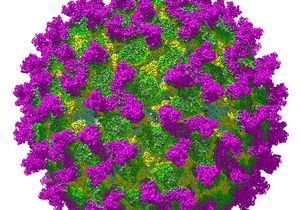
UCLA research reveals the three-dimensional atomic structure of a double-stranded RNA virus and the biological nano-switch that turns on transcription.
Life scientists from UCLA and other universities in the U.S. and England argue that predatory animals helped keep the population of large herbivores in check.
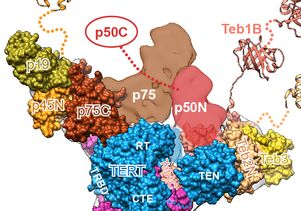
“There is so much potential for treating disease if we understand deeply how telomerase works,” said UCLA professor Juli Feigon, a senior author of the study.
New research indicates that some dinosaurs, at least, had the capacity to elevate their body temperature using heat sources in the environment, such as the sun.
The particles are used in a wide range of consumer products for their ability to kill bacteria. But that benefit might be coming at a cost to the environment.
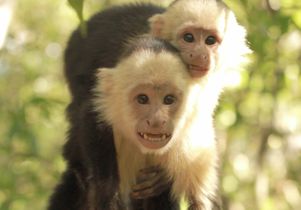
Anthropologist Susan Perry has observed extraordinarily sophisticated political strategies in capuchin monkey behavior that mirror the social machinations so common in human workplaces.
Researchers from the UCLA Institute of the Environment and Sustainability call for a federal ban on salamander imports to prevent a deadly pathogen from coming here.
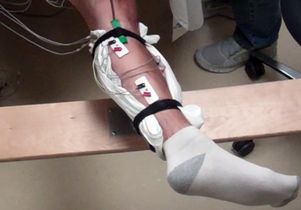
Five men who have been completely paralyzed for years moved their legs in a rhythmic motion, thanks to a noninvasive method of stimulating the spinal cord, UCLA scientists report.
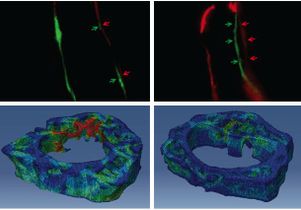
Results could one day have an impact on the development of a treatment for osteoporosis as well as potentially help those with traumatic bone injuries.