Law professor Kimberlé Crenshaw writes in the Washington Post about how intersectionality brings to light the invisibility of many constituents within groups that claim them as members, but often fail to represent them.
Los Angeles-area Korean Americans who heard presentations in their churches were more likely to get tested, according to researchers at the UCLA Jonsson Comprehensive Cancer Center.
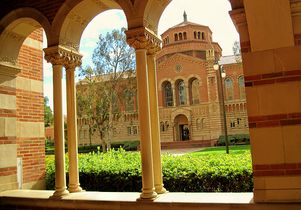
UCLA placed No. 16 in the world and No. 11 in the U.S. The report analyzes 800 universities, taking into account quality of teaching and research, knowledge transfer and international outlook.
A new global health minor explores the institutional, economic, logistic, legal and social challenges of global health, using a multidisciplinary lens to consider health in a global context.
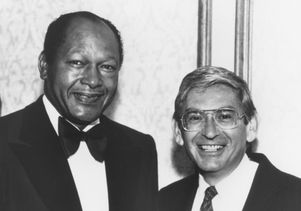
The collection will offer students and scholars from a wide range of disciplines insight into the philanthropist’s extraordinary business, philanthropic and civic accomplishments.
The initiative will provide access to the latest therapeutic cancer clinical trials and state-of-the-art care for men and women who have served in the armed forces.
UCLA researchers recommend promoting on-site availability of dental services in community health centers to encourage co-location of dental and primary care medical services.
By combining never-before–released data from energy utilities with public data, UCLA researchers created a database that provides an unprecedented look at the energy-use landscape.
Professor Bhagwan Chowdhry writes that Narendra Modi should leverage his country’s connections to Silicon Valley to make it easier for educated IT professionals to return to India and help implement the Digital India initiative.
UCLA Anderson Forecast’s third quarterly report of 2015 predicts a strong outlook for the next two years, with a slim chance of a recession and a slight change for a surge in growth.
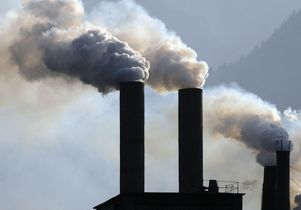
Cement manufacturing accounts for roughly 7 percent of the world’s carbon dioxide emissions, but scientists are determined to lessen its environmental impact.
Two UCLA Anderson professors write in an op-ed that despite rhetoric on Capital Hill, the Trans-Pacific Partnership will not curb China’s influence in the global marketplace.