Public health professor Roshan Bastani, director of UCLA’s Kaiser Permanente Center for Health Equity, joined a panel of health experts at a Zócalo event to discuss how to help low-income families stay healthy.
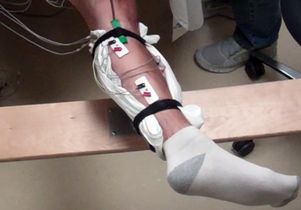
Five men who have been completely paralyzed for years moved their legs in a rhythmic motion, thanks to a noninvasive method of stimulating the spinal cord, UCLA scientists report.
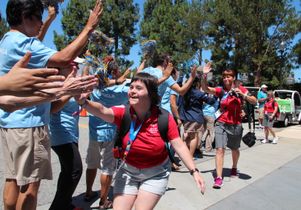
For the first time in Special Olympics World Games history, cheers are ringing out from the sidelines as 225 cheerleaders from around the country converge to be part of Cheer for LA2015.
Mark Gold writes in the L.A. Times that to meet the mayor’s goal of reducing imported water by 50 percent by 2025, we must all pay more to upgrade infrastructure and invest in new projects.
In California, where bilingual instruction is largely prohibited, secondary students who don’t speak English quickly fall behind. But a project to create a bilingual online curriculum is being led by UCLA professor Patricia Gándara.
The UCLA Volunteer Center, which is coordinating Team UCLA’s efforts campuswide, estimates that nearly 1,000 Bruin students, faculty, staff, alumni and supporters are lending their time and talents to make the games a rousing success.
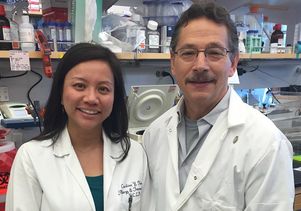
The award from the California Institute for Regenerative Medicine will fund a phase I/II clinical trial that will enroll 10 patients with an immunodeficiency disorder at three different U.S. locations.
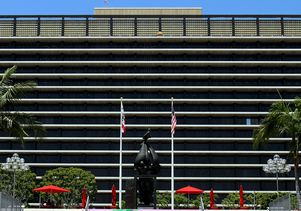
The UCLA Center for World Health and the LA5 Rotary Club brought together a panel of experts to talk about the failing health of the Earth and what mega-cities can do about it before an audience of 200 business peoplein downtown Los Angeles.
Caley Versfelt, a Special Olympics World Games global messenger, has gained a lot of self-confidence and important skills through Special Olympics and several UCLA programs geared toward people with intellectual and developmental disabilities.
Kareiva will conduct research into urban conservation, improving environmental communications and exploring the role of consumer choices in pushing businesses to go green.
A UCLA-led study suggests that the Brain Trauma Foundation's guidelines for treating traumatic brain injuries do not guarantee better clinical outcomes for patients.
Two UCLA health care researchers say it’s about time that Medicare reimburse health providers for consulting with patients about treatment near the end of their lives.
Researchers at the UCLA Institute of the Environment and Sustainability recommend that state officials adopt best practices for monitoring leaks and measuring water loss.
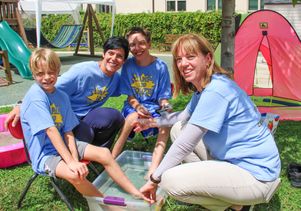
Camp Leg Power combines creative therapeutic activities in a fun camp atmosphere with a pilot study to see if changes in the brain can be identified in children with spastic cerebral palsy.