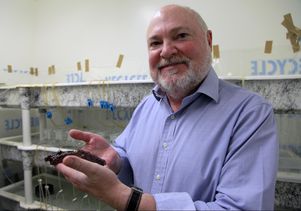
The research in marine snails could lead to new treatments to restore memories and alter traumatic ones in people with Alzheimer's disease and those dealing with post-traumatic stress disorder.
“Tissues are wonderfully complex structures, so to engineer artificial versions of them that function properly, we have to recreate their complexity,” said UCLA professor Ali Khademhosseini.
The award from the Patient-Centered Outcomes Research Institute will be used to compare care delivered through a health system with care that occurs in a community-based setting.
Researchers led by UCLA’s Dr. Paul Krebsbach are the first to characterize the mechanism of the gene, and they found it regulates the molecular process that dictates cell growth and human development.
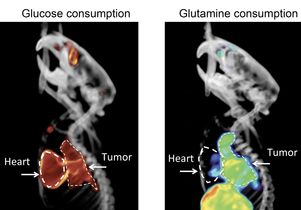
The discovery explains the mechanisms behind the protective effects of lipid emulsion therapy and could improve treatments for people with heart disease.
A gift from philanthropists Jane and Terry Semel will enable UCLA to expand research, teaching and activities connected to the campus’s Healthy Campus Initiative.
The team used molecular engineering to develop vaccines that use a common delivery method, or “single vector,” to carry protective antigens to the immune system.
Study provides evidence that a type of RNA in saliva may be able to regulate the growth of oral bacteria responsible for diseases, such as periodontitis and meningitis.
UCLA research provides critical knowledge for medicinal chemists to begin designing new drugs based on cambinol that are more potent than the molecule itself.
The study, led by Professor Amander Clark, could lead to important advances in an area of medicine that historically has been underfunded and underappreciated.
Researchers used cryo electron microscopy to obtain the first atomic model of the particle, which is made up of more than 3,000 protein molecules comprising tens of millions of atoms.
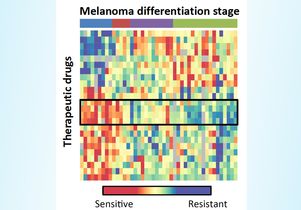
The cells that de-differentiated — meaning that they reverted back to a less-mature cell — showed sensitivity to a type of self-inflicted cell death called ferroptosis.
The studies found a link between risk-related terms that Google and Twitter users researched or tweeted about and subsequent syphilis trends that were reported to the CDC.
The advance could help bring high-quality medical diagnostics into resource-poor regions, where people otherwise do not have access to high-end technology.