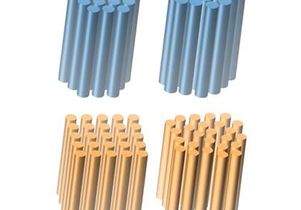
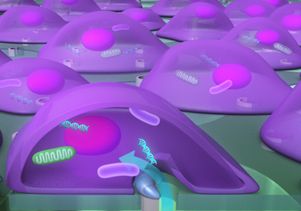
The advance could make it much more efficient to build nanoelectronic and nanobioelectronic devices that could measure brain cell and circuit function in real time.
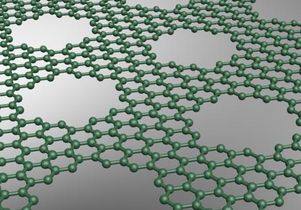
The study, by researchers at the California NanoSystems Institute, could be an important step in the effort to satisfy the world’s need for clean water.
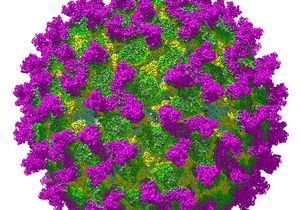
UCLA research reveals the three-dimensional atomic structure of a double-stranded RNA virus and the biological nano-switch that turns on transcription.
The new cell construction extends the cell’s effective life in air by more than 10 times, with only a marginal loss of efficiency converting sunlight to electricity.
UCLA researchers found that the tiny particles can strengthen gutta percha, the material used to fill the root canal, and even deliver drugs to fight infection.
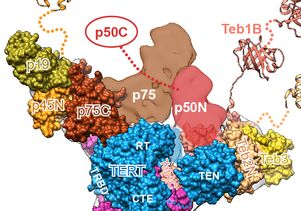
“There is so much potential for treating disease if we understand deeply how telomerase works,” said UCLA professor Juli Feigon, a senior author of the study.
The particles are used in a wide range of consumer products for their ability to kill bacteria. But that benefit might be coming at a cost to the environment.
Cement manufacturing accounts for roughly 7 percent of the world’s carbon dioxide emissions, but scientists are determined to lessen its environmental impact.
Fuel cells and hydrogen batteries are already important sources of green energy, but further advances will require scientists and engineers to better understand how the technologies work.
Scientists from UCLA and City of Hope have become the first to inhibit the mechanism of a protein that regulates a key process that causes cancer to grow.
California NanoSystems Institute researchers have imaged the atomic structures of three specific biological nanomachines, findings they hope advance work on antibiotics targeted toward specific pathogens.
UCLA engineers and doctors developed a tool that can deliver nanoparticles, enzymes, antibodies and bacteria into cells thousands of times faster than current technology.
New compact, reliable energy storage devices outperform batteries by holding larger amounts of energy, recharging more quickly and lasting for longer recharge cycles.