During the Winston C. Doby lecture, the co-founder of the United Farms Workers outlined a history of civil rights and encouraged the audience to keep fighting for justice.
UCLA study, which was based on an analysis of the most effective approaches to paid family and medical leave, shows how unpaid leave undermines economic growth.
Economics professor Adriana Lleras-Muney writes about how a welfare experiment from 100 years ago offers a dramatic lesson in what really helps poor children.
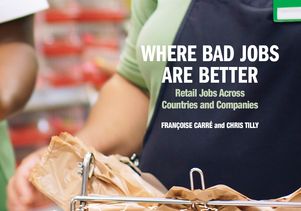
A new book co-authored by UCLA professor of urban planning Chris Tilly challenges the “myth of inevitability” for poor working conditions in America’s largest employment sector.
Ivo Welch notes that the energy consumption to fuel the digital currency is equivalent to the consumption of just fewer than 2 million average U.S. households.
Political scientist Margaret Peters says historically trade barriers meant more open immigration policies, while free trade meant more immigration restrictions.
Three urban planning professors note that L.A. has more land, and land value, than development, so a small land tax could raise more money for affordable housing.
As these communities rapidly gentrify, spurred in part by extension of the region’s rail network, soaring rents are pushing out the newest generation of immigrants and threatening their businesses.
The awards recognize the work of journalists whose contributions illuminate subjects in business, finance and the economy for readers and viewers around the world.
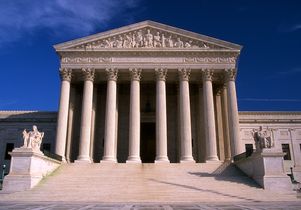
Law professor Adam Winkler notes that justices appointed by Republicans and Democrats have tended to side with business interests in cases before the court.
Economist Jerry Nickelsburg on how the Nordic nation overcame a deep financial crisis through improved regulation, higher bank equity requirements, and strict financial stress tests.
While California has been a winner in the free trade world market in terms of its agricultural exports, gains in technology and location on the Pacific rim in close proximity to Asia, manufacturing centers in the Midwest like Detroit have lost good-paying union jobs.
More than 10,000 adults offered their thoughts on health care reform, immigration, taxes, climate change, Black Lives Matter and other public policy issues.