Post-acute care accounts for some $62 billion in annual Medicare spending, but spending varies widely across different parts of the U.S., suggesting that some medical centers may be using these services too often.
Johnese Spisso, a nationally recognized academic health care leader, will oversee all operations of UCLA’s hospitals and clinics as well as the health system’s regional outreach strategy, effective Feb. 8.
Through a systematic review of Alzheimer’s studies, Ron Brookmeyer’s team at UCLA has found that the rate of being diagnosed with the disease doubles every five years in older populations.
The founding director of UCLA’s Ahmanson-Lovelace Brain Mapping Center is now vice chancellor for UCLA Health Sciences and chief executive officer of UCLA Health. And he’s still in awe of the brain and its complicated choreography.
UCLA Anderson alumna Sandy Tesch Wilkins is part of a solid core of Anderson students and alumni who are intent on putting their business skills to use in positive ways to have social impact.
Researchers led by UCLA’s Dr. Edward Garon compared pembrolizumab to the chemotherapy drug docetaxel in a clinical trial involving more than 1,000 people.
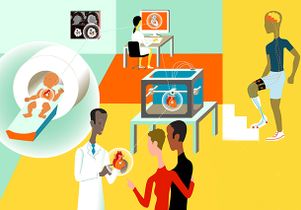
UCLA scientists are working at the forefront of technological advances in an era of personalized health care treatment and research that challenges our imaginations.
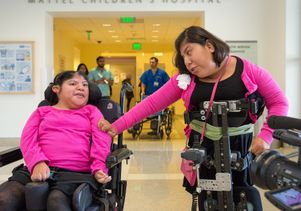
Maria de Jesus and Maria Teresa Alvarez, the formerly conjoined Guatemalan twins who were separated in 2002 in a landmark 23-hour surgery, returned to Mattel Children’s Hospital UCLA to visit sick children.
Of the 47 geographical areas the researchers analyzed, 20 had significantly higher percentages of people with advanced-stage disease than the U.S. norm.
Logic would suggest that millions of years of evolution would have perfected spatial localization in humans. A new UCLA study helps explain why that’s not the case.